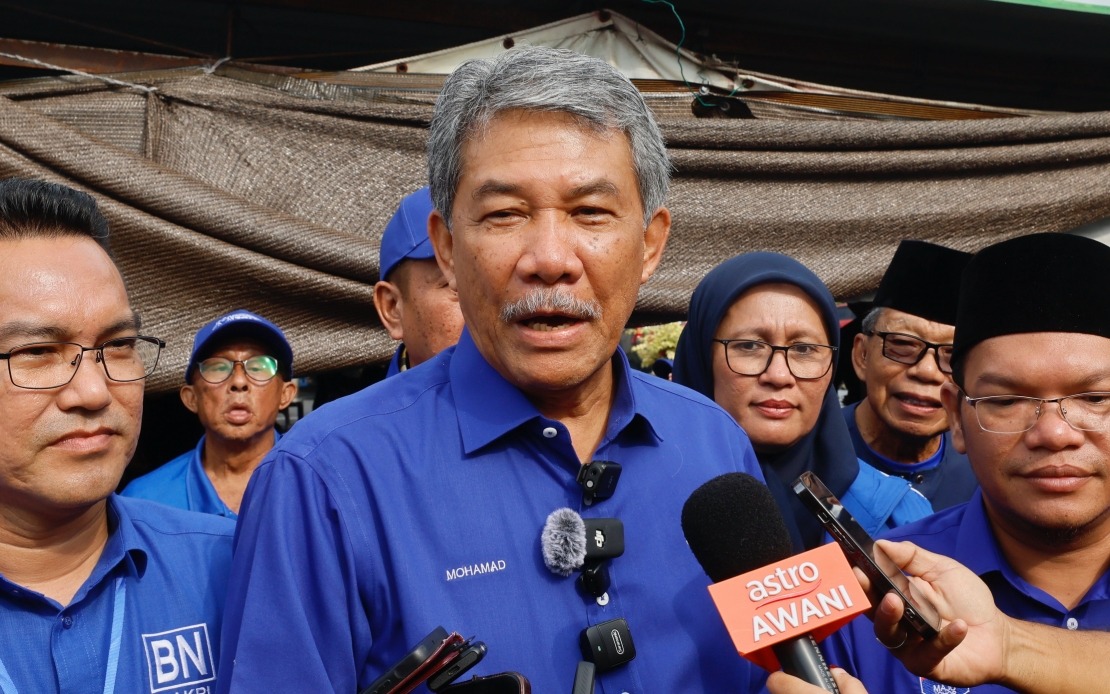
The Johor state election campaign must maintain civility and professional standards to protect Malaysia's broader political stability, warned UMNO deputy president Datuk Seri Mohamad Hasan on the eve of polling. Speaking during a voter engagement session in Johor Bahru ahead of the July 11 election, the Foreign Minister emphasised that while competing parties should feel free to present their platforms and policy proposals, the conduct of the campaign must not undermine the delicate balance of cooperation that currently exists within the Unity Government at the federal level. His remarks reflect growing concerns about the potential for state-level political contests to destabilise the broader coalition arrangements that have governed Malaysia since 2022.
Mohamad Hasan drew a critical distinction between acceptable electoral competition and destructive personal antagonism. He acknowledged that political parties naturally engage in healthy debate about their respective visions and track records, and that such policy discussions form a legitimate and necessary part of democratic engagement with voters. However, he cautioned against the kind of personalised attacks and inflammatory rhetoric that could poison inter-party relationships and make it difficult for coalition partners to continue working together on national matters. His framing positions the election as a test of political maturity, suggesting that how parties conduct themselves during the campaign will be a measure of their fitness to govern.
The Foreign Minister's plea for prudence carries particular weight given the composition of the Unity Government. The coalition brings together ideologically diverse parties that have overcome historical rivalries to form a stable federal administration. The Johor election, being contested by multiple parties within this coalition, presents a real risk of escalating tensions. Mohamad Hasan's intervention suggests that UMNO leadership has considered this risk carefully and wishes to establish informal boundaries for acceptable campaign conduct before tensions spiral. By speaking publicly about these expectations, he has effectively set a standard against which all parties' behaviour will be judged.
One of the more contentious issues surrounding the Johor election involves speculation about whether the state poll is connected to efforts to secure the release of former Prime Minister Datuk Seri Najib Tun Razak. These allegations have circulated among some quarters, generating controversy and raising questions about UMNO's true motivations for calling the election. Mohamad Hasan addressed this head-on, dismissing such claims as unfounded and emphasising that Malaysia remains a nation governed by the rule of law. He stressed that UMNO, as an institution, has consistently respected and upheld this principle, and that the party's commitment to legal order is not negotiable or contingent on electoral outcomes.
The distinction he drew between state and federal authority is legally and constitutionally crucial. A state election determines the composition of the state legislative assembly and leads to the appointment of a Menteri Besar, whose powers are confined to state-level governance. The release or pardon of a convicted individual, by contrast, falls within federal jurisdiction and ultimately requires the exercise of royal prerogative by the Yang di-Pertuan Agong. As Mohamad Hasan explained, a change in state government would provide no mechanism whatsoever for influencing a pardon decision. By logically demonstrating that a Johor state government would lack any instrumentality to affect Najib's situation, he sought to remove the factual basis for speculation that the election is being conducted for that purpose.
This constitutional clarification carries implications beyond the immediate election. It represents a public statement from a senior UMNO figure that the party respects the separation of powers and is not seeking to use electoral victories to circumvent legal processes or manipulate the institutions designed to uphold the rule of law. In the Malaysian context, where concerns about institutional independence have periodically surfaced, such reassurances from prominent political figures serve an important function in maintaining public confidence in constitutional governance. The emphasis on the Agong's inviolable authority to grant pardons underscores that no political party, regardless of its electoral standing, can exercise undue influence over decisions that are constitutionally reserved to the monarchy.
The Johor state election itself reflects the competitive dynamics within the broader Malaysian political landscape. A total of 172 candidates are competing for 56 seats in the State Legislative Assembly, representing multiple parties with varying levels of support and organisational capacity. The scale of competition and the number of candidates involved mean that the election will be closely watched not only for its implications for state governance but also as a barometer of shifting voter sentiment and party strength in a region that has traditionally been a political battleground. Early voting is scheduled for July 7, with the main polling on July 11.
The timing of Mohamad Hasan's remarks reflects strategic thinking about narrative control in the weeks leading up to the election. By establishing expectations for civil discourse before the campaign intensifies, he has positioned UMNO as the party concerned with stability and institutional integrity. Should other parties subsequently engage in more aggressive personalised attacks or inflammatory rhetoric, they risk being cast as the parties willing to destabilise the federal coalition for short-term electoral advantage. This rhetorical positioning gives UMNO room to claim the moral high ground in post-election commentary, regardless of the actual election outcome.
The call for campaign prudence also reflects broader anxieties within Malaysia's political establishment about social cohesion and national stability. Elections at any level have the potential to generate community divisions if campaigns focus excessively on personality conflicts or inflammatory rhetoric rather than substantive policy differences. In a diverse, multiethnic society like Malaysia, where political divisions can potentially correlate with communal lines, political leaders have a responsibility to ensure that electoral competition does not inflame intercommunal tensions. Mohamad Hasan's emphasis on maturity and propriety in campaigning implicitly appeals to this shared concern.
The Foreign Minister's intervention also sends a message to other component parties within the Unity Government, particularly those contesting the Johor election. DAP, PKR, and other coalition partners are reminded that they have an interest in maintaining the stability of the federal coalition even as they compete in state elections. While electoral competition is legitimate and necessary, the underlying cooperation that keeps the federal government functioning must be protected. This framing suggests that senior UMNO leadership will be monitoring campaign conduct and will judge parties partly on how responsibly they behave during this period.
Looking forward, the results of the Johor election will provide insight into voter preferences and party strength in one of Malaysia's most important states. However, beyond the specific outcome, the election will serve as a test of whether Malaysia's political parties can simultaneously compete intensely at one level while maintaining cooperative relationships at another. The success or failure of that balancing act will have implications not only for Johor but for the continued viability of the Unity Government and the broader stability of Malaysian governance. Mohamad Hasan's carefully calibrated message represents an attempt to nudge the political system toward the cooperative outcome, even as electoral competition proceeds.

