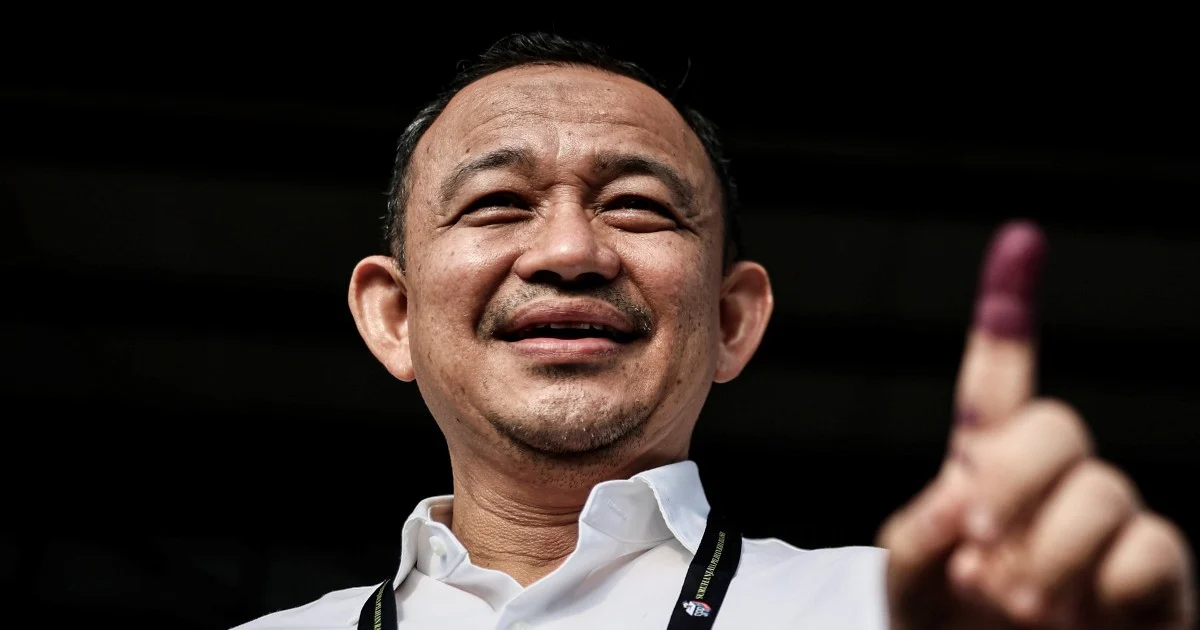
In a significant shift within Johor's political landscape, the state election results are pointing towards a notable success for PKR, with former education minister Dr Maszlee Malik commanding a decisive lead in his Puteri Wangsa contest. The preliminary tallies suggest that the experienced politician stands on the verge of delivering the party its first electoral victory in Johor, marking a breakthrough for the Pakatan Harapan component in a state that has historically tilted towards establishment politics.
Simultaneously, the election reveals an equally striking pattern of territorial gains for Barisan Nasional, which has successfully penetrated into constituencies long considered secure opposition strongholds. This dual phenomenon—PKR's emergence coupled with BN's territorial expansion—underscores the fluid and unpredictable nature of Johor's electoral dynamics, where traditional voting patterns appear to be eroding in favour of more volatile political preferences among the electorate.
Maszlee's trajectory in Puteri Wangsa reflects his sustained political relevance despite leaving the education portfolio. His previous experience in high office, combined with local-level campaigning, has evidently resonated with voters in this constituency. For PKR, which has struggled to establish a meaningful presence in Johor relative to its prominence in other Malaysian states, this result would constitute a symbolic breakthrough. The party's electoral prospects in the southern state have long been hampered by BN's deep institutional roots and dominance in rural and semi-urban areas where traditional patronage networks remain influential.
The broader competitive dynamic in this election reveals that BN's penetration into traditionally opposition-friendly areas cannot be dismissed as marginal incursions. These gains suggest that opposition parties, including PH components, face mounting pressure to defend constituencies they may have assumed were secure. The expansion of BN's footprint indicates either a consolidation of support in its traditional base coupled with selective breakthroughs in new areas, or a more comprehensive shift in voter sentiment across diverse regions.
For Malaysia's political equilibrium, Johor remains strategically crucial. The state has long served as a bellwether for national political trends, and the patterns emerging from this election carry implications beyond regional boundaries. A revitalised BN performance in Johor, combined with fragmented opposition gains, could reshape calculations about the forthcoming national political contest. BN's ability to recapture ground in opposition areas suggests the coalition has not lost its organisational capacity or voter appeal, despite its unprecedented defeat in 2018.
The significance of PKR's emergence in Johor should not be understated, particularly given the party's historical weakness in the state. Maszlee's prominence as a former education minister provides the party with a higher-profile representative, potentially attracting urban and educated voters who prioritise policy credentials and administrative experience. However, converting a single constituency victory into broader state-level influence remains a formidable challenge, especially when BN is simultaneously consolidating support.
These results also highlight the continuing relevance of individual political personalities in Malaysian elections. Maszlee's personal standing appears to have translated into voter support in Puteri Wangsa, suggesting that while party affiliations matter, candidates' personal reputations and constituencies' specific concerns can override broader partisan trends. This pattern has become increasingly evident across Malaysian politics, where strong local personalities can sometimes outperform weaker national campaign narratives.
The voter behaviour reflected in these preliminary results suggests growing electoral volatility in Johor, a state that has historically been characterised by relative political stability and predictability. The willingness of voters to support candidates from both major coalitions, rather than adhering rigidly to one or the other, indicates a more discerning and less locked-in electorate. This fluidity presents both opportunities and uncertainties for all political players, as traditional assumptions about voter loyalty can no longer be reliably applied.
For BN's leadership, these inroads into opposition territory validate their recent emphasis on organisational renewal and targeted constituency-level engagement. The coalition has invested resources in recapturing ground lost in 2018, and these results suggest that strategy is yielding measurable returns. However, the simultaneity of PKR's breakthrough tempers any narrative of wholesale BN resurgence, indicating instead a more nuanced political reconfiguration where different parties gain selectively rather than one coalition achieving overwhelming dominance.
Regionally, Johor's electoral trajectory merits close attention from other Southeast Asian observers, as it demonstrates how even entrenched political systems can experience unexpected competitive dynamics. The state's geographic proximity to Singapore and its significance as an economic hub mean that political stability and predictability remain important to both local stakeholders and neighbouring jurisdictions. Electoral surprises, though reflecting democratic vitality, can create uncertainty in business and policy environments.
Looking forward, these results will likely inform calculations about PH's organisational capacity and strategic focus in Johor, where the coalition has traditionally been relegated to secondary importance behind DAP and Amanah in other states. If PKR can convert Maszlee's victory into a broader foothold in the state, it may reshape the opposition coalition's regional architecture. Conversely, if this victory remains isolated, it may simply represent a personal achievement rather than a party breakthrough, leaving PH's Johor challenge fundamentally unresolved.

