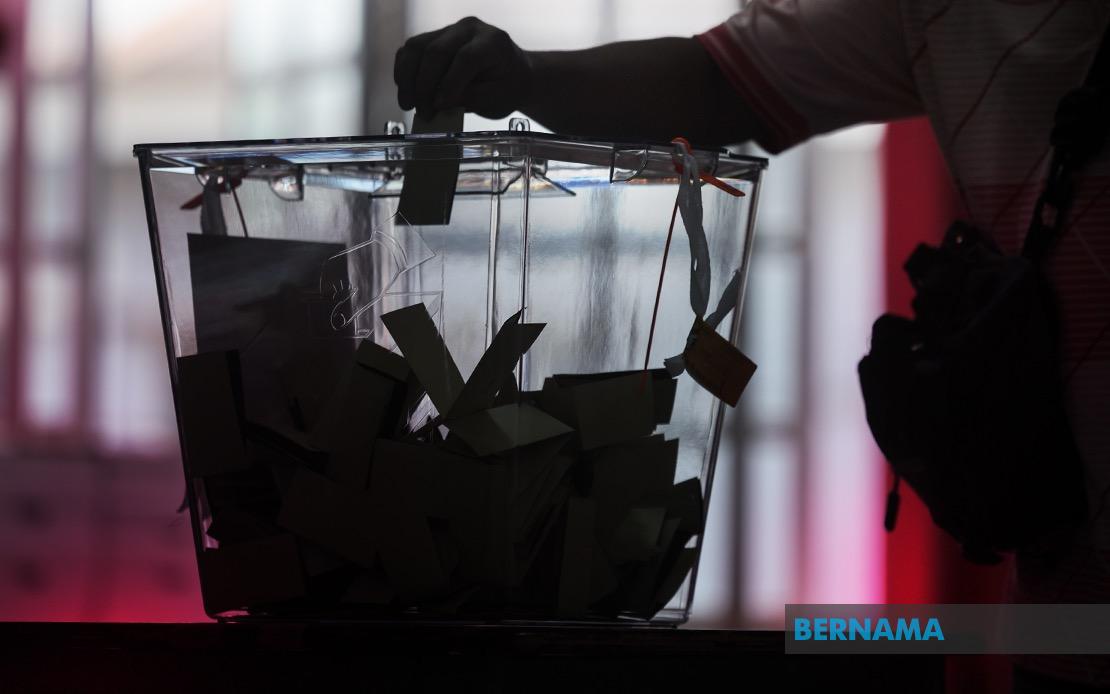
The outcome of Johor's 16th state election could hinge significantly on voter participation rates, with political analysts suggesting that a surge in turnout would likely benefit the Pakatan Harapan coalition. Associate Professor Dr Mazlan Ali from Universiti Teknologi Malaysia argues that increased engagement at the ballot box, particularly among voters living outside the state, could reshape the electoral landscape in ways that disadvantage Barisan Nasional's traditional rural strongholds.
The foundation for this assessment rests on a striking comparison between two recent electoral contests in Johor. When the state held elections in 2022, only marginally more than half of eligible voters cast ballots. This depressed turnout benefited BN substantially, enabling the coalition to secure 40 seats by leveraging its deep-rooted local support networks and core voter base throughout the state. The picture changed dramatically when the 15th General Election took place later that year, drawing approximately 75 per cent of voters to polling stations. Under these elevated participation conditions, PH captured 14 parliamentary seats in the state and nearly doubled its popular vote share, climbing from approximately 350,000 votes to 830,000 votes.
This electoral arithmetic reveals a crucial pattern that shapes current analysis. The difference between the two contests was not primarily about messaging or campaign effectiveness but rather about who showed up to vote. Mazlan emphasises that the 2022 state election's low turnout severely handicapped PH because many of its supporters—those living and working elsewhere in Malaysia—remained absent from polling stations due to pandemic-related travel restrictions and economic uncertainty. When those same voters returned to participate in the general election months later, they brought substantially more support for the coalition, transforming vote totals and seat counts across Johor constituencies.
The political dynamics favouring PH in a high-turnout scenario reflect fundamental differences in voter composition between the two major coalitions. PH's support base consists predominantly of outstation voters who have migrated to other states or towns for employment and education, younger demographic cohorts, swing voters without strong party loyalties, and more educated urban populations. These voters typically engage with political issues through social media platforms and respond to messaging emphasising transparency, meritocracy, and social justice. By contrast, BN derives its strength from voters with longer tenure in their communities, those influenced by traditional identity-based politics, and rural constituencies where party structures have operated for decades.
Mazlan attributes PH supporters' inclination to travel home for voting to their assessment of federal governance and economic policy. The analyst suggests that voters who perceive tangible benefits from political stability at the national level, expanding economic opportunities, and government programmes such as fuel subsidies feel motivated to preserve the conditions they value. This psychological disposition transforms voting from a mere civic obligation into a strategic action intended to maintain favourable circumstances. Those living distant from their home constituencies weigh the cost and effort of returning against the perceived importance of the election, and many determine that ensuring PH's continuity justifies the journey.
The urban and semi-urban constituencies scattered throughout Johor represent the crucial battleground in this election. These areas host the highest concentrations of outstation voters, young professionals, and educated citizens—precisely the demographic segments most likely to support PH when participation rates rise. Mazlan notes that voters in these settings engage differently with political campaigns than their rural counterparts, focusing on governance competence, policy specifics, and performance metrics rather than traditional loyalty markers. They consume political information through diverse channels and respond to appeals based on economic management and social fairness rather than communal identity or historical party affiliation.
The pandemic's aftermath creates additional structural advantages for PH under high-turnout scenarios. The 2022 state election was constrained by lingering COVID-19 anxieties and restrictions that discouraged unnecessary travel. Three years later, these constraints have vanished entirely. Outstation voters can return home without confronting either formal barriers or widespread health concerns that previously deterred their participation. Airlines operate normally, intercity transport networks function without interruption, and workplaces no longer impose pandemic-related movement restrictions. These practical changes mean the comparison between the artificially suppressed 2022 turnout and the more normal 2024 participation rate becomes sharper and more favourable to PH.
If the analytical framework holds and outstation voters do return in substantial numbers, Mazlan projects that several marginal seats could shift significantly. The swing would not occur uniformly across all constituencies but rather concentrate in urban and semi-urban areas where outstation populations represent meaningful portions of the electorate. In seats where this demographic comprises 20 to 40 per cent of voters, a difference between 50 per cent and 75 per cent turnout could easily determine the outcome. This targeting effect makes turnout the central variable determining whether PH advances toward parity with BN or remains substantially behind in seat counts.
However, Mazlan cautions that turnout remains an uncertain variable dependent on PH campaign effectiveness in the closing days before voting. The coalition must translate sympathetic sentiment among outstation voters into actual participation, a task requiring sustained organisational effort and persuasive messaging. Some supporters may discount the election's significance, underestimate the feasibility of returning home, or feel insufficiently motivated by campaign narratives to justify the journey and associated expenses. PH's challenge thus extends beyond policy articulation to the practical mechanics of mobilisation, ensuring that favourable demographic trends translate into votes.
The analytical perspective offered by Mazlan reflects a broader pattern observable across Southeast Asian democracies, where voter participation often correlates with the relative advantage different coalitions enjoy. When educated, urban, and geographically mobile voters participate at elevated rates, centre-left and reformist coalitions typically advance, while lower participation benefits established parties relying on stable rural networks and traditional support structures. Johor exemplifies this dynamic perfectly, with its diverse population split between entrenched BN support in rural areas and growing PH sympathy among mobile, educated urban populations. The election's outcome will ultimately depend on whether Johor voters prioritise stability and continuity or seek to reinforce the federal government's reform agenda through decisive state-level backing.

