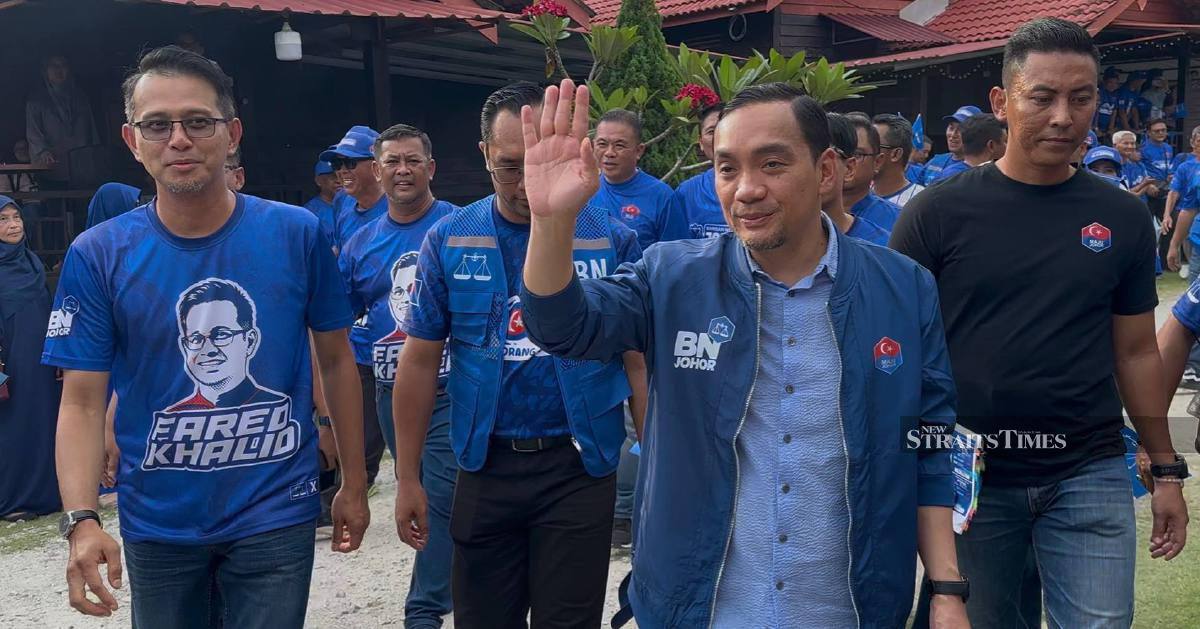
Caretaker Menteri Besar Datuk Onn Hafiz Ghazi has firmly stressed that the imminent Johor state election serves a singular purpose: to restore the machinery of representative democracy by enabling citizens to determine their next state administration. Speaking in Batu Pahat, Onn Hafiz's remarks carry particular weight at a moment when speculation surrounds the electoral process and its timing, with various political narratives circulating across Malaysian media and social platforms regarding underlying motivations for dissolving the state assembly.
The emphasis on democratic mandate carries significance within Johor's political context. As the nation's southern economic powerhouse and a crucial base for multiple political coalitions, Johor's electoral direction typically influences broader national political calculations. The caretaker Menteri Besar's positioning of the election as fundamentally about governance renewal rather than addressing ancillary concerns reflects a deliberate attempt to frame the narrative around institutional legitimacy and constitutional processes rather than factional disputes or tangential matters that have periodically surfaced in public discourse.
Onn Hafiz's clarification becomes relevant against the backdrop of persistent public speculation regarding the motivations behind the assembly dissolution. In Malaysian politics, state elections occasionally become entangled with broader national controversies or individual legal matters, leading to questions about whether electoral exercises primarily serve democratic renewal or serve as vehicles for addressing other agendas. By articulating that the Johor election exists purely within the democratic renewal framework, the caretaker leader is attempting to establish clear parameters around the election's purpose and legitimacy.
The insistence on democratic mandate also reflects constitutional principles embedded within Malaysia's federal system. State elections, according to the Federal Constitution, constitute the formal mechanism through which state governments derive their authority to govern. When a Menteri Besar dissolves the state assembly and calls for fresh elections, the legal foundation rests upon returning to voters the question of which party or coalition should command the confidence of the legislative assembly. From this constitutional perspective, Onn Hafiz's framing aligns with established democratic procedure.
For Malaysian voters in Johor, particularly those attempting to distinguish between substantive governance issues and peripheral political narratives, such clarifications help establish focus on what should legitimately form the basis of electoral choice. The economy, state infrastructure development, education, healthcare delivery, and management of Johor's business-friendly environment represent the substantive matters upon which voters might reasonably evaluate governmental performance and make electoral decisions. When leadership explicitly separates the election from other domains, it creates space for issue-based campaigning and voter deliberation.
The caretaker Menteri Besar's position also carries implications for how the broader Southeast Asian region observes Malaysian electoral processes. With international observers increasingly monitoring governance quality and democratic integrity across the region, clear articulation that elections serve their constitutional purpose—rather than functioning as instruments for achieving political objectives unrelated to governance selection—strengthens perceptions of institutional health. This distinction matters particularly as economic investment decisions often reflect investor confidence in political stability and institutional predictability.
Within Johor specifically, the state's political landscape encompasses competing coalitions with distinct governing philosophies and economic priorities. Whether the incumbent coalition retains voter confidence or opposition parties successfully persuade voters to change direction should represent the election's substantive outcome. The caretaker leader's framing keeps focus on this fundamental question rather than permitting the election to become obscured by parallel controversies that might distract from genuine policy differences between competing political visions for the state.
Onn Hafiz's emphasis also resonates with voter frustration increasingly evident in Malaysian politics regarding the perception that electoral exercises sometimes serve narrow factional interests rather than broader democratic purposes. By articulating transparently that the Johor election exists solely to enable democratic choice about state leadership, he addresses an implicit public concern about electoral legitimacy. This transparency, particularly from an incumbent caretaker facing the uncertainty of fresh polls, carries credibility value within the electorate.
The timing and manner in which such clarifications emerge within Malaysian political discourse also warrants examination. That a caretaker Menteri Besar felt compelled to explicitly separate the election from other matters suggests sufficient public discourse creating this need for clarification. This indicates how interconnected Malaysian politics has become, with state-level electoral exercises rarely existing in isolation from national controversies or legal proceedings involving political figures. The caretaker leader's statement, in effect, attempts to redraw boundaries around what legitimately forms election content.
Moving forward, how Johor's election campaign develops will indicate whether political actors across coalitions accept this framework prioritising democratic mandate renewal or whether they attempt to introduce extraneous elements into campaign discourse. The quality of electoral debate—focused on governance capabilities, economic vision, and state policy priorities—will largely depend on whether political participants respect the distinction Onn Hafiz has articulated. For Malaysian voters observing Johor's electoral process, the clarity of this distinction between legitimate election content and peripheral matters will facilitate more informed and substantive democratic participation.

