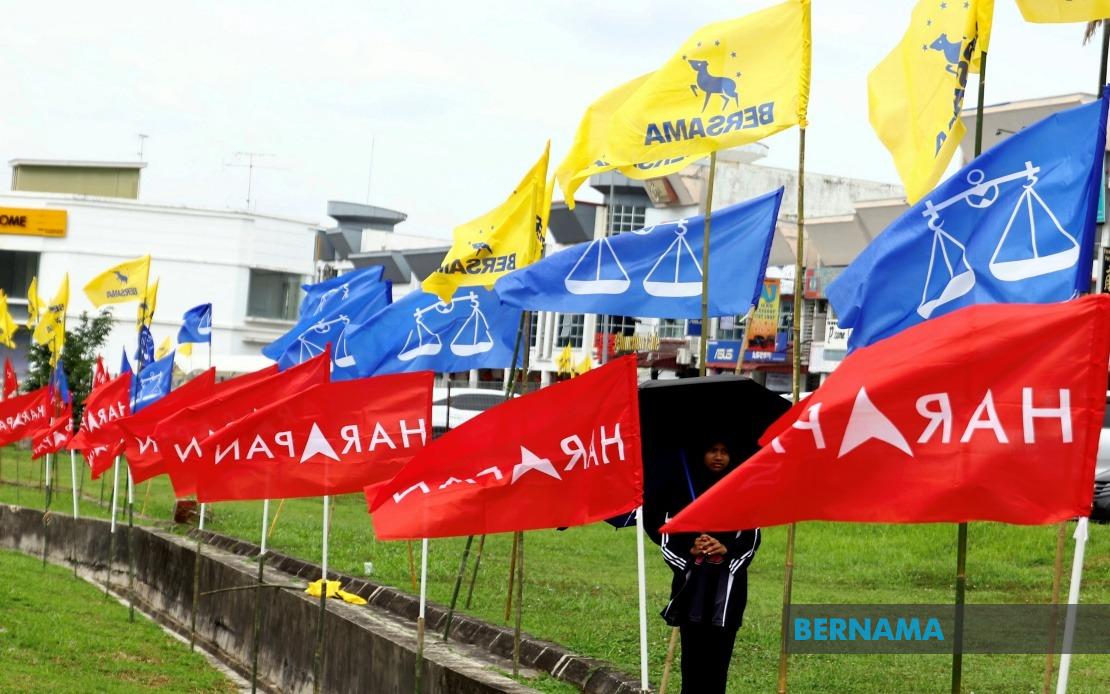
The curtain falls today on one of Malaysia's most closely watched state elections as Johor enters polling day following an intensive two-week campaign that saw major political coalitions vie for voter support through competing visions of governance and economic recovery. More than 2.7 million registered voters across the state will determine the fate of 172 candidates contesting the 56 state assembly seats, with results expected to be fully known by 10 pm tonight according to the Election Commission.
The campaign period, which commenced on June 27, concludes at 11.59 pm last night, ending all ground and online canvassing activities that have dominated the political landscape. Beginning at 8 am today, 1,076 polling centres opened to facilitate what represents a significantly smaller candidate field than the 239 who contested in the previous state election, reflecting changed political configurations and coalition strategies heading into this election cycle.
The contest features clear frontrunners in Barisan Nasional and Pakatan Harapan, each fielding 56 candidates, with Perikatan Nasional presenting 33 candidates, Parti Bersama Malaysia 15, and smaller parties MUDA, Parti Orang Asli Malaysia, and Parti Sosialis Malaysia competing for remaining seats alongside six independent candidates. The composition reflects shifting political alignments within Malaysia's broader landscape, particularly given the formation of the federal Unity Government between BN and PH, which has introduced new dynamics into state-level competition.
Voter turnout will serve as a critical barometer for translating campaign momentum into electoral outcomes, according to Dr Nazreena Mohammed Yasin, political analyst at Universiti Tun Hussein Onn Malaysia. However, she cautioned that turnout patterns cannot be uniformly applied across constituencies, as demographic variations and local conditions mean that higher participation rates may advantage particular parties in certain areas while proving immaterial elsewhere. The previous state election in 2022 recorded turnout of 54.92 per cent, providing a benchmark against which analysts will assess today's engagement levels.
Dr Nazreena emphasised that the effectiveness of party machinery in mobilising supporters and managing polling day logistics will prove decisive, particularly in narrowly contested constituencies where victory margins have historically been razor-thin. The presence of undecided voters and fence-sitters represents another significant variable, as their last-minute decisions could determine outcomes in marginal seats. Beyond raw results, the magnitude of vote swing compared to the 2022 election will indicate whether major coalitions have consolidated support, experienced erosion, or shifted voter allegiances in meaningful ways that could signal broader political realignment within the state.
The campaign itself has centred on bread-and-butter concerns that resonate with ordinary Malaysians, particularly the escalating cost of living, employment generation, economic reconstruction following pandemic-related disruptions, and public welfare provision. Both major coalitions emphasised these themes as they attempted to convince voters that their respective visions could deliver tangible improvements to household finances and economic opportunity, recognising that abstract political narratives hold less sway when families struggle with daily expenses.
Associate Professor Dr Mazlan Ali of Universiti Teknologi Malaysia observed that the dominant campaign narrative has revolved around political stability and strong governance performance, with BN and PH leveraging their respective track records at federal and state levels to argue their continued fitness to govern. He suggested that while parties presented various pledges and manifestos, voters increasingly judge political parties based on their demonstrated ability to deliver on previous commitments rather than aspirational promises. This evolution in voter behaviour reflects growing sophistication and scepticism regarding campaign rhetoric disconnected from concrete outcomes and administrative competence.
The heightened public interest surrounding this election, coupled with the significance of the outcome for Johor's trajectory, may produce elevated turnout compared to previous cycles, according to Dr Mazlan's assessment. When voter engagement increases, individual ballots become proportionally more consequential in determining outcomes, particularly in closely divided constituencies where demographic shifts or minor swings in candidate preference can produce different results. The stakes for today's voting extend beyond immediate state-level governance, as results will inevitably influence national political calculations and provide insights into broader voter sentiment regarding coalition performance under the federal Unity Government arrangement.
Early voting involving 20,607 members of the Malaysian Armed Forces, Royal Malaysia Police, General Operations Force, and their spouses occurred last Tuesday, with these security personnel and their families typically constituting a distinct voting bloc with particular demographic characteristics and political preferences. This advanced voting process ensures that crucial personnel maintain operational capacity while exercising democratic rights, though the aggregate impact of early voting on overall results tends to be modest given the security forces represent a small fraction of the total electorate.
The election represents significant consequences for Johor's governance structure and policy direction over the ensuing five years. The state maintains Malaysia's second-largest population after Selangor and constitutes a critical economic hub with substantial manufacturing, port, and services sectors, making its electoral outcome relevant far beyond state boundaries. A clear mandate for either major coalition would provide stronger governance authority, whereas a divided or fragmented result could complicate coalition-building and policy implementation, potentially creating challenges for economic development initiatives and service delivery.
Political analysts will scrutinise not merely which coalition secures the most seats, but the nature of support distributions across different constituencies and demographic zones. Shifts in voting patterns between urban and rural areas, performance among different ethnic and age cohorts, and changes in traditional strongholds for various parties will collectively paint a picture of evolving political preferences and the effectiveness of competing strategies. These patterns will inform parties' approaches to forthcoming elections and provide early indicators regarding any broader realignment of Malaysian political alignments.
As voters cast ballots today, they exercise choice not merely between competing personalities and parties, but between different visions for addressing Johor's economic challenges, enhancing employment prospects, and ensuring public services meet expanding demand. The result will determine whether BN consolidates recent advances in the state, whether PH successfully challenges established patterns of dominance, or whether smaller parties make meaningful gains in particular constituencies. Results emerging tonight will reverberate through Malaysia's political establishment and influence calculations regarding the sustainability of the current federal arrangement and prospects for future electoral contests.

