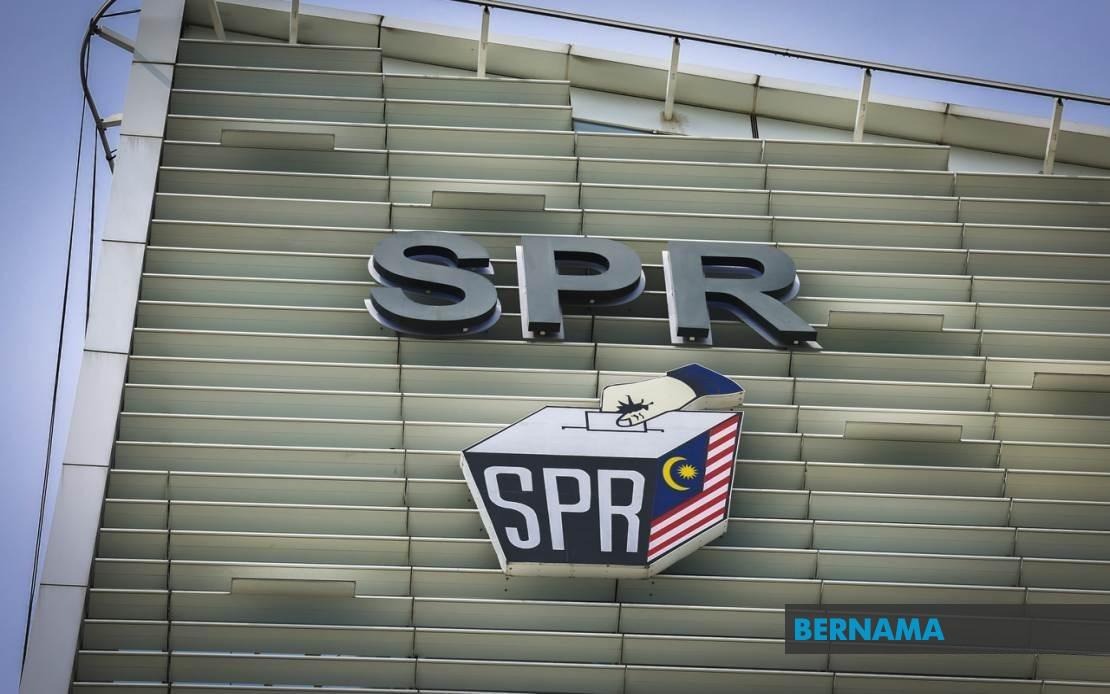
The Election Commission reported receiving 305 separate complaints and reports of campaign-related misconduct during the ongoing Johor State Election drive as of early July, reflecting ongoing challenges in ensuring candidates and political parties adhere to electoral regulations during high-stakes state contests.
The violations spanned multiple categories of electoral law breaches, with improper display of campaign materials in zones restricted by local authorities constituting the bulk of reported infractions. A total of 140 cases fell into this category, indicating that despite clear signage and advance notification of restricted areas, candidates and their supporters continued to flout placement guidelines with regularity. This persistent problem underscores the difficulty enforcement agencies face when dealing with grassroots campaign activity across a large geographic area with numerous municipalities and local government entities maintaining separate restrictions.
The second most significant cluster of violations involved campaign posters, banners and signage that obstructed sightlines for drivers and pedestrians. Ninety instances of such traffic-obstructing materials were formally reported, raising public safety concerns and demonstrating that visual pollution from campaign material remains an endemic issue across Malaysian electoral contests. These oversized or poorly positioned installations not only breach electoral rules but potentially endanger motorists and create traffic hazards, particularly in urban and semi-urban areas where space is constrained and visibility critical.
A further 27 cases involved placement of campaign materials within the strict 50-metre exclusion zone immediately surrounding polling centres, a protective perimeter designed to maintain neutrality and prevent last-minute electioneering that could unduly influence voters. This specific violation suggests that despite detailed briefings for candidates about polling day regulations, some campaign teams either misunderstand or deliberately disregard the boundaries governing behaviour near voting locations.
The remaining 48 complaints encompassed assorted other campaign offences, including potential violations involving electoral financing, unlawful assembly during campaigning, or breaches of social media conduct guidelines introduced in recent elections. The catch-all nature of this category reflects the expanding complexity of modern election regulation, which now extends beyond traditional poster and billboard concerns into digital platforms and campaign finance transparency.
To address the volume of violations, the Election Commission established 56 dedicated Election Campaign Enforcement Teams across Johor, tasked specifically with monitoring compliance with the Election Offences Act 1954 throughout the campaign period spanning from nomination day on June 27 through until the evening of July 10. This substantial enforcement apparatus represents a significant deployment of regulatory resources, yet the sheer number of reported violations suggests that even this substantial presence struggles to achieve complete compliance.
The commission coordinated closely with multiple enforcement agencies to manage the election environment, creating an inter-agency task force incorporating the Royal Malaysia Police, the Malaysian Anti-Corruption Commission focusing on financial irregularities, and the Malaysian Communications and Multimedia Commission overseeing digital campaign conduct. This multi-agency approach reflects the distributed nature of modern campaign violations, which span physical, financial and digital domains requiring specialist expertise from different authorities.
In formal statements, the Election Commission emphasised that all complaints received were subject to appropriate follow-up action, though the commission did not detail whether violations resulted in fines, material removal orders, or other enforcement measures. For Malaysian voters and observers, the transparency of enforcement outcomes remains an important indicator of whether regulations carry meaningful consequences or function primarily as nominal requirements.
The Johor contest itself represents a significant electoral event, with 172 candidates competing across 56 state assembly seats, making it a substantial engagement of electoral machinery and campaign activity. The concentration of violations during a single state election campaign illustrates how campaign law breaches scale with the intensity and geographic spread of contestation, suggesting that nationwide general elections would likely generate substantially higher violation counts.
The election schedule concentrated campaign activity into a compressed timeframe, with early voting scheduled for July 7 and main polling day set for July 11, creating a rushed final period where campaign teams rush to maximise last-minute visibility. This compressed timeline frequently correlates with elevated violation rates as candidates prioritise campaign reach over meticulous regulatory compliance, knowing that enforcement response time may lag behind rapid material deployment.
For Southeast Asian observers, the Johor election demonstrates that even well-resourced electoral commissions struggle to achieve complete compliance with campaign regulations without substantially increasing enforcement intensity or adjusting legal frameworks. Malaysia's experience suggests that campaign law violations remain a persistent structural feature of contested elections rather than anomalies, reflecting the incentives facing campaigns competing in closely-fought races where marginal advantages matter.
Looking forward, the Election Commission's commitment to conducting an efficient, fair, transparent and credible election extends through the final hours of campaigning on July 10 at 11:59 pm, after which campaign material must be removed and the official campaign period concludes. Whether the 305 reported violations translate into material impacts on campaign effectiveness or election outcomes remains uncertain, though their documentation demonstrates that Malaysian electoral regulation possesses meaningful enforcement capacity even if complete compliance remains elusive.

