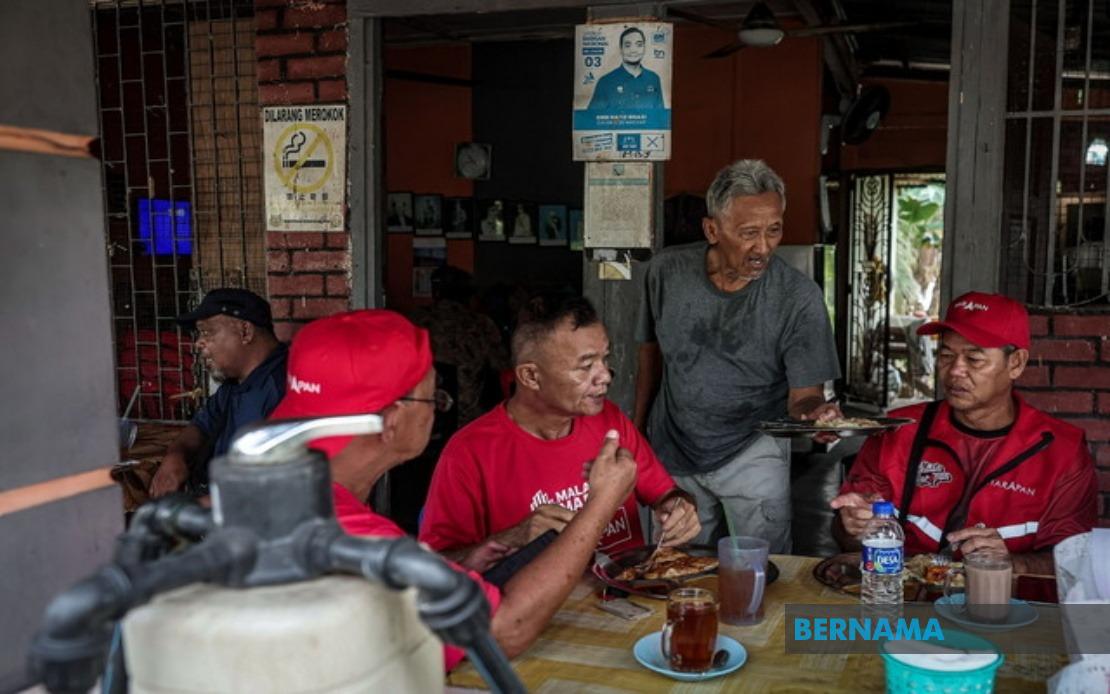
The Johor state election campaign has delivered an unexpected economic windfall to small-scale traders and food vendors in communities across the state, transforming what is fundamentally a democratic exercise into tangible commercial opportunity for struggling businesses. In settlements like Felda Layang-Layang and Simpang Renggam, petty traders report experiencing unprecedented surges in customer traffic and sales volumes since the campaign period began, a phenomenon that reveals how major political events can generate ripple effects throughout local economies.
Noorma Zafmeeden, a 70-year-old stall operator in Felda Layang-Layang, has witnessed her modest breakfast business transform dramatically during the election season. Her warung, which typically generates less than RM400 in morning sales on ordinary days, has seen revenues climb substantially as campaign workers, party supporters, and curious voters flood into the area. The shift represents not merely a temporary uptick but a meaningful improvement in daily takings that has surprised even the veteran operator, who had not anticipated such pronounced changes tied to electoral activity.
Together with her husband Bahari Madiran, 76, Noorma has operated the warung since settling in the Felda community in 1987, maintaining a disciplined schedule that sees them preparing traditional Malaysian breakfast staples like roti canai and nasi lemak from early morning before transitioning to fried dishes in the evening. For Bahari, the heightened activity has brought more than mere financial benefit. He describes their establishment as a gathering place that embodies communal harmony, where patrons from diverse ethnic and religious backgrounds congregate in an atmosphere of mutual respect and friendly interaction. The influx of visitors during the campaign has satisfied him in ways beyond economic calculation, providing opportunities to engage with people and political activists from across Malaysia, thereby enriching his understanding of the broader national conversation.
The economic stimulus extends beyond breakfast vendors. Ahmad Ridzuan Awang, a 45-year-old nasi campur trader operating in Simpang Renggam, has experienced even more dramatic changes to his business pattern. On ordinary trading days, his carefully prepared selection of dishes typically remains unsold until evening approaches, but the election campaign has compressed this timeline significantly. By as early as 1.30 pm, his entire tray inventory has sold out, driven by bulk orders from various political parties and campaign organisations seeking to feed their workers and supporters. This dramatic acceleration of sales velocity suggests that the campaign has fundamentally altered local consumption patterns, at least temporarily.
Ahmad Ridzuan's perspective highlights a crucial dimension often overlooked in election coverage: the concept of campaign activity as generating what might be termed "political tourism." The arrival of campaign workers, party operatives, and supporters from across the country creates demand that local food businesses are well-positioned to satisfy. This influx represents genuine economic activity that flows money into community coffers and stimulates related commercial activity. Ahmad Ridzuan notes explicitly that the benefits extend beyond food vendors themselves, creating positive spillover effects for local suppliers and surrounding businesses that service the increased foot traffic and economic activity generated by the election campaign.
The Johor state election itself represents a significant political event, with 172 candidates contesting 56 seats across the state. The campaign period has proven substantial enough to create measurable economic impacts at the grassroots level, with polling scheduled for July 11 and early voting commencing on July 7. This scale of electoral activity necessarily brings sustained movement of people through communities, and traders positioned at natural gathering points—food stalls, markets, and public spaces—stand to capture this transient but real commercial opportunity.
For Malaysia's informal economy, which encompasses hundreds of thousands of petty traders and hawkers operating on tight margins, even temporary revenue surges carry significance. The election season windfall provides breathing room that can help vendors manage fixed costs, invest in inventory replenishment, or simply secure additional income during what might otherwise be lean trading periods. This dynamic has particular relevance in Felda settlements and rural areas, where economic opportunities are sometimes limited and where farming communities rely on supplementary income from trading activities.
The phenomenon also reflects broader patterns visible during major public events and campaigns across Southeast Asia, where localised economic benefits accrue to communities hosting significant activity. Street-level traders become inadvertent beneficiaries of political processes, gaining opportunities they would not otherwise encounter in their regular trading routines. This creates an interesting intersection between democratic participation and economic reality, where the machinery of electoral politics generates tangible livelihood benefits for ordinary people operating outside formal economic structures.
However, vendors must also reckon with the temporary nature of campaign-driven demand. The heightened activity will inevitably recede once the election concludes and campaigners move on to other priorities. This reality underscores the vulnerability of informal traders whose income depends substantially on variable foot traffic patterns. For traders like Noorma and Ahmad Ridzuan, the campaign season represents a concentrated opportunity to boost earnings, but sustainable business growth requires consistent customer bases and reliable demand.
The broader implication for Malaysian policymakers concerns the economic role of informal traders in community life and the importance of creating conditions that allow petty traders to develop beyond dependency on temporary economic surges. While election campaigns provide valuable short-term opportunities, long-term trader prosperity requires supportive policies around licensing, location security, access to finance, and market development. The enthusiasm and satisfaction expressed by vendors during this campaign period suggest that with appropriate support infrastructure, these communities could sustain higher levels of economic activity throughout the year.
The Johor election campaign thus serves as an accidental case study in grassroots economic stimulus, demonstrating how political processes can generate measurable benefits for vulnerable traders and small businesses. As the campaign progresses toward polling day, these vendors will continue capitalising on the opportunities presented, while looking ahead to the inevitable return to ordinary trading conditions once the democratic exercise concludes.

