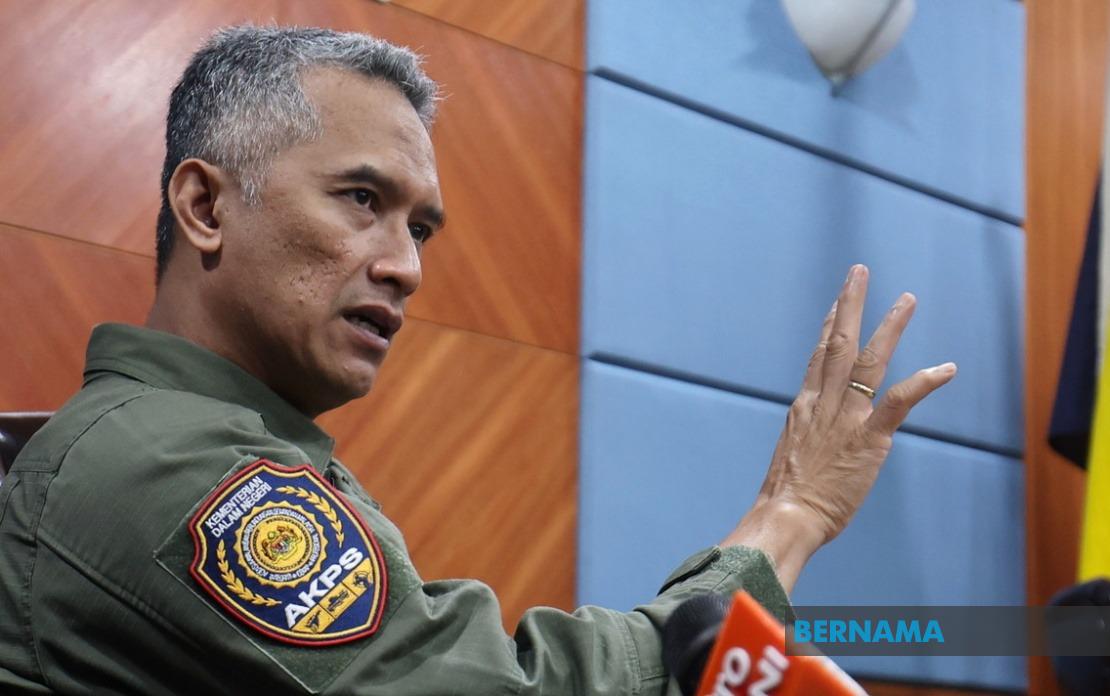
Facing the prospect of heightened cross-border movement ahead of Johor's 16th state election on Saturday, the Malaysian Border Control and Protection Agency is gearing up for one of its busiest operational periods this year. The agency will operate at full capacity across the two primary land checkpoints connecting Malaysia and Singapore, with dedicated attention to facilitate the return journey of thousands of voters residing or working across the causeway. Datuk Seri Mohd Shuhaily Mohd Zain, the agency's director-general, outlined the comprehensive measures being implemented to prevent bottlenecks during what officials expect to be a period of elevated traveller volumes.
The strategic preparations began Friday and will extend through polling day Saturday, with intensity peaking during traditional rush hours when cross-border commuters typically make their journeys. At the Sultan Iskandar Building, the busier of the two facilities, the agency will deploy 38 dedicated inbound counters dedicated to private vehicles, alongside 35 electronic gates designed to process passengers rapidly without manual intervention. An additional 20 counters—combining automated QR code systems and manual inspection—will operate throughout the checkpoint. Simultaneously, the Sultan Abu Bakar Complex will activate 24 lanes at its vehicle processing zone, with between 18 and 24 additional inspection points across its bus terminal, where the majority of cross-border workers typically transit.
The timing of these preparations reflects logistical lessons drawn from the 2022 Johor state election, when the agency observed how daily commuters modify their travel patterns around polling days. Although the agency anticipates only a modest increase above routine traffic volumes—since most Johoreans working in Singapore traverse the border daily regardless—the concentration of voters returning within a compressed window presents distinct challenges. Friday afternoon and Saturday morning emerge as the critical periods when contingencies may become necessary. The agency has prepared escalation protocols, including the activation of contra-flow lanes that would temporarily reverse directional restrictions to create additional processing capacity, particularly in the vehicle halls where congestion develops most rapidly.
Contingency arrangements extend beyond traffic management into physical infrastructure deployment. Should the passenger processing hall at the Sultan Iskandar Building exceed its standard capacity of approximately 1,500 people, the agency is prepared to segregate traveller categories by opening the premium Golden Service counter area, thereby converting infrastructure typically reserved for expedited commercial processing into temporary relief capacity. Historical data demonstrates that the Sultan Iskandar Building has accommodated significantly larger crowds during peak tourism periods, reaching approximately 5,500 simultaneous visitors while maintaining inspection throughput of up to 6,400 people hourly. This institutional knowledge informs the agency's confidence that current infrastructure can absorb the anticipated electoral surge without systematic breakdown.
Critical to smooth operations is inter-agency coordination both within Malaysia and across the border. The Road Transport Department and People's Volunteer Corps will position personnel at the Sultan Abu Bakar Complex specifically to manage the flow of public buses and private commercial transport, reducing passenger-induced congestion that typically compounds vehicle processing delays. Equally significant, the Malaysian agency has conducted coordination meetings with Singapore's Immigration and Checkpoints Authority at the Woodlands Checkpoint to ensure bilateral immigration clearance proceeds without diplomatic or operational friction. Such synchronisation prevents circumstances where one jurisdiction's bottleneck creates cascading delays in the other, a risk particularly acute when simultaneous surge events occur at both sides of a shared border.
The agency has also undertaken a technical precaution rarely visible to the public but essential to seamless operations: postponing all system upgrades, scheduled maintenance, and preventive hardware work on July 10 and 11 to eliminate any technical failures during the critical period. This decision reflects the centralised technological infrastructure underpinning modern border management, where unscheduled system degradation can instantly transform processing capacity from 6,400 people hourly to mere hundreds. The postponement underscores how contemporary border operations depend as heavily on digital systems as on physical infrastructure and personnel.
Currently, the Sultan Iskandar Building processes between 300,000 and 350,000 travellers daily across all categories, with Malaysians comprising 67 percent of the flow, Singaporeans 29.5 percent, and other foreign nationals the remainder. The election-driven surge will temporarily compress what is normally distributed across the entire day into specific hours, creating proportionally greater stress despite absolute numbers remaining manageable. The agency's preparation strategy acknowledges this temporal concentration rather than merely overall volume increases, an analytical sophistication that distinguishes this operation from generic capacity planning.
Looking beyond Saturday's election, the agency identifies this exercise as a planning reference for the Johor Bahru-Singapore Rapid Transit System Link currently under development. This rail connection, expected to commence operations in coming years, will fundamentally alter voter return patterns and cross-border commuting behaviour, potentially shifting preference from vehicle-based transit to mass rapid transit. The agency views Saturday's operations as a data-gathering opportunity, collecting real-time evidence about traveller behaviour patterns and bottleneck characteristics that will inform infrastructure and operational specifications for the rail link's integration into existing border management systems. This forward-looking dimension transforms immediate election logistics into broader strategic planning for the region's transportation future.
The 2026 election data itself carries implications beyond administrative interest. With 172 candidates competing for 56 state assembly seats across Johor, and voting concentrated on a single Saturday, the electoral framework concentrates decision-making intensity into approximately 14 hours of polling. For overseas-resident Malaysians, this window becomes even narrower when accounting for travel time, creating genuine logistical pressure to transit efficiently. The agency's preparations thus serve the democratic process directly, removing mechanical barriers that might otherwise suppress electoral participation among geographically distant citizens.
Public communication has accompanied operational preparations, with the agency actively publicising checkpoint status and congestion estimates through social media channels. This transparency serves dual purposes: enabling individual travellers to optimise their personal journey timing based on real-time information, thereby distributing demand more evenly across available hours, while simultaneously establishing public expectations about potential delays and the agency's responsive measures. Such communication succeeds when it shifts behaviour prospectively rather than merely documenting reactive responses to congestion after it develops.
The election operation demonstrates how routine administrative functions acquire heightened significance during democratic processes. Border management—typically perceived as a technical and security matter—becomes integral infrastructure supporting electoral participation when citizens must physically cross international boundaries to vote. The agency's mobilisation reflects recognition that democratic capacity depends not merely on political systems but on the physical and logistical substrate enabling citizens to exercise rights. For Malaysia's federal context, where multiple concurrent electoral cycles might eventually strain resources, Saturday's operation provides benchmarking data on cross-border voter surge management and the feasibility of accommodating similar events as electoral cycles proliferate.

