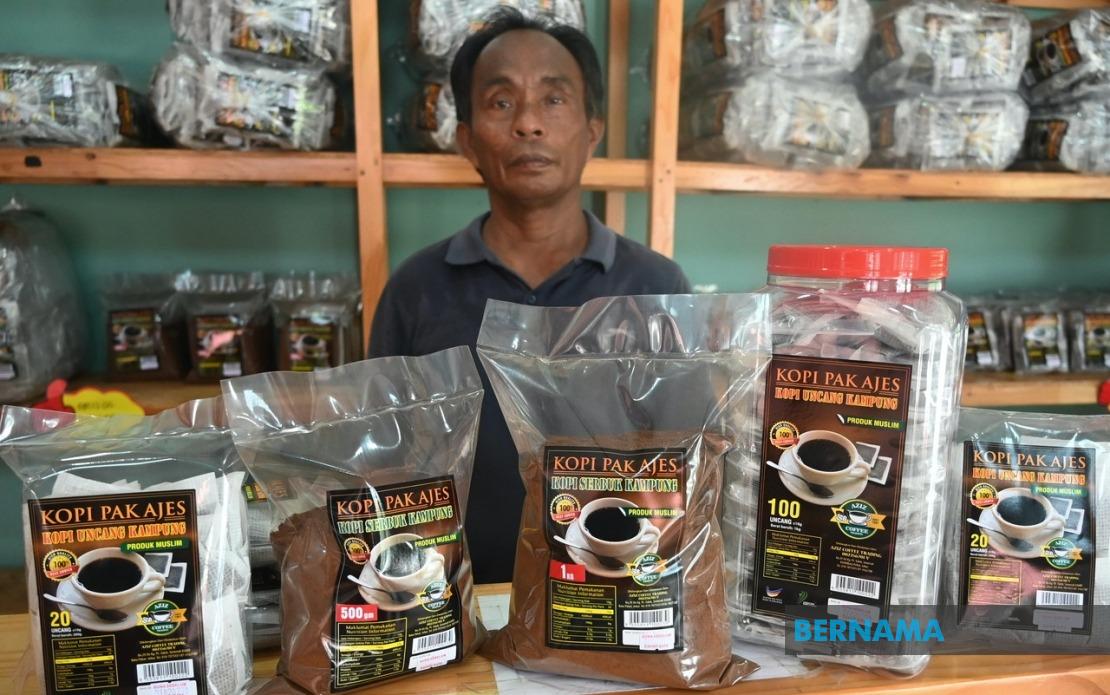
The energy surrounding Johor's 16th state election has created an unexpected economic ripple effect for small businesses, nowhere more evident than in Kampung Parit Sidek, Semerah, where Aziz Mohd—known throughout the district as Pak Ajes—finds his three-decade-old coffee enterprise operating at full throttle. With 172 candidates competing for 56 state seats and polling day imminent, the constant movement of campaign machinery and election workers has transformed what was once a steady regional trade into a lucrative seasonal windfall for the coffee producer.
At 65 years old, Pak Ajes has witnessed the evolution of his modest enterprise from a hobby into a serious commercial operation, yet nothing quite prepared him for the election-season surge in orders. His company, Aziz Coffee Trading, normally supplies a steady clientele of coffee shops across Muar and Batu Pahat, but the influx of campaign-related demand from constituencies including Semerah, Sungai Balang, and Bukit Naning has necessitated radical operational adjustments. The scale of this uptick is profound enough that he and his son Muhammad Fitri have had to establish new supply chains, reaching as far as Rengit and Kluang to source adequate coffee beans to maintain production schedules.
The current production capacity would have seemed unimaginable when Pak Ajes first ventured into coffee processing in 1991. He had identified an abundance of coffee beans in neighbouring villages and initially processed them for personal consumption and to support local beverage vendors. Before discovering his coffee niche, he pursued quail farming for egg production and mushroom cultivation, both of which he sold to wholesalers and wet market traders. The transition to coffee came gradually, starting with approximately RM200 in capital accumulated from his earlier agricultural pursuits, which he invested into small-scale coffee powder packaging beginning with 100-gram quantities sold on demand.
Today, the operation has expanded dramatically. Aziz Coffee Trading now manufactures over five tonnes of coffee powder monthly, a figure that underscores the professional scale the business has achieved. Each packet of coffee requires meticulous handling at every production stage. The process begins with separating coffee beans from stems and husks, progresses through approximately 15 days of sun-drying, and continues through roasting, grinding, and careful packaging. Pak Ajes emphasises that the final packaging stage demands particular attention, as the fine powder readily spills and deteriorates if exposed to air for extended periods, causing it to harden and clump—a quality degradation that would damage both product integrity and brand reputation.
Despite the technical demands and physical labour involved, Pak Ajes approached the election season opportunity with strategic foresight. Campaign organisers from various candidates' teams contacted him in advance, enabling him to prepare supply chains and production schedules accordingly. This collaborative relationship reflects how ground-level political activity intersects with local commerce, creating mutual benefit. The candidate teams gain reliable, affordable beverage supplies, while Pak Ajes captures otherwise unavailable revenue during a compressed seasonal window. He describes the arrangement as a fortunate convergence, acknowledging that such concentrated demand opportunities arise infrequently in his line of work.
The business landscape shifted further when Pak Ajes and his son Muhammad Fitri opened Kupi Nang Ajes Cafe in 2022, positioning it directly in front of their residential compound in Semerah. The café serves as both retail outlet and brand ambassador, offering an accessible menu including Americano and latte at deliberately modest pricing. This diversification represents a strategic pivot, transforming the wholesale coffee powder operation into a more integrated supply chain that captures consumer spending across different market segments. Election season activity has likely boosted foot traffic at the café as well, creating compound benefits beyond factory sales.
Looking beyond the immediate election windfall, Pak Ajes and his son harbour expansion ambitions that reflect confidence in their market position and product quality. They envision opening a second café outlet in a high-traffic location, preferably Batu Pahat town or Muar, with ultimate aspirations extending to franchising operations across Malaysia. Such scaling would represent a remarkable trajectory for a business that began with subsistence-level capital and personal initiative. The ambition also signals the entrepreneurs' belief in the broader viability of their product and brand, not merely as a niche regional offering but as a nationally repeatable concept.
Government support has played an enabling role in this growth trajectory. The Department of Agriculture has contributed materially through equipment donations including a coffee grinder and automated bagging machine, alongside technical courses covering packaging standards and product labelling requirements. Such institutional support removes capital barriers that might otherwise constrain small-scale producers and demonstrates how agricultural policy mechanisms facilitate commercialisation of traditional products. For Pak Ajes, these interventions translated directly into production capability and professional presentation, factors essential for competing in formal retail environments beyond traditional wet markets.
The broader narrative surrounding Pak Ajes captures elements relevant to Malaysian economic development discussions. Small and medium enterprises frequently constitute the backbone of local employment and economic activity, yet they often operate with limited visibility in national policy conversations that tend to focus on larger corporate entities and manufacturing sectors. Election cycles inadvertently illuminate these micro-economic realities, revealing how political processes generate employment and commercial opportunities at community level. The temporary surge in demand during campaign season, while limited in duration, provides working capital and market validation that can fund subsequent expansion phases.
The timing of this election windfall also illustrates seasonal patterns affecting small-scale food and beverage producers across Malaysia. Unlike year-round businesses with stable demand curves, enterprises like Aziz Coffee Trading experience pronounced fluctuations tied to tourism patterns, public holidays, and major events. The ability to anticipate and prepare for such cycles—as Pak Ajes did through advance contact with campaign organisers—separates successful operators from those who struggle with supply constraints and cash flow volatility. This adaptive capacity, refined through decades of operation, exemplifies the practical business acumen that characterises surviving small enterprises.
As polling day approaches in Johor, candidates and their teams will continue visiting constituencies throughout the state, maintaining the demand surge that has benefited Pak Ajes and countless other small traders. When the election concludes and campaign machinery winds down, the business will return to baseline operations. However, the profits accumulated during this concentrated period provide capital for implementing those expansion plans he and Muhammad Fitri have outlined. The coffee entrepreneur's experience during the 16th Johor state election ultimately demonstrates how localised political activity ripples through community commerce, creating opportunities for those positioned to capitalise on them.

