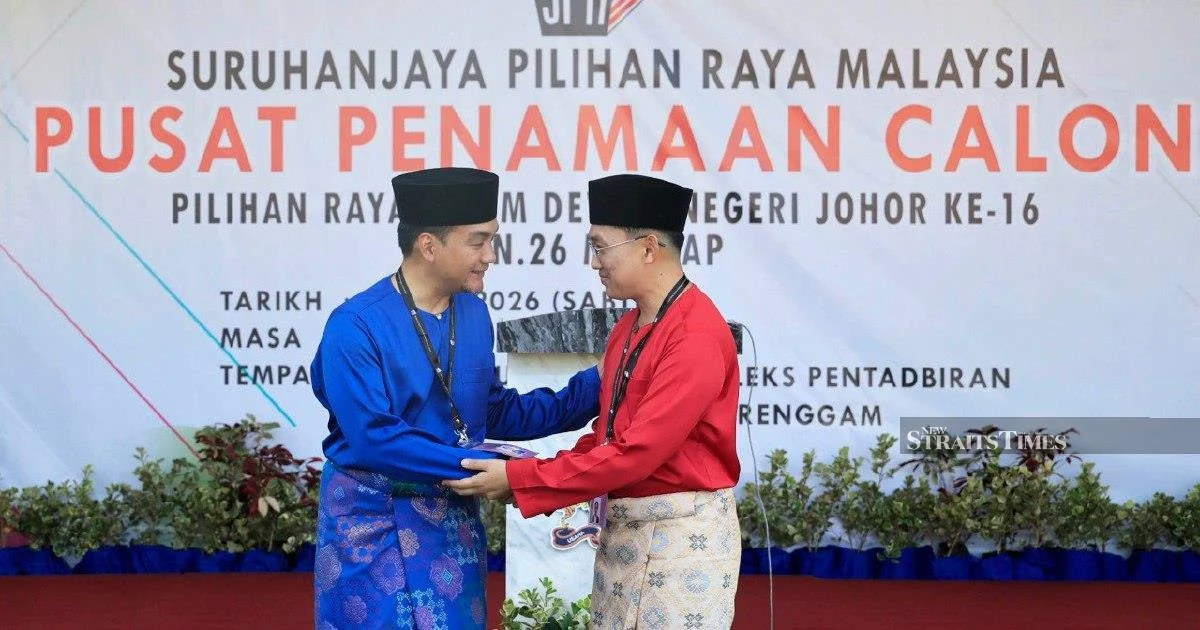
Datuk Onn Hafiz Ghazi, serving as Johor's caretaker Menteri Besar, has signalled his wariness about the forthcoming state election scheduled for July 11, refusing to assume his path to a second term will be smooth. Speaking in Simpang Renggam, the long-serving incumbent stressed that the political landscape remains unpredictable, a message that underscores the competitive nature of the contest he faces in the Machap constituency.
The Menteri Besar's cautious stance reflects broader uncertainties across Malaysian politics at present. State elections in recent years have demonstrated that voter sentiment can shift dramatically, and incumbency offers no guaranteed protection—a lesson many officials across the country have absorbed. Onn Hafiz's comment suggests awareness that Johor's electorate, while traditionally responsive to the ruling coalition, cannot be taken for granted in what promises to be a closely watched ballot.
Machap, the constituency from which Onn Hafiz is contesting, has long been a significant political battleground within Johor. The seat carries symbolic importance not merely because of its geographic position but because it reflects the broader dynamics within the state. The Menteri Besar's willingness to acknowledge uncertainty rather than project confidence is noteworthy, as it contrasts with some political figures who maintain absolute certainty in their electoral prospects. This approach may signal genuine concern about opposition momentum or recognition that complacency could prove costly.
Johor has experienced considerable political volatility over the past decade, with multiple shifts in state governance and realignments among political coalitions. The state's electorate has demonstrated sophistication in evaluating local governance performance against larger national political narratives. This voting pattern complicates predictions and makes Onn Hafiz's caution seem well-founded. Voters in urban and semi-urban areas of Johor, in particular, have shown willingness to shift their support based on economic performance and service delivery at the state level.
The July 11 election will occur against a backdrop of broader national political developments that inevitably influence state-level contests. The interplay between federal and state politics remains a crucial factor in electoral outcomes, and Johor's significance as one of Malaysia's most economically important states means that national political dynamics reverberate strongly within its borders. Onn Hafiz's reminder that "anything can happen" likely reflects understanding of these complex currents.
Opposition parties have been actively preparing for the Johor election, recognizing the opportunity to make gains in a state where the ruling coalition has historically maintained dominance. The competitive environment across multiple constituencies means that even well-established incumbents cannot assume automatic victories. The message from the caretaker Menteri Besar effectively acknowledges this reality, positioning him as someone taking the contest seriously rather than approaching it with complacency.
For Malaysian observers and regional analysts, Johor's election carries significance beyond the state itself. As one of the country's most developed and populous states, voting patterns there often indicate broader shifts in Malaysian electoral preferences. A strong performance by any particular coalition or party in Johor can influence momentum heading into future general elections and affect the political calculations of national leaders. This context makes Onn Hafiz's cautionary remarks part of a larger conversation about where Malaysian politics may be heading.
The caretaker period preceding elections typically involves intensive campaigning and ground-level engagement with voters. Onn Hafiz's involvement in Simpang Renggam suggests active campaigning across different parts of Johor, a strategy essential for maintaining momentum and reassessing voter sentiment. Such grassroots engagement often reveals nuances that polling data or broader political analysis might miss, potentially explaining why the Menteri Besar seems alert to electoral uncertainties.
Economic conditions in Johor—ranging from employment levels to cost of living pressures—will likely influence voting behaviour significantly. The state's industrial base, agriculture sector, and increasingly important technology and manufacturing industries all contribute to economic conditions that voters evaluate when making electoral choices. Governance performance on these fronts may prove decisive in various constituencies, adding another layer of unpredictability that explains Onn Hafiz's circumspection.
The Menteri Besar's caution may also reflect internal coalition dynamics within Johor politics. The structures of political alliances at state level can influence candidate selection, campaign resource allocation, and ultimately electoral performance. Internal tensions or shifting priorities among coalition partners sometimes create vulnerabilities that opposition parties exploit. Recognising these complexities, experienced politicians like Onn Hafiz understand that maintaining focus and avoiding assumptions about victory remains essential.
As Johor heads toward July 11, the political environment will likely intensify further. Campaign narratives will sharpen, and both ruling and opposition parties will deploy their resources strategically. Onn Hafiz's message serves as a sober reminder that electoral contests, even those involving experienced incumbents in traditionally favourable circumstances, remain fundamentally unpredictable. His willingness to acknowledge this reality may ultimately reflect the kind of attentiveness to voter concerns that proves most valuable during campaign periods.

