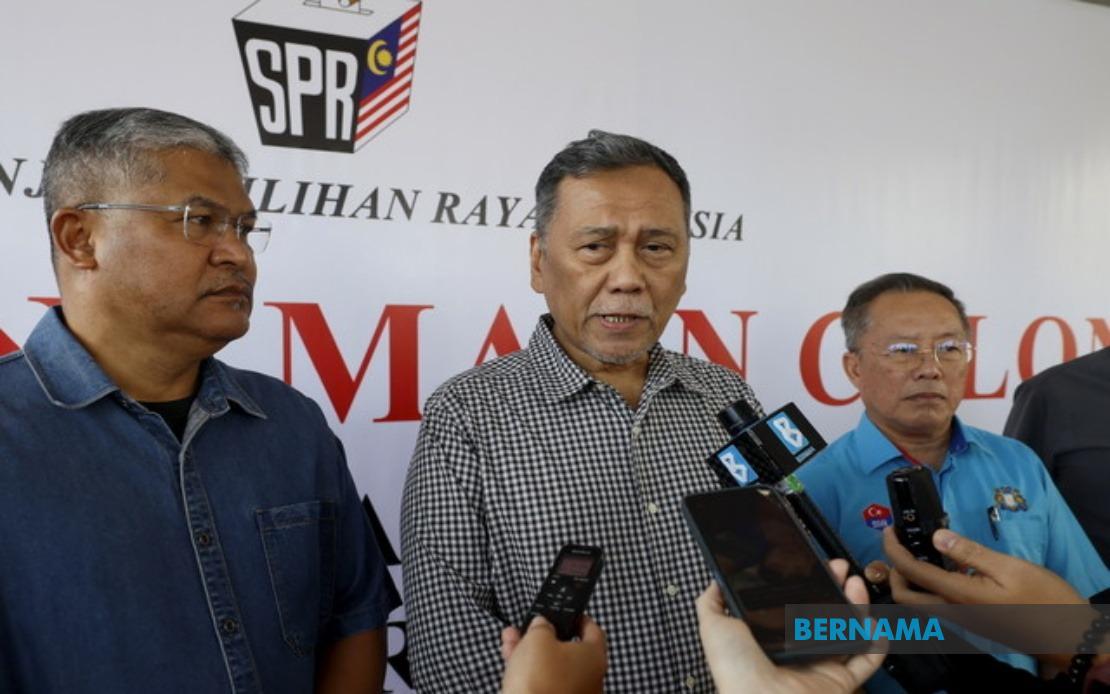
The push towards Malaysia's Johor state election is entering its decisive phase as the Election Commission revealed a mixed picture of candidate interest hours before the nomination deadline. With only 133 out of 593 prospective candidates who purchased nomination forms having paid the required deposits, Election Commission chairman Datuk Seri Ramlan Harun urged remaining hopefuls to complete their registration before the window closes tomorrow morning. The relatively low conversion rate from form purchases to confirmed candidacies suggests some uncertainty among potential contestants, though officials remain optimistic that the final tally will climb before the cutoff.
Ramlan's comments came during an inspection of preparations at the Maharani constituency nomination centre in Muar, where the commission has spent considerable effort ensuring all 56 state nomination centres are fully operational. The EC conducted two consecutive days of trial runs to validate procedures and iron out logistical challenges before the formal process begins. This investment in preparation reflects the commission's determination to run a smooth operation, particularly important given the politically sensitive nature of state elections and the need to maintain public confidence in the electoral process across a state that has been a historical battleground between competing coalitions.
The nomination figures reveal something interesting about candidate confidence levels across different political formations. While Pakatan Harapan committed early to fielding candidates in all 56 seats—with PKR contributing 20, Amanah 19, and DAP 17—the lower-than-expected deposit payments suggest either logistical delays or genuine hesitation among some potential candidates regarding their prospects. Similarly, Barisan Nasional's decision to contest every seat with 36 UMNO candidates, 16 MCA candidates, and four MIC representatives demonstrates traditional confidence, though the actual nomination numbers may reveal whether all parties have managed to mobilise their machinery effectively.
Perikatan Nasional's configuration presents a more fragmented picture. PAS will contest 11 seats while Bersatu contests 16, the Malaysian Indian People's Party five, and Pejuang just one. This distribution, while strategically calculated to avoid multi-cornered clashes, indicates that the PN coalition remains geographically concentrated rather than mounting a comprehensive state-wide challenge. The Malaysian United Democratic Alliance will contest four seats, and Parti Sosialis Malaysia one, while Parti Bersama Malaysia makes its state electoral debut with 15 seats contested—a significant opening move for a party seeking to establish itself as a serious contender beyond fringe status.
Security considerations loom large as nomination day approaches, with authorities implementing carefully designed measures to prevent confrontations between rival camps. Returning officer Zainal Eran outlined a compartmentalised approach whereby only the candidate, proposer, and one designated supporter will be permitted inside nomination centres, while other party supporters occupy designated field areas separated by physical barriers. This segregation strategy acknowledges the high emotions surrounding state elections and the potential for incidents when multiple political camps converge at single locations. The emphasis on orderly procedure reflects lessons learned from previous electoral exercises and a determination to prevent the kind of street-level disruptions that could undermine confidence in the democratic process.
The timeline now becomes compressed. Having dissolved the State Legislative Assembly on June 1, the Election Commission has set tomorrow as nomination day, with early voting scheduled for July 7 and the main polling day for July 11. This accelerated calendar leaves candidates minimal time for campaign preparation once nominations close, compressing what is typically a more leisurely campaign period. For voters in Johor, this compressed schedule means elections will dominate the political landscape for barely two weeks, an intensity that could work either for or against incumbents depending on the prevailing political mood and how effectively each coalition mobilises its support base during that narrow window.
For Malaysian observers watching the broader political landscape, the Johor election carries significance beyond the state itself. As the country's second-largest state economy and a critical power base for both major coalitions, results will provide important signals about shifting voter sentiment heading into potential federal-level contests. Johor has historically been a Barisan stronghold, but the emergence of credible opposition challenges and coalition realignments mean no outcome can be assumed. The relatively modest deposit payment numbers suggest campaigns will be genuinely competitive across multiple constituencies rather than a foregone conclusion favouring any single bloc.
The Election Commission's focus on procedural perfection and security reflects broader institutional concerns about maintaining electoral integrity amid Malaysia's fractious political environment. Regular trial runs, designated supporter zones, and careful credential checks all serve to prevent administrative chaos or deliberate disruptions that could delegitimise results. These measures are particularly important in a state election where state-level results can cascade into broader political instability if perceived as compromised or unfair.
As candidates rush to complete their deposits before tomorrow's deadline, the eventual candidate count will provide the first concrete indication of competitive intensity across Johor's 56 seats. The gap between forms sold and deposits paid, once closed, will reveal which constituencies face multi-cornered contests and where clear two-way battles will dominate campaign rhetoric. This distribution of candidacies will significantly influence campaign dynamics and voter choice, potentially determining which seats become genuine contests and which favour entrenched incumbents or previously dominant parties fighting to retain their electoral base.

