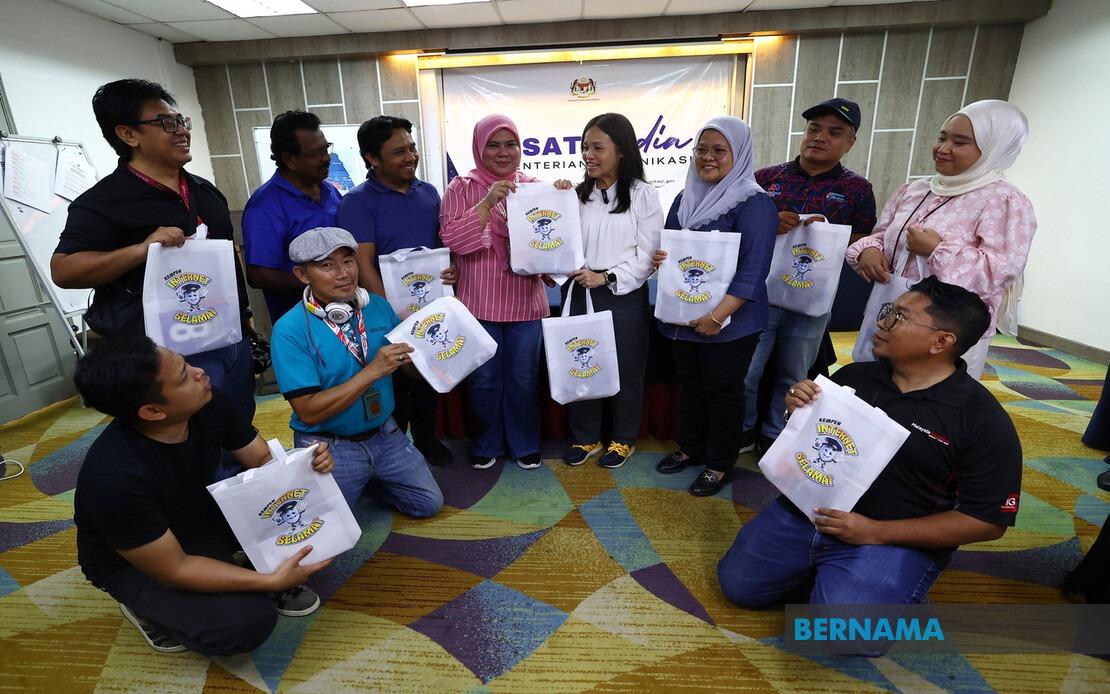
Ahead of Johor's 16th state election scheduled for July 11, the Malaysian Communications Ministry has unveiled a comprehensive media infrastructure initiative designed to facilitate seamless election coverage across the state. Working alongside the Information Department, the ministry has deployed two primary media centres and a network of 100 National Information Dissemination Centres, or NADI, strategically positioned throughout Johor to serve journalists, broadcasters, and content creators during the campaign period. This substantial investment in communication infrastructure reflects the government's commitment to ensuring transparent and efficient reporting during a significant political event that will shape the state's governance for years to come.
Deputy Communications Minister Teo Nie Ching outlined the operational framework for these facilities during a site visit to the Hotel Seri Malaysia in Johor Bahru, one of the two flagship media centres. The primary hubs—the other located at NADI Kampung Sawah Awok in Muar—will maintain extended hours from 9 am to 9 pm daily beginning June 26 and continuing through polling day. This extended operational window ensures media personnel have uninterrupted access to facilities regardless of when news breaks or develops during the campaign's critical phases. The Muar location strategically covers the northern portions of the state, while the Johor Bahru centre serves the southern and central constituencies, providing geographic balance to the support network.
Connectivity remains paramount in modern election coverage, and the ministry has prioritised robust digital infrastructure. All media centres guarantee minimum internet speeds of 100 Mbps, a threshold that eliminates bandwidth constraints for transmitting video content, high-resolution photographs, and real-time social media updates. Teo emphasised that this velocity eliminates the technical frustrations that historically plagued election reporting, particularly for broadcasters managing live feeds and multimedia journalists filing time-sensitive stories. The substantial investment in fibre-optic connectivity reflects recognition that contemporary news dissemination demands instantaneous transmission capabilities, especially given the proliferation of digital-native news platforms across Malaysia's media landscape.
Beyond internet provisioning, the facilities offer comprehensive technological resources tailored to journalistic operations. Each centre features desktop computers and laptops configured for content editing, news management systems, and communications platforms. Photocopiers, printers, and document scanning equipment accommodate reporters requiring hard-copy materials or needing to produce printed credentials and passes. These supplementary provisions acknowledge the hybrid nature of modern newsrooms, where teams still require physical infrastructure alongside digital tools. The thoughtful inclusion of office amenities demonstrates understanding of the logistical challenges journalists face during protracted election coverage, particularly when working extended shifts.
The Malaysian Communications and Multimedia Commission has assumed responsibility for monitoring telecommunications performance throughout the campaign period. Rather than relying solely on reactive complaint mechanisms, the MCMC will proactively engage with telecommunications service providers to maintain consistent, high-quality connectivity across Johor. This collaborative approach incentivises providers to invest in temporary capacity upgrades and network optimisation specifically for election-related demand surges. Teo highlighted that sustained coordination prevents the infrastructure degradation that sometimes occurs when millions of Malaysians simultaneously access news and election information through their devices.
Recognising that signal strength varies geographically, the MCMC has developed the MCMC Nexus application, a crowd-sourced monitoring tool enabling citizens to report real-time signal quality at their locations. This participatory approach converts the general population into volunteer data collectors, providing granular geographic intelligence about network performance. Users can identify coverage dead zones or weak signal areas without surrendering personal information—the application captures only technical metadata including geographic coordinates and signal strength measurements. This privacy-respecting design encourages widespread participation by assuring contributors that telecommunications companies cannot access identifying details, only aggregated technical data enabling network improvement planning.
Election campaigns frequently generate heated rhetoric, and Malaysia's multicultural composition demands vigilance against divisive narratives. Teo reminded political parties and their supporters that healthy campaigning requires avoiding provocative content touching on race, religion, and royalty—the sensitive 3R categories that historically have ignited communal tension. The MCMC will collaborate with law enforcement to identify and remove social media content exceeding acceptable provocation thresholds. This dual approach—preventive messaging combined with enforcement mechanisms—aims to maintain a campaign environment conducive to democratic participation without inciting intercommunal friction. For Malaysian readers, this effort carries particular weight given the nation's history of communal harmony challenges and the electoral cycle's potential to amplify divisive rhetoric.
Misinformation constitutes another significant electoral challenge, particularly through social media where falsehoods propagate faster than corrections. The Malaysian Media Council has established a dedicated fact-checking platform supporting journalists and citizens navigating the information landscape. Teo urged Malaysians to cultivate information hygiene practices by verifying claims through authoritative sources before amplifying them through personal networks. This emphasis on individual responsibility complements institutional fact-checking efforts, creating overlapping verification mechanisms. For Southeast Asian readers, this regional initiative demonstrates how Malaysian institutions are adapting democratic processes to accommodate digital communication realities, a model potentially instructive for neighbouring countries managing their own election cycles.
The logistics underlying election coverage extend beyond what observers typically notice, yet they fundamentally enable the transparent reporting essential to democratic accountability. By provisioning media centres with reliable connectivity, computing resources, and monitoring systems, the government creates conditions for journalists to document the campaign comprehensively and fairly. The two-week period from June 26 to July 11 represents an intensive news cycle during which media demand for infrastructure support peaks sharply. This proactive investment prevents bottlenecks that could compromise coverage quality or create competitive disadvantages favouring organisations with superior resources. For Malaysian journalists, these preparations signal official recognition that their work requires supportive institutional frameworks.
Early voting commencing July 7 provides journalists additional reporting opportunities preceding election day. Media centres will remain fully operational through this preliminary voting period, enabling coverage of participation patterns and any irregularities. The concentrated operational framework—specific dates and hours—allows the ministry to concentrate technical support staff, security, and administrative resources efficiently. This focused approach differs from permanent facilities requiring year-round maintenance; instead, the temporary infrastructure is deployed, optimised for the election period, and subsequently demobilised. For Malaysian readers, this cyclical model demonstrates pragmatic resource management balancing democratic participation support with fiscal efficiency.
The comprehensive preparation visible in these arrangements reflects lessons learned from previous elections and technological advances in digital communications. Media coverage quality directly influences public understanding of political platforms, candidate qualifications, and governance implications. By removing connectivity obstacles and providing functional workspace, the government indirectly supports informed electoral participation. When journalists can transmit stories efficiently and thoroughly investigate political developments, voters gain the information foundation necessary for thoughtful candidate selection. This symbiotic relationship between infrastructure support and democratic quality explains why communications ministries across Southeast Asia increasingly prioritise election-cycle connectivity initiatives.

