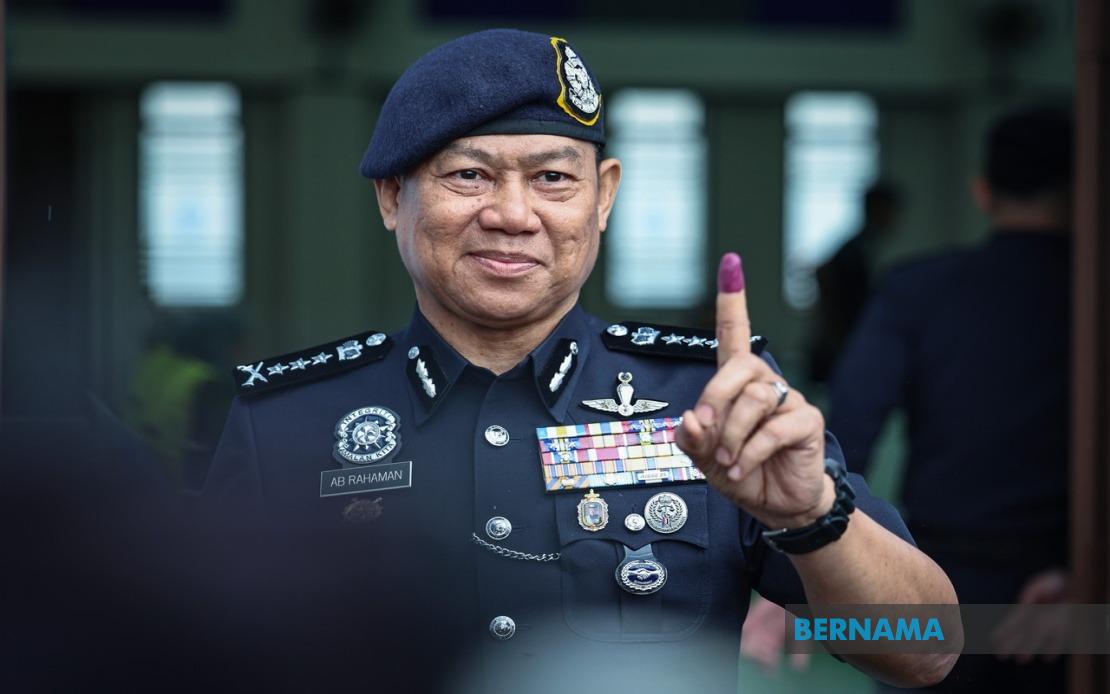
The 16th Johor state election entered its penultimate phase on July 7 as police personnel and armed forces members exercised their right to vote ahead of the general poll, demonstrating steady participation in the advance voting process. By 10.30 am, 4,257 law enforcement officers representing 36.3 percent of eligible early voters had submitted their ballots across the state, signalling healthy engagement despite the election campaign's intensity.
The early voting mechanism, which allows security personnel and military staff to cast ballots before the official polling day, reflects Malaysia's efforts to ensure that frontline uniformed services can participate in democratic processes without compromising operational readiness. For the Johor election, this arrangement proved particularly significant given the state's extensive police and military presence, necessitating careful coordination to maintain security operations while facilitating electoral participation.
Johor police chief Datuk Ab Rahaman Arsad briefed the media following his own ballot submission at the Johor Police Contingent Headquarters in Johor Bahru, underscoring the administration's commitment to transparency throughout the electoral exercise. He emphasised that the voting experience had unfolded without disruption at any of the 53 dedicated early voting centres distributed across Johor, with poll workers and officials maintaining proper procedures and security protocols.
The absence of reported incidents across these centres reflects meticulous planning and coordination among election authorities, law enforcement, and the Election Commission. In a closely contested state election environment, maintaining order and public confidence in the integrity of the voting process remains paramount, particularly during early voting phases when media scrutiny and public awareness typically intensify.
The police leadership acknowledged that the complete picture of voter turnout would only emerge after all designated polling centres concluded operations later that day. This cautious approach to preliminary figures reflects standard electoral practice, wherein officials refrain from drawing conclusions until comprehensive data becomes available, avoiding premature interpretations that might generate unnecessary speculation.
Within the broader campaign period leading to the election, police reported that their investigative focus had centred primarily on acts of vandalism targeting electoral materials. Party flags, political billboards, and campaign signage had become subjects of vandal attention, prompting authorities to document and investigate such incidents as violations of electoral regulations. These materials, which proliferate during campaign seasons, occasionally become flashpoints for competitive political behaviour that crosses into illegality.
A more contentious matter surfaced when law enforcement received numerous complaints regarding claims made by former Johor State Assembly Speaker Datuk Dr Mohd Puad Zarkashi concerning alleged palace interference in the dissolution of the state legislative assembly. Nationally, police had registered 153 reports concerning his statements as of the reporting date, though Johor-specific investigations remained ongoing. This unprecedented volume of reports highlighted the sensitivity surrounding assertions that implicate palace involvement in legislative matters, an issue that touches upon constitutional boundaries and institutional relationships.
The 16th Johor state election featured competitive contests across all available seats, with 172 candidates pursuing positions in the 56-seat state assembly. The breadth of candidate participation indicated that multiple political parties and independent contenders recognised the significance of this election cycle, each mounting campaigns to mobilise their respective support bases throughout the state.
The registered electoral roll encompassed more than 2.7 million voters across Johor, a substantial number reflecting the state's demographic weight within Malaysia's federal structure. Johor's political complexion has historically influenced broader national dynamics, given its size, economic importance, and historical role in Malaysian politics. The state election therefore carried implications extending beyond state-level governance to broader political calculations affecting federal-level formations and parliamentary alignments.
The 64 early voting centres that opened simultaneously at 8 am accommodated 20,607 registered early voters during the advance polling phase. These centres operated on staggered closure schedules between noon and 6 pm, depending on geographical location and registered voter numbers at specific centres, allowing authorities to manage flows efficiently while ensuring adequate time for all eligible early voters to complete the process.
The Saturday polling date marked the culmination of an extended campaign period during which political parties, candidates, and media commentary had intensified scrutiny of policy positions, electoral pledges, and leadership capabilities. For Malaysian voters, Johor elections typically provide important indicators of voter sentiment and political momentum, often influencing calculations regarding subsequent national elections or federal political developments.
The smooth administration of early voting, absent significant disruptions or credibility challenges, provided election authorities with confidence in their operational capacity to manage the larger main polling day. Election Commission personnel and their security force counterparts had successfully orchestrated the preliminary phase, establishing conditions for the Saturday general vote to proceed with similar professionalism and order.

