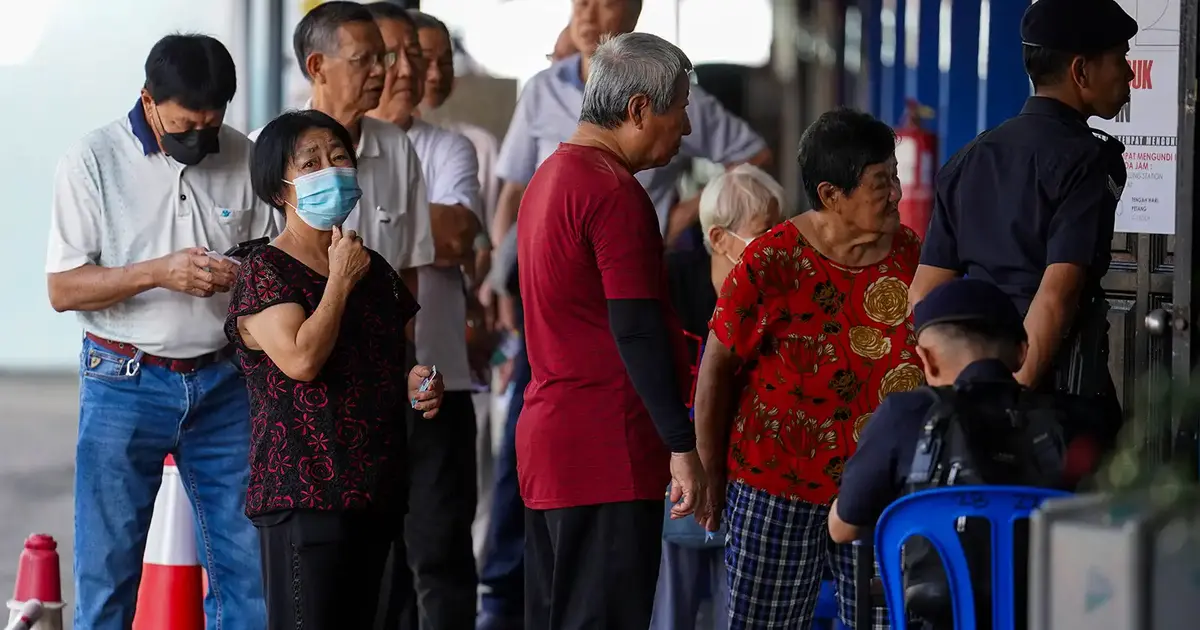
Former Bangi Member of Parliament Ong Teng Cheong has offered a distinctly different interpretation of Pakatan Harapan's performance among Chinese voters in the recent Johor election, suggesting that the coalition's losses stem predominantly from voter disengagement rather than wholesale switching of support to Barisan Nasional. Speaking to political observers and media commentators seeking to understand the outcome, Ong contended that only a modest proportion of Chinese voters actually shifted their allegiance away from the opposition alliance during the contest.
This assessment carries particular weight in Malaysian political discourse, as Chinese voters have historically constituted a significant and influential bloc within Johor's electorate. Their voting patterns have often served as a bellwether for broader shifts in peninsular politics, making any substantial movement among this demographic noteworthy for national political strategists across all major coalitions. The former MP's interpretation directly challenges alternative narratives that attribute PH's setback to active Chinese voter rejection of the coalition in favour of BN support.
The concept of differential turnout as an explanation for electoral outcomes has become increasingly relevant in Malaysian politics. Rather than assuming that reduced support necessarily reflects changing voter preferences, analysts must distinguish between voters who abandon a party and voters who simply choose not to participate in the electoral process. This distinction matters enormously for understanding the true nature of political shifts and for formulating appropriate responses from opposition parties seeking to rebuild their support base.
For Pakatan Harapan, the turnout argument carries somewhat more optimistic implications than a narrative of voter defection would suggest. If Chinese voters merely abstained rather than actively supporting opponents, this implies that engagement and mobilisation strategies might succeed in bringing these voters back to the polling stations in future elections. Such voters represent a latent reserve of potential support that could be activated through effective ground campaigns, policy communication, and renewed party visibility. The challenge becomes one of reinvigorating enthusiasm rather than completely reversing settled partisan preferences.
Johor has emerged as a crucial battleground in recent Malaysian politics, particularly following the 2022 state election where Barisan Nasional reasserted significant dominance after a period of opposition gains. Chinese voters in the state occupy a strategic position within constituencies that often decide electoral outcomes at both state and parliamentary levels. Understanding their behaviour patterns thus directly impacts broader calculations about coalition viability and the balance of power in peninsular politics.
The broader context of Malaysia's Chinese-voting demographics reveals considerable complexity that extends well beyond simple models of support shifting. Urban Chinese voters in particular have demonstrated a capacity for discerning, issue-focused voting across recent electoral cycles, occasionally rewarding and punishing both coalition and opposition performers based on specific grievances or policy positions. A period of low turnout among this group might reflect disappointment with available options, concerns about the state of political discourse, or preoccupation with economic challenges rather than straightforward rejection of PH as a political force.
Ong's commentary also implicitly addresses questions about the effectiveness of opposition mobilisation efforts in Johor. Turnout deficits among sympathetic voter populations often signal problems with campaign organisation, messaging clarity, or perceived stakes of the election among the base. For PH operatives analysing the results, this diagnosis points toward specific operational improvements rather than fundamental strategic rethinking about core support demographics. Better voter contact systems, clearer articulation of policy differences with BN, and heightened emphasis on the significance of participation might all address turnout-based challenges.
The structural position of Johor within national politics amplifies the significance of this electoral segment. As Malaysia's second-largest state by population and a traditional BN stronghold that PH has periodically threatened to penetrate, Johor's Chinese voters sit at the intersection of multiple political calculations. National party leadership from both coalitions monitors performance here closely when assessing the viability of their broader peninsular strategies. A diagnosis emphasising turnout rather than defection suggests different conclusions about whether the coalition landscape has fundamentally shifted.
The political implications for Malaysian Chinese communities themselves merit consideration as well. Declining turnout among any ethnic group's voters raises questions about political representation and party responsiveness to community concerns. If significant numbers of Chinese voters feel sufficiently disengaged to skip elections, this might reflect inadequate attention to their specific policy priorities, insufficient visibility of Chinese candidates in party structures, or broader dissatisfaction with how political parties address matters of community concern. Such patterns potentially create openings for rival political movements to cultivate these alienated voters.
Moving forward, Ong's assessment suggests that the principal task facing Pakatan Harapan in Johor involves restoring confidence and participation among Chinese voters rather than fundamentally reconstructing its appeal. This diagnosis implies that the underlying coalition support base remains substantially intact, though currently dormant or disheartened. Successful reengagement would require demonstrable attention to Chinese voter concerns, visible presence in Chinese-majority communities, and credible messaging about policy commitments. The interpretation frames PH's challenge as one of activation rather than wholesale reinvention.
For the broader Malaysian political landscape, this analysis contributes to ongoing debates about the durability of electoral coalitions and the mechanisms through which support shifts occur. Whether PH's losses genuinely reflect voter apathy or represent something more fundamental will likely become clearer through subsequent electoral contests. The coming general election and any intervening state elections will provide crucial tests of whether Ong's interpretation holds validity or whether deeper realignment among Chinese voters has indeed taken place.

