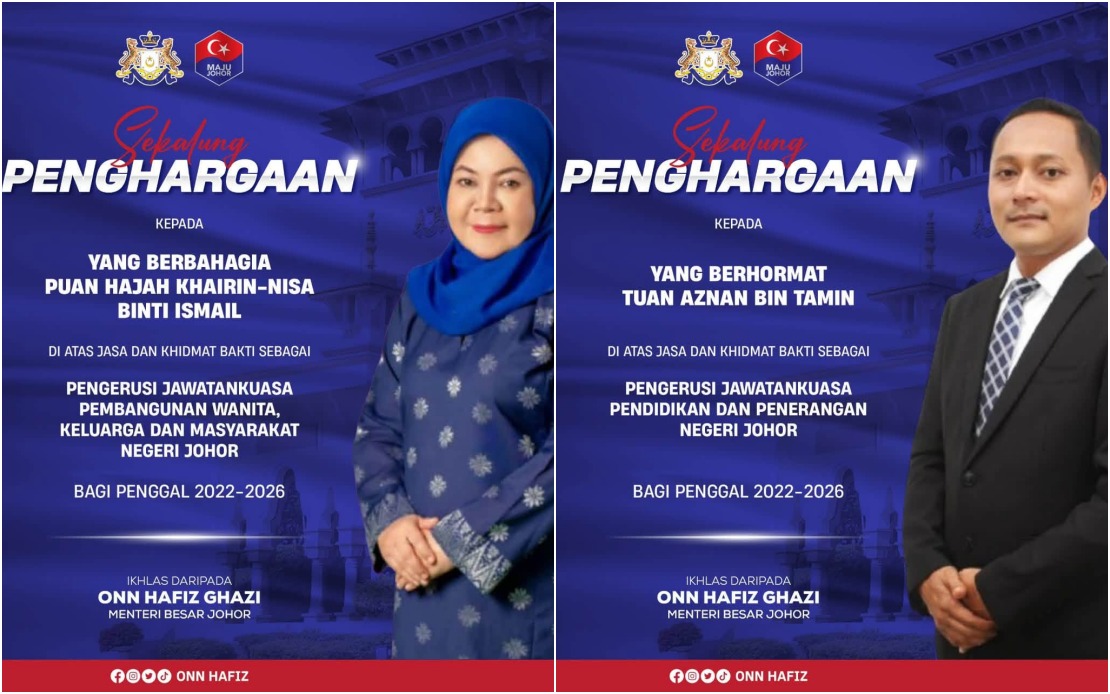
Johor's Menteri Besar Datuk Onn Hafiz Ghazi has framed the recent restructuring of the state executive council as an essential step in maintaining administrative momentum and refreshing the state's governance approach. Speaking in the aftermath of the cabinet reshuffle, which saw the appointment of new members alongside the retention of existing ones, Onn Hafiz sought to balance the political sensitivities inherent in such changes by emphasizing that the move represents continuity rather than rejection of past efforts.
The Johor leader made clear that removing four exco members from their positions did not constitute a dismissal of their value or accomplishments. Instead, he positioned the reshuffle within a broader narrative of managed succession and institutional renewal, arguing that such reorganisations are routine aspects of governance and fundamental to steering Johor toward greater prosperity. His measured approach reflects the political calculation required when restructuring a cabinet, particularly in a state like Johor where factional divisions within Umno and the broader ruling coalition remain a sensitive matter.
Onn Hafiz specifically acknowledged the departing members—Datuk Zahari Sarip, K. Raven Kumar, Aznan Tamin, and Khairin-Nisa Ismail—for their contributions across the 2022-2026 term. The public recognition of their sacrifices, time commitments, and intellectual contributions serves both a practical and symbolic purpose: it allows the Menteri Besar to manage the morale of affected party members while signalling to the broader electorate that governance transitions need not be acrimonious. This approach is particularly important in Malaysian state politics, where perceptions of fairness and due recognition can influence party cohesion and public confidence.
The Menteri Besar articulated a philosophy suggesting that executive responsibility extends beyond individual portfolio holders. By framing experience, wisdom, and service commitment as ongoing attributes that transcend specific positions, Onn Hafiz appeared to be suggesting that departing members could continue contributing to Johor's development through other channels, whether in the assembly or in party leadership. This messaging potentially softens the blow for those removed from the inner circle while reinforcing the notion that political careers in Malaysia need not be terminal simply because a particular appointment has ended.
According to the cabinet reshuffle framework, six assemblymen retained their existing portfolios whilst four new faces entered the executive council. This composition suggests a measured approach to renewal rather than wholesale replacement, indicating that the Menteri Besar sought to preserve institutional knowledge while injecting fresh perspectives. The swearing-in ceremony at Istana Bukit Serene before Tunku Mahkota Ismail, the Regent of Johor, lent ceremonial weight to the proceedings and underscored the constitutional and traditional dimensions of executive appointments in the state.
For Malaysian political observers, such reshuffles frequently signal internal power dynamics within ruling coalitions. In Johor, where Umno maintains significant influence but shares power within the state government structure, the composition of the exco and the identities of those elevated or sidelined can reflect shifting allegiances, generational transitions, or efforts to balance representation across party factions and ethnic communities. The appointment of four new members alongside six incumbents may indicate either consolidation of existing power structures or strategic expansion to accommodate emerging party figures.
The timing and presentation of this reshuffle also matter within the broader context of Malaysian politics. State-level administrative changes often presage or reflect national political shifts, particularly in economically significant states like Johor. How Onn Hafiz manages factional tensions and ensures that all components of the state's multiethnic coalition feel represented in executive positions can influence electoral calculations ahead of future state elections and impact the stability of the state government's majority in the assembly.
From a governance perspective, executive council reshuffles offer opportunities to realign responsibilities according to performance metrics, electoral considerations, or shifting policy priorities. By publicly crediting the previous team with achievements whilst simultaneously introducing new members, Onn Hafiz attempted to signal that the state government remains dynamic and responsive to evolving circumstances. This narrative is crucial for a state like Johor, which faces economic pressures, competition from neighbouring states, and the need to attract investment and talent.
The Menteri Besar's emphasis on collective effort and team achievement, rather than individual performance evaluation, reflects diplomatic language typical of Malaysian politics. Rather than explicitly criticizing the departing members or suggesting they had failed in their roles, Onn Hafiz opted to celebrate their participation in a shared endeavour and imply that the reshuffle is simply part of normal governance cycles. This approach minimizes public discord and allows former exco members to maintain their political standing within party structures, which is important for maintaining unity within the ruling coalition.
For Johor residents and businesses, the significance of this reshuffle lies in the continuity of policy implementation and the effectiveness of the new executive team in addressing state-level challenges. The retention of six members suggests that proven performers or those with strategic importance to the coalition will continue in their roles, whilst the introduction of four new faces may bring different expertise, demographic representation, or loyalty factors to the cabinet. The interaction between these two groups will largely determine whether the reshuffle enhances or impedes the state government's capacity to deliver on its development agenda.

