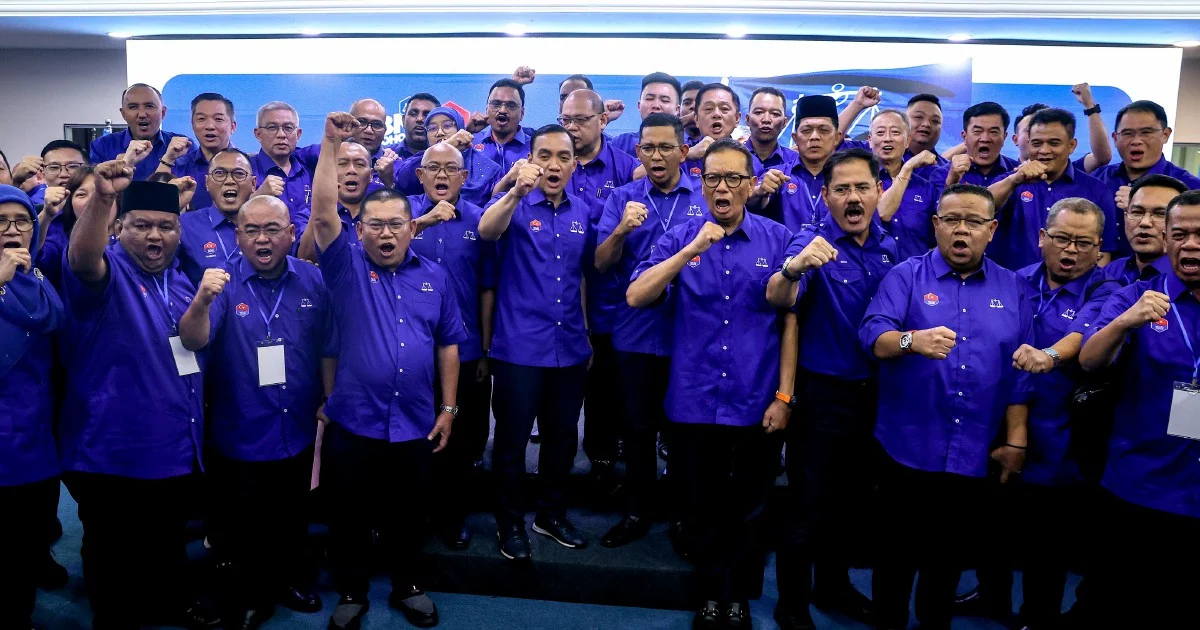
The possibility of a wider political coalition in Johor has effectively vanished with Barisan Nasional's formal announcement of its electoral candidates for the upcoming state elections. The revelation came during a press briefing in Johor Baru, where the coalition's leadership presented its full candidate list without including a single nominee from Parti Wawasan Negara, a development that quells mounting speculation about a potential tripartite arrangement involving BN, PAS, and Wawasan.
Whispers of a possible collaboration between these three political entities had circulated for weeks in Malaysian political circles, prompting observers to monitor BN's candidate announcement closely. The scenario would have represented a significant realignment in Johor's political landscape, bringing together Malaysia's dominant federal coalition with two Islamist and conservative-leaning parties. Such an arrangement would have fundamentally altered the dynamics of the contest, potentially strengthening the anti-Pakatan Harapan front in the state.
The decision to proceed with a BN-only slate suggests that negotiations, if they occurred at all, failed to materialise into concrete electoral cooperation. Coalition leaders appear to have opted for independence in Johor, maintaining BN's traditional organisational structure and candidate vetting processes rather than accommodating external partners. This choice reflects confidence in BN's existing machinery and electoral prospects within the state, where the coalition has historically maintained significant influence despite recent national political upheavals.
For Wawasan, the exclusion represents a significant snub from Malaysia's most established political grouping. The party, founded by former political figures seeking to carve out space in the centre-right spectrum, has struggled to gain meaningful parliamentary or state assembly representation since its inception. The failure to secure even a handful of candidacies through a coalition arrangement underscores the party's limited bargaining power and the reluctance of established coalitions to dilute their electoral offerings with unproven political entities.
The implications for PAS remain more ambiguous. While the party is not mentioned as being excluded, the absence of any formal tripartite arrangement suggests that PAS faces a decision about whether to contest independently or pursue bilateral understandings with BN in specific constituencies. PAS has historically performed well in certain Johor districts, particularly in Malay-majority areas, and the party's electoral strategy may involve targeted cooperation rather than a wholesale coalition partnership. This fragmented approach could either amplify or diminish PAS's influence depending on local constituency dynamics.
The announcement carries particular significance for Malaysian voters seeking clarity on electoral choices. When speculation about coalitions swirls without resolution, voters face uncertainty about which combinations of parties will actually contest seats. BN's unilateral candidate unveiling removes this ambiguity, allowing supporters and opponents alike to assess the coalition's proposed representatives and craft their campaign strategies accordingly. This transparency, though arriving late in the pre-election period, establishes clear parameters for the contest ahead.
BN's strategy in Johor reflects broader calculations about the coalition's position in Malaysia's contemporary political environment. The coalition retains control of the state government and seeks to consolidate power through its traditional voter base and party structures. Bringing in external coalition partners might have complicated messaging, diluted BN's brand identity, or raised questions about candidate quality and loyalty. By maintaining organisational autonomy, BN can present a unified front emphasising its record in office and experience in governance.
For Wawasan particularly, the exclusion highlights the persistent challenge faced by newer political entities attempting to break through Malaysia's oligopolistic party system. Established coalitions like BN and Pakatan Harapan control access to electoral viability through their candidate nominations, while smaller parties find themselves perpetually seeking entry points. Wawasan's failure to secure even marginal representation through BN cooperation demonstrates how difficult it remains for emergent political movements to gain traction in Malaysian electoral politics, regardless of their ideological positioning or founding narratives.
The broader political landscape in Johor will now take shape around BN's defined slate, with opposition parties formulating responses based on known candidates rather than speculated arrangements. This clarity, while reducing political intrigue, establishes the actual contest parameters that voters will confront when they go to the polls. The election will proceed with BN presenting its full strength independently, rather than as part of a negotiated multi-party arrangement that ultimately proved elusive for all involved parties.