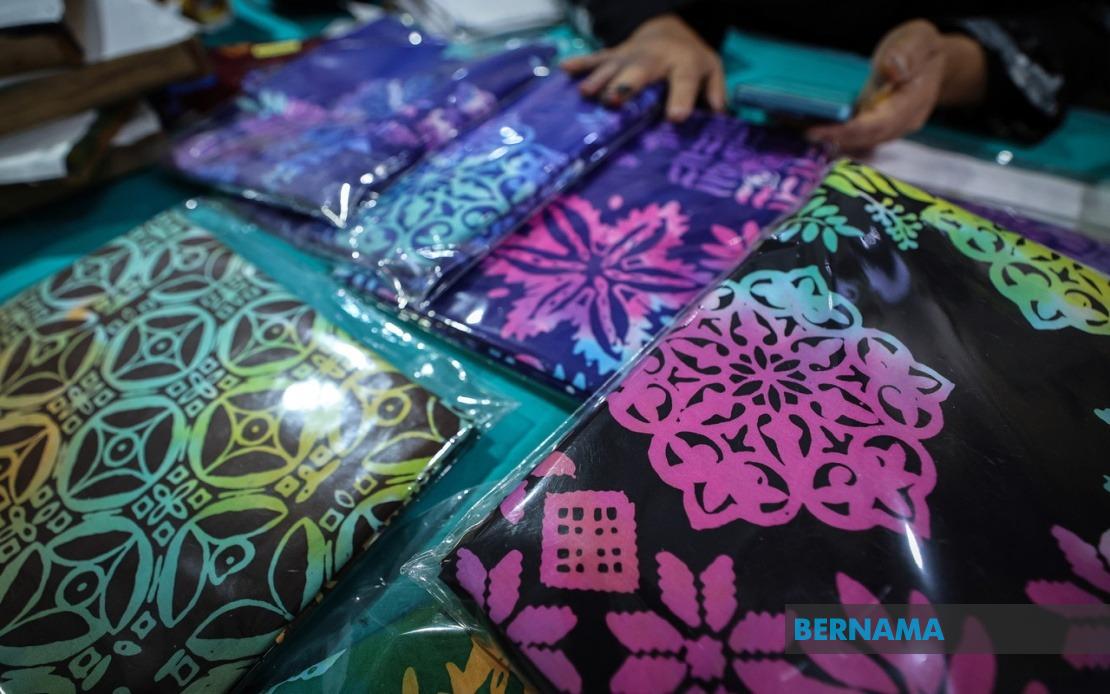
Johor is quietly establishing itself as an emerging hub for batik production, moving beyond the genre's traditional stronghold on the East Coast by developing designs rooted in the southern state's unique environmental and historical character. Artisans working across the region are integrating locally-inspired motifs—from black pepper and gambir plants to mangrove ecosystems and tiger-stripe patterns—into their textile creations, offering a fresh perspective on Malaysia's celebrated batik heritage while anchoring their work firmly to Johor's identity.
At the forefront of this movement is Maimunah Yaacob, 58, whose three decades of commitment to batik production in Johor has made her a pioneering figure in establishing the craft's foothold beyond traditional strongholds. Operating from Ranorm Batik Creation in Kampung Singapura, Tanjung Sedili, near Kota Tinggi, Maimunah has transformed what began as a modest kitchen operation with just RM2,000 initial capital into a respected enterprise recognised at national platforms. Her journey reflects a broader pattern of craft preservation and innovation happening across Malaysia's textile sector as artisans seek to diversify heritage production and create regionally-distinct market niches.
Maimunah's approach to design reflects deep engagement with Johor's geographical and cultural landscape. Rather than defaulting to generic batik aesthetics, she has methodically mapped the state's diverse districts onto specific textile motifs. Muar and Pontian, for instance, feature berembang trees and pineapples—symbols intimately connected to those areas' agricultural heritage and natural environment. Kota Tinggi and Sedili, by contrast, incorporate maritime elements including mangrove forests and coral reef patterns, visual languages that resonate with communities whose histories and livelihoods remain tethered to the sea. This granular approach to regional representation transforms batik from abstract artform into a tangible expression of place-based identity.
Maimunah's formal training, beginning with foundational hand-drawn canting techniques learned in Terengganu in 1993 and followed by two years of advanced study along Jalan Conlay in Kuala Lumpur, equipped her with the technical mastery necessary to execute her creative vision. Yet her competitive advantage has emerged not from replicating established East Coast conventions, but from consciously positioning Johor Batik as aesthetically and conceptually distinct. When she commenced commercial operations in the mid-1990s, batik remained relatively underappreciated outside specialist circles. Her determination to succeed hinged on offering designs substantively different from existing market offerings—a strategic calculation that has proven prescient given contemporary consumer appetite for authentic regional products with cultural narrative.
The distinction between hand-drawn batik and industrially-produced alternatives represents more than technical minutiae; it constitutes the fundamental basis for market differentiation and craft preservation. Traditional batik created through the hot wax and canting process produces a characteristic visual signature wherein dye penetrates evenly through both fabric sides, creating an aesthetic integrity impossible to replicate through mechanical printing. This physical reality anchors Maimunah's commitment to labour-intensive traditional methodology despite mounting competition from machine-produced alternatives that promise cost advantages and consistency. Her insistence on authentic techniques preserves not merely production methods but entire knowledge systems and artisanal relationships that industrialisation inevitably erodes.
Market reception has validated Maimunah's positioning strategy across multiple channels. Participation in showcases including the National Craft Day celebration in Kuala Lumpur and the Johor Craft Festival has generated regional visibility and commercial opportunity. Perhaps most significantly, the enterprise has attracted international clientele from Singapore, indicating that Johor Batik's regional particularity carries appeal beyond state boundaries. Product pricing ranges from RM35 for headscarves to several hundred ringgit for silk attire sets, reflecting tiered positioning that acknowledges diverse consumer purchasing capacity while maintaining premium positioning for labour-intensive creations.
Recognising that craft preservation ultimately depends on intergenerational knowledge transmission, Maimunah has advocated strategically for expanded formal training infrastructure. Her calls for additional programmes and structured courses in Johor Batik production address a critical vulnerability in the sector—younger Malaysians' limited exposure to traditional textile arts and the perception that such crafts lack contemporary relevance or economic viability. Without deliberate institutional investment in training pipelines, artisanal knowledge risks evaporating as experienced practitioners age without successors, a pattern observable across multiple heritage craft sectors throughout Southeast Asia.
Maimunah's product diversification strategy also merits attention as a model for heritage craft modernisation. Introduction of contemporary and casual design iterations specifically targeting younger consumer demographics demonstrates sophisticated market segmentation without compromising traditional technique commitment. Rather than accepting a binary choice between heritage authenticity and commercial viability, this approach recognises that younger consumers may engage with batik through different aesthetic idioms and usage contexts than preceding generations. A young professional might incorporate a casually-styled batik piece into contemporary wardrobes in ways they would never wear formal traditional attire, yet such purchases still sustain artisanal producers and maintain craft visibility.
Johor's emerging batik sector also reflects broader economic geography shifts within Malaysia's heritage craft economy. Traditional concentration of batik production and commercial activity along the East Coast—particularly in Terengganu and Kelantan—has created both brand advantages and market saturation. Johor's development of regionally-rooted design vocabularies and product differentiation offers pathways for economic diversification within the state while contributing to Malaysia's international cultural positioning. As Southeast Asian economies increasingly compete on heritage and authenticity narratives in premium consumer markets, regional textile traditions like Johor Batik acquire strategic economic significance beyond local cultural preservation.
The trajectory of Maimunah's enterprise illuminates larger questions about craft sustainability within modern economies. Success in this sector requires simultaneous commitment to uncompromised technical authenticity, creative innovation that maintains market relevance, strategic positioning that communicates distinctive value propositions, and deliberate engagement with institutional frameworks including craft festivals, government support mechanisms, and educational infrastructure. Few heritage crafts can sustain purely nostalgic marketing; instead, successful practitioners like Maimunah navigate complex tensions between tradition and modernity, maintaining technical integrity while adapting product portfolios, design languages, and distribution channels to contemporary consumer expectations and market structures.
Looking forward, Johor Batik's development trajectory will likely depend substantially on policy support, investment in training infrastructure, and broader consumer awareness campaigns that cultivate appreciation for hand-crafted heritage textiles among Malaysian and international audiences. The sector's success would benefit from coordinated promotion emphasising Johor's distinctive design vocabulary and positioning the state as a serious alternative to established East Coast batik traditions. Museum exhibitions, educational programmes in schools, tourism integration, and e-commerce platforms could collectively amplify visibility and accessibility. Such institutional scaffolding has proven essential for heritage craft survival in other Southeast Asian contexts where governments have strategically invested in craft sector development as both cultural preservation and economic diversification mechanism.

