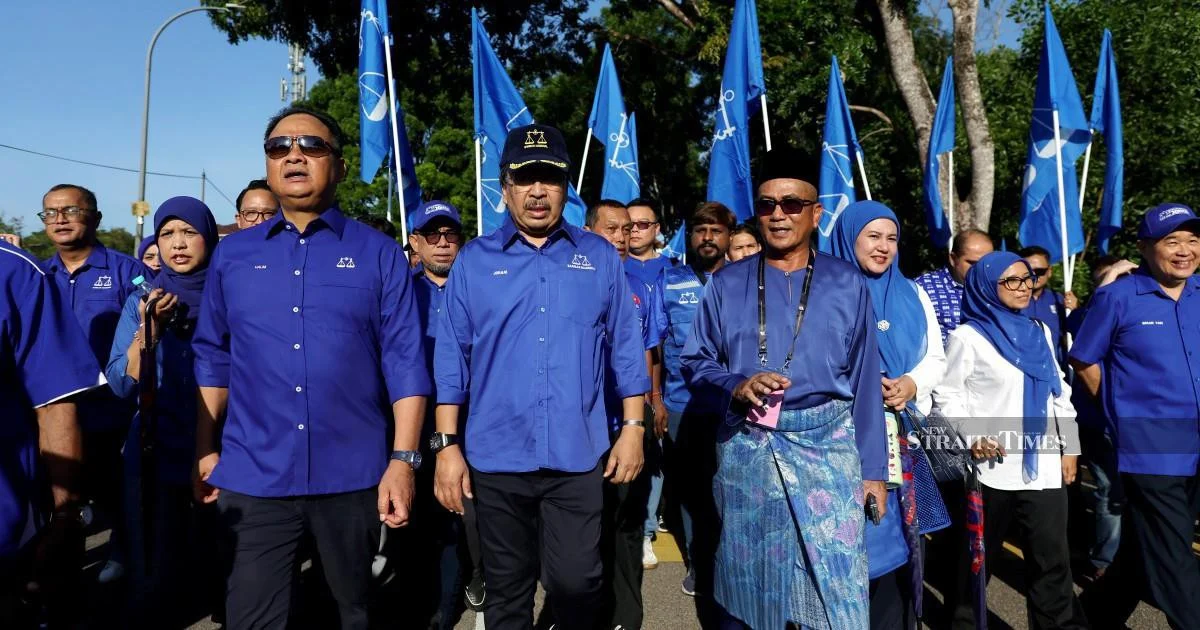
Umno vice-president Datuk Seri Johari Abdul Ghani has injected fresh momentum into Barisan Nasional's electoral machinery in Johor by making a direct appearance in the Tiram constituency, where he personally endorsed the coalition's chosen candidate at a community gathering in Taman Pelangi Indah.
The move reflects the traditional playbook employed by Malaysia's ruling coalition during state elections: deploying senior party figures to constituencies deemed strategically important or potentially competitive. Johari's presence at the community hall serves as both a morale booster for grassroots volunteers and a signal to voters that the coalition considers the seat a priority battleground. His decision to venture into Johor from his own base underscores the significance BN places on maintaining its dominant position in a state where the coalition has historically held considerable sway.
Johari's profile carries particular weight in Umno circles. As vice-president of the party, he occupies one of the most senior elected positions within the organization and wields considerable influence over party strategy and resource allocation. His appearance at campaign events typically indicates that the party leadership has identified specific constituencies requiring reinforcement, either because of competitive threats from opposition rivals or because of internal party concerns about voter turnout and mobilization.
The Tiram seat carries its own political narrative within Johor's broader electoral landscape. Like many state constituencies, it represents a microcosm of the demographic and political shifts that have reshaped Malaysian electoral dynamics over the past decade. The constituency encompasses both established residential areas and newer developments, presenting a mixed voter profile that may include younger, urban-oriented voters alongside more traditional community segments that have traditionally supported BN.
Barisan Nasional's campaign strategy in Johor reflects the coalition's broader challenges at the state level. Despite remaining the dominant political force across most of Malaysia's states, BN has faced periodic setbacks in state elections, particularly when opposition pacts have successfully mobilized voters around anti-corruption narratives or promises of greater accountability. In Johor specifically, BN continues to hold the state government, but maintaining that advantage requires sustained campaign effort and the deployment of recognizable party personalities who can energize supporters.
The community hall setting chosen for Johari's appearance is itself instructive about how Malaysian political campaigns operate at the local level. Rather than large public rallies that demand extensive security and logistical coordination, parties often favour intimate community gatherings where candidates and senior figures can engage directly with voters, address local concerns, and generate word-of-mouth momentum through personal connections. These sessions typically blend formal speeches with informal interactions, allowing participants to raise constituency-specific issues that may not feature prominently in national campaign messaging.
For the BN candidate contesting Tiram, receiving visible endorsement from a party vice-president offers tangible advantages. It demonstrates to constituents that their representative enjoys backing at the highest levels of party hierarchy, potentially translating into better access to government resources, development projects, and advocacy channels if elected. Conversely, the candidate's own profile—whether rooted in local business, community service, or previous political experience—would have influenced the party's decision to deploy Johari's support in this particular seat.
The timing of such campaign appearances also warrants consideration. State elections in Malaysia typically occur within defined windows, and party headquarters carefully schedule senior figures' visits based on polling assessments, volunteer reports, and strategic projections about which constituencies present the greatest risks or opportunities. Johari's trip to Taman Pelangi Indah suggests that internal BN assessments flagged Tiram as requiring additional high-level attention during this phase of campaigning.
Regionally, Johor's political trajectory carries implications that extend beyond state boundaries. As Malaysia's southernmost peninsula state and a major economic engine, Johor's electoral direction influences perceptions about BN's broader viability as a national governing force. Opposition parties use state election results in Johor to build narratives about declining BN support, while the coalition views success in the state as essential validation of its continued electoral relevance across diverse constituencies and voter demographics.
Johari's hands-on campaign engagement also reflects the personalized nature of Malaysian politics, where individual party leaders maintain personal voter bases and networks that transcend formal organizational structures. Senior figures like Johari invest time and political capital in direct constituent engagement because these relationships generate loyalty that extends beyond any single election cycle, creating reservoirs of goodwill that parties can draw upon during future contests.
As Johor's election campaign progresses, similar high-profile visits by party heavyweights from both BN and opposition coalitions will likely continue across various constituencies. These appearances function as barometers of party strategy, revealing which seats party strategists consider genuinely competitive or vulnerable to challenge. For voters in Tiram and observers of Malaysian state politics more broadly, Johari's presence signals that BN remains committed to contesting every seat seriously and deploying its organizational advantages to retain control of this politically significant state.

