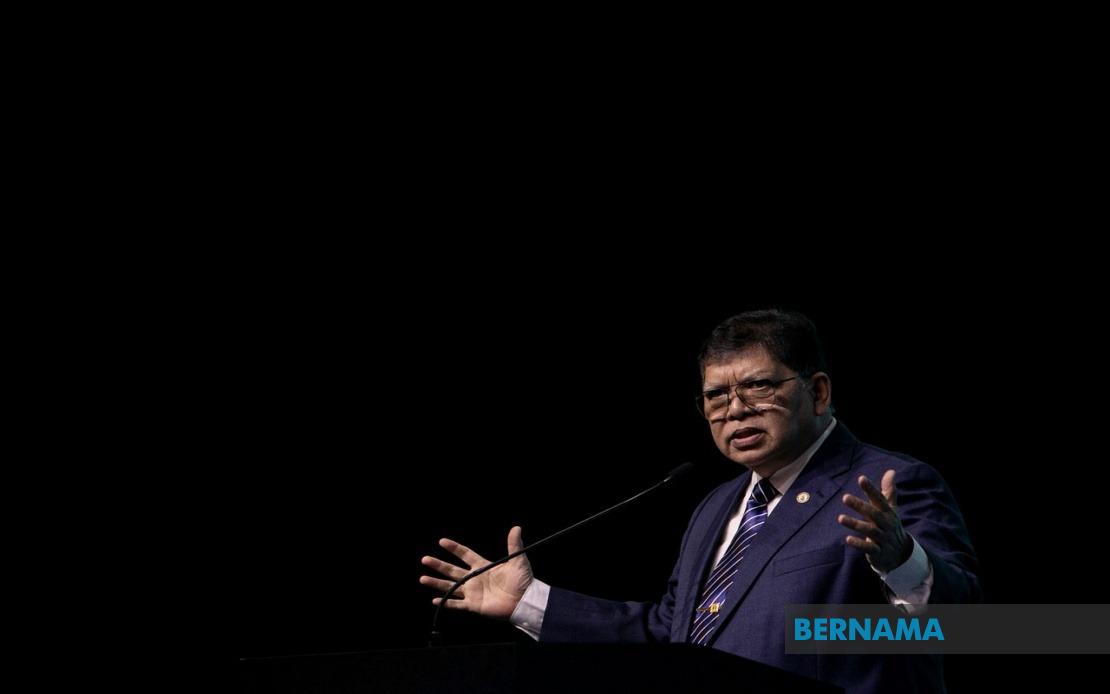
At the 8th World Conference on Islamic Thought and Civilisation in Ipoh on July 22, Dewan Rakyat Speaker Tan Sri Johari Abdul articulated a strategic vision for strengthening Malaysia's democratic foundations through targeted engagement with youth. His framework centres on three interconnected programmes designed to transform how young Malaysians understand, participate in, and ultimately steward the nation's political institutions. Rather than viewing these initiatives as isolated educational exercises, Johari positioned them as components of an integrated approach to safeguarding both good governance and long-term political stability at a moment when many democracies globally face questions about youth disengagement and civic cohesion.
The Sekolah Parlimen programme represents the entry point into this ecosystem of democratic engagement. Through immersive parliamentary visits, secondary school students aged 16 and 17—many serving as head boys and head girls in their respective institutions—gain direct exposure to the legislative process. By witnessing live parliamentary debates and observing the mechanics of democratic decision-making firsthand, participants encounter tangible proof that Malaysia's democratic system remains functional and vital. Johari's emphasis on bringing students "from across Malaysia" underscores an intentional effort to democratise access to parliamentary knowledge, ensuring that civic education extends beyond urban centres or privileged school systems. This direct observation approach differs markedly from abstract civics textbooks, creating memorable encounters with democracy in practice. To date, nearly 2,000 students from over 1,000 schools have participated, with Johari personally committing to meet every visiting group twice weekly—a remarkable allocation of institutional leadership attention that signals the priority accorded to this initiative.
The National Service Training Programme (PLKN) operates on a distinctly different pedagogical principle, one rooted in experiential sociological transformation rather than institutional observation. The 45-day intensive programme brings together recruits from disparate ethnic, religious, and socioeconomic backgrounds, using physical training and shared hardship as catalysts for mutual understanding. Johari characterised this duration as a critical sociological incubator, a period sufficiently extended for genuine relationships to form across Malaysia's demographic divides. The framing here emphasises that PLKN's value transcends fitness or military discipline; instead, its core function involves breaking down social barriers and fostering the lived experience of national unity. For participants in their late teens and early twenties, spending six weeks alongside peers from unfamiliar communities creates opportunities for understanding that prove far more durable than classroom instruction about multiculturalism.
Youth Parliament constitutes the third pillar and operates according to fundamentally different democratic rules than Malaysia's established electoral system. By employing proportional representation rather than the traditional first-past-the-post framework, this platform compels young participants between 18 and 30 to think systematically about representing diverse constituents and articulating coherent political platforms. Participants are not merely voting or expressing preferences; they must actively form political parties, develop manifestos, and engage in campaigns that appeal across different demographic segments. This requirement to construct comprehensive political narratives forces critical thinking about governance, coalition-building, and the representation of plural interests within a single nation. The experience provides practical lessons in political mechanics and strategic thinking while simultaneously exposing youth to the complexity of balancing competing demands within a multiethnic, multireligious state.
Taken collectively, these three programmes create a carefully sequenced pathway through which Malaysian youth encounter democracy at different cognitive and emotional levels. The Sekolah Parlimen experience operates primarily at the observational and inspirational level, demonstrating that parliamentary institutions function and matter. The PLKN initiative works at the interpersonal and emotional level, fostering bonds across ethnic and religious lines through shared experience. Youth Parliament operates at the strategic and intellectual level, demanding that young people think systematically about governance, representation, and political choice. The progression acknowledges that democratic citizenship cannot be imparted through any single mechanism; rather, it requires layered exposure across multiple modalities.
For Malaysia specifically, these initiatives address genuine contemporary challenges regarding generational cohesion and democratic legitimacy. A nation with a young median population faces persistent questions about whether its institutional arrangements adequately reflect youthful aspirations and accommodate emerging forms of political consciousness. By creating structured channels for youth engagement that move beyond passive instruction, Johari's framework attempts to transform potential sources of disaffection into invested participants in the democratic system. The emphasis on youth from rural schools and the commitment to geographical equity in programme access further suggests awareness that democratic engagement cannot remain concentrated in urban centres without exacerbating regional disparities in political consciousness and institutional familiarity.
The proportional representation model employed in Youth Parliament merits particular attention given Malaysia's electoral system, which has historically been criticised by some observers as insufficiently representative of minority perspectives and capable of producing highly skewed outcomes where aggregate vote shares diverge substantially from seat distributions. By exposing youth to alternative models through practical experience rather than theoretical debate, the Youth Parliament initiative allows participants to understand both the mechanics and consequences of different democratic architectures. This experiential learning may prove far more effective than abstract academic discussions in shaping how future voters evaluate electoral system design.
Johari's personal involvement in these initiatives, evidenced by his commitment to twice-weekly meetings with Sekolah Parlimen groups, signals important institutional prioritisation. When senior constitutional figures visibly invest time and attention in youth engagement programmes, such commitment operates symbolically as well as practically. It communicates that the speaker of the lower house—a position representing parliamentary democracy at its apex—regards intergenerational transmission of democratic values as a core institutional responsibility rather than an ancillary educational programme. This personal engagement also creates pathways for direct dialogue between youth and senior political leadership, potentially allowing grievances or proposals to reach decision-making levels that might otherwise remain isolated within youth spaces.
The placement of these remarks at an international conference on Islamic thought and civilisation adds additional resonance. By framing youth democratic engagement as compatible with Islamic values and civilisational identity, Johari addresses potential false dichotomies between Islamic perspectives and democratic practices. This positioning matters significantly in a Malaysian context where debates occasionally pit Islamic authenticity against Western-origin democratic forms, as though these represent incompatible civilisational choices. By arguing that robust democratic participation and governance constitute expressions of Islamic civilisation rather than foreign impositions, the speaker locates democratic practices within a broader Islamic intellectual tradition.
Moving forward, the sustainability and scalability of these programmes will determine their actual impact on political stability and good governance. Current participation figures—nearly 2,000 students through Sekolah Parlimen—represent meaningful but modest penetration given Malaysia's annual cohort of secondary school students. If the programmes can expand significantly while maintaining quality and genuine engagement, their cumulative effect on democratic culture could prove substantial. However, even at current levels, these initiatives signal institutional commitment to viewing youth engagement not as threat management or co-optation, but as essential investment in shared democratic citizenship. For Malaysia and comparable Southeast Asian democracies, such sustained institutional engagement with young citizens may ultimately prove as important to long-term stability as the formal mechanisms of representation and accountability themselves.

