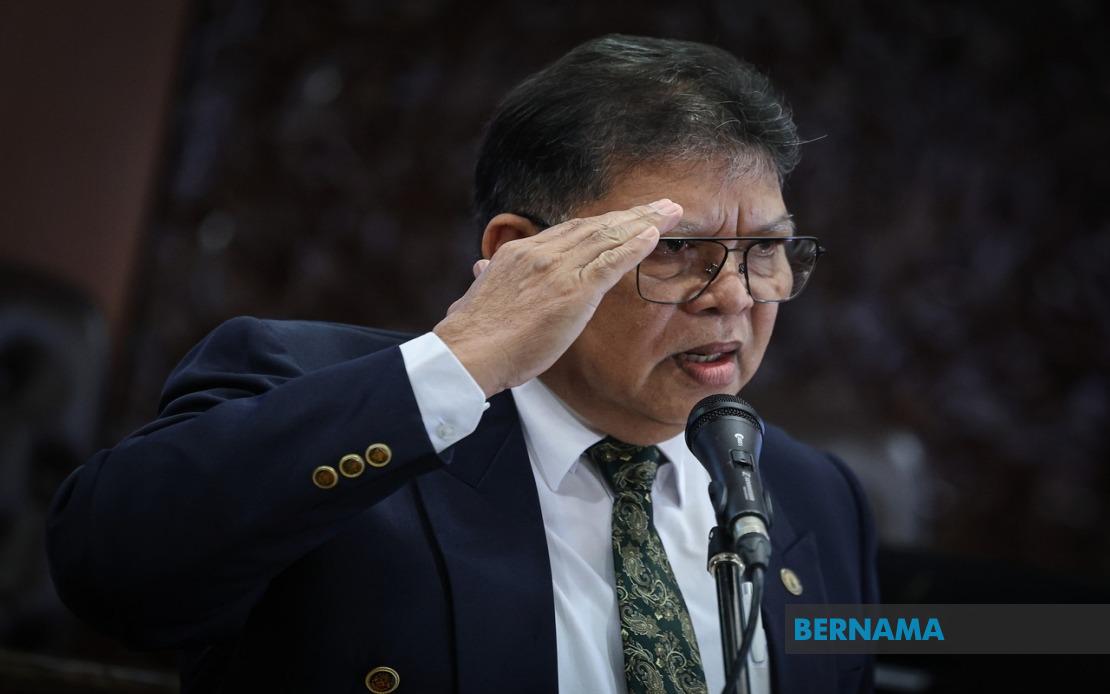
Dewan Rakyat Speaker Tan Sri Johari Abdul has advanced the case for adopting a proportional representation electoral system, arguing that such reform is essential to preserving parliamentary seats for Malaysia's ethnic minorities as the nation's demographic profile undergoes dramatic transformation over coming decades. Speaking at the Harmony Symposium held at Parliament on June 26, Johari contended that proportional representation offers the most pragmatic pathway for cultivating a generation of leaders that authentically reflects Malaysia's multicultural and multiethnic character.
Johari's intervention into this politically sensitive terrain stems from demographic realities that demand urgent national attention. According to projections he cited, Bumiputera Malays are projected to constitute 77 per cent of Malaysia's total population by 2050—a substantial increase from current levels. This demographic shift raises pressing questions about the viability of existing electoral arrangements in guaranteeing minority political representation. Under Malaysia's current first-past-the-post constituency system, minority communities increasingly face the prospect of being geographically dispersed across electorates where they constitute insufficient numbers to influence election outcomes, effectively rendering them voiceless in parliamentary proceedings.
The Speaker articulated his underlying concern with characteristic directness: if minority populations lack parliamentary representation, their policy interests remain unheard and unaddressed by elected legislators responsible for governing the nation. The consequence, he suggested, would manifest in deteriorating ground-level community relations and social cohesion as unrepresented groups feel marginalised by the political system. This analysis reflects broader international scholarly consensus that sustainable democracy requires institutional arrangements capable of translating diverse community interests into parliamentary representation.
Johari deliberately framed this debate as transcending immediate contemporary political concerns. Malaysia's complexity extends beyond simple racial binaries—the nation encompasses 77 distinct ethnic groups whose interests and perspectives demand institutional recognition. Genuine national harmony cannot be constructed solely through addressing present-day grievances; rather, it demands visionary thinking about Malaysia's trajectory across the next century. His call to "talk about tomorrow" represents an attempt to shift parliamentary discourse away from reactive crisis management toward proactive institutional design.
The proportional representation proposal challenges Malaysia's entrenched electoral architecture, which has remained substantially unchanged since independence. First-past-the-post systems inherently magnify majoritarian representation while compressing minority voice—a dynamic that becomes increasingly problematic as demographic proportions shift. Proportional systems, by contrast, allocate parliamentary seats more closely reflecting vote shares, enabling minority groups to retain legislative representation even when geographically distributed. However, implementing such reform would necessitate navigating considerable constitutional amendment processes and political sensitivity around electoral change.
Johari's remarks gain significance from his position as parliamentary head, traditionally a role emphasising institutional continuity rather than constitutional innovation. His willingness to publicly champion electoral reform signals the gravity with which senior parliamentary figures view demographic transformation's implications for national cohesion. The suggestion implicitly acknowledges that Malaysia's current institutional arrangements may prove inadequate for accommodating increasingly diverse electoral participation under fundamentally altered demographic conditions.
The symposium itself demonstrates institutional effort toward broader social cohesion. Organised in collaboration with Syahredzan Johan, chairman of the Malaysia Cross-Party Parliamentary Group on Racial and Religious Harmony, the gathering attempted to embed discussions of national harmony within parliamentary spaces rather than confining them to civil society forums. Syahredzan, representing Bangi, articulated the group's ambition to catalyse policy and legal reforms advancing inclusive Malaysia through partnerships spanning Parliament, government ministries, civil society organisations, and educational institutions.
Such parliamentary engagement with harmony discourse represents a departure from earlier approaches treating these matters as peripheral to core legislative business. By institutionalising these conversations, policymakers acknowledge that Malaysia's multicommunal character demands explicit parliamentary attention rather than remaining implicit in legislative processes. The group's explicit focus on producing concrete policy recommendations and practical mechanisms suggests recognition that rhetorical commitment to harmony without institutional reform rings hollow to communities observing persistent representation deficits.
Proportional representation remains highly contentious across Malaysia's political landscape, with established parties benefiting from current arrangements often resisting reform. The first-past-the-post system has historically amplified majority-party parliamentary majorities, enabling single-party dominance—a dynamic that parties wielding such advantages typically defend vigorously. Johari's public advocacy therefore stakes significant political capital on this issue, implicitly positioning parliamentary leadership as responsive to demographic-driven institutional challenges rather than merely custodian of existing structures.
The demographic projections underlying Johari's argument warrant scrutiny, as population forecasts extending to 2050 carry considerable uncertainty. Migration patterns, birth rates, and immigration policy changes could materially alter trajectory. Nevertheless, the direction appears unmistakable: minority proportions within Malaysia's electorate face gradual reduction, creating genuine governance challenges for sustaining representative legitimacy across all communities.
Regionally, Malaysia's situation reflects patterns evident across ethnically diverse Southeast Asian democracies grappling with institutional arrangements inadequately representing minority interests. Countries like Singapore and Myanmar have confronted similar questions about electoral systems and minority representation, albeit through vastly different political contexts. Malaysia's potential embrace of proportional representation could establish regional precedent for minority-inclusive electoral design.
Implementing Johari's proposal would require navigating Article 55 of Malaysia's Constitution, governing redistricting and electoral procedures—a politically arduous amendment process requiring supermajorities. Nevertheless, framing electoral reform as necessary for demographic sustainability rather than minority appeasement potentially creates political space for serious consideration. As Malaysia approaches midcentury demographic transformation, Johari's initiative suggests serious actors within governing institutions recognise that current arrangements may inadequately serve the multicommunal nation's long-term stability and legitimacy.

