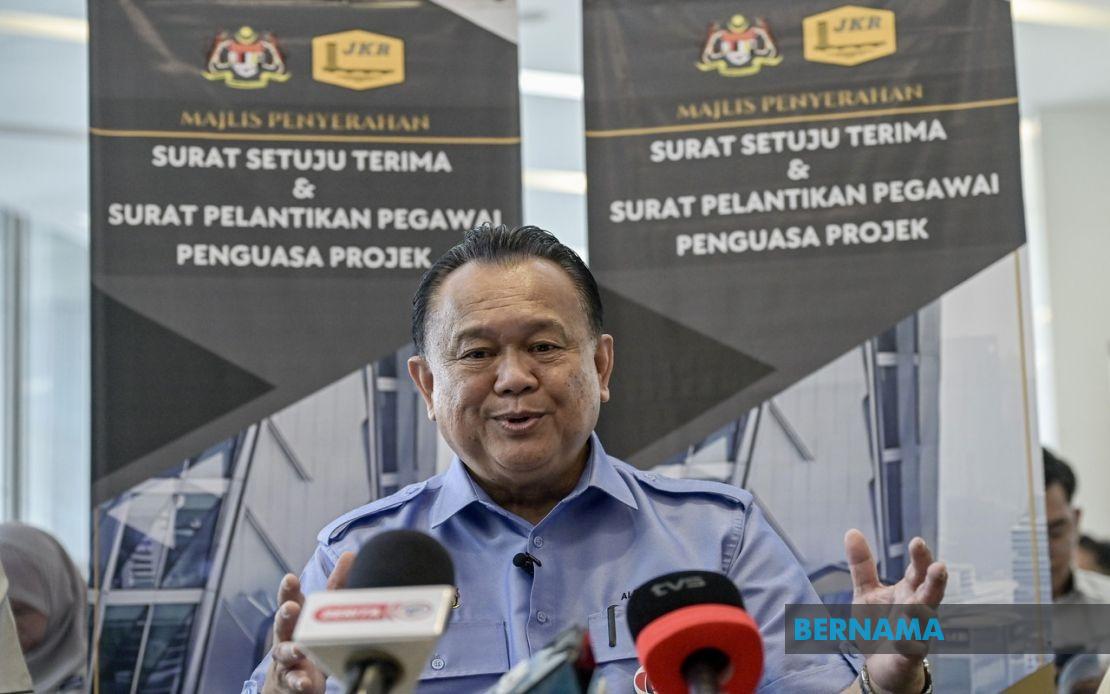
Works Minister Datuk Seri Alexander Nanta Linggi has drawn a clear line in defining what constitutes genuine project success for the Public Works Department (JKR), arguing that speed of completion alone cannot be the yardstick by which infrastructure initiatives are judged. Speaking after presiding over ceremonies for the Perak police contingent headquarters and housing project in Kuala Lumpur, Nanta emphasised that the traditional notion of "ahead of schedule" must be reframed entirely. A project truly achieves early completion only when it simultaneously maintains the cost parameters and quality benchmarks that were established from the outset.
The minister's comments reflect a growing sophistication in how Malaysia's government machinery evaluates public infrastructure outcomes. Rather than celebrating projects that break through timelines while accumulating cost overruns or delivering substandard workmanship, the Works Ministry has begun adopting a more holistic framework for assessment. Nanta articulated this philosophy with particular clarity, noting that accelerated delivery accompanied by quality lapses or budget slippage does not represent genuine progress. Instead, true acceleration occurs only within the bounds of fiscal responsibility and technical standards.
Contractors executing JKR work must now navigate this tripartite accountability structure with heightened awareness. The minister stressed that project teams cannot simply prioritise one objective at the expense of others. Doing so risks cascading problems that ultimately classify initiatives as "sick projects"—a designation that carries significant reputational and operational consequences. This directive carries particular weight given Malaysia's historical struggle with infrastructure quality and cost control, issues that have dogged major government undertakings across multiple administrations.
To operationalise this vision, the Ministry of Works (KKR) and JKR have instituted formal mechanisms designed to eliminate sick and abandoned projects from their portfolios. Key performance indicators, or KPIs, now explicitly target the elimination of such problematic initiatives. Accompanying these metrics are standardised operating procedures and guidelines intended to provide contractors and supervising officers with clear benchmarks for implementation monitoring. This systematic approach represents an evolution from more ad-hoc project management practices that may have characterised earlier infrastructure delivery efforts.
The effectiveness of these measures appears measurable already. Deputy Minister Dr Ahmad Maslan reported that the proportion of sick projects under JKR supervision has declined to 4.13 per cent, down from five per cent in the previous assessment period. This improvement translates concretely: of 871 projects currently under active construction, only 36 meet the classification of sick or troubled undertakings. While the absolute numbers remain concerning, the downward trajectory suggests that the ministry's emphasis on systematic oversight is yielding results.
The Perak police contingent headquarters initiative exemplifies the scale and ambition of contemporary JKR portfolio priorities. Valued at approximately RM366 million, this project will be developed by Serada Realty Sdn Bhd across 25 hectares adjacent to Bulatan Sultan Azlan Shah in Bandar Meru, Ipoh. The implementation timeline spans 42 months, with anticipated completion in February 2030. The undertaking carries strategic significance for the Ministry of Home Affairs (KDN), underscoring its importance within Malaysia's broader governance infrastructure.
The project directly addresses a longstanding operational constraint facing Perak's police operations. The existing contingent headquarters is now 58 years old and in severely deteriorated condition, rendering comprehensive renovation economically unviable. A purpose-built replacement will enhance operational effectiveness and response capabilities. Specifically, KKR projects that the new facility will contribute to reducing Perak's crime index by an estimated five per cent annually. Additionally, police response times are expected to improve substantially, decreasing from the current 15-minute baseline to a target of 10 minutes.
These operational benefits extend beyond mere statistics; they reflect how infrastructure investment translates into tangible improvements in public safety and governance. For Malaysian citizens in Perak and beyond, the modernised facility represents enhanced security responsiveness. The compressed response timeline carries particular significance in emergency situations where minutes determine outcomes. The anticipated crime reduction quantifies another dimension of project value—reducing criminal incidence directly improves quality of life across affected communities.
Nanta's remarks to contractors receiving their letters of acceptance emphasised the gravity of their obligations. Recipients must discharge their responsibilities with full integrity, maintaining unwavering commitment to specified standards, optimal quality execution, and adherence to contractual timelines. The language employed—"trust given with full integrity, responsibility and commitment"—casts project delivery as a matter of institutional trustworthiness, not merely technical competence. This framing elevates contractor conduct to align with broader governance expectations.
The role of superintending officers emerges as equally critical within this accountability architecture. These officials bear responsibility for proactive monitoring of construction progress, identification of emerging site-based issues, and swift implementation of corrective measures. Rather than functioning as passive observers, superintending officers now occupy a frontline position in protecting project schedule adherence and performance outcomes. Their effectiveness directly determines whether initiatives maintain trajectory toward successful, on-time delivery.
For Malaysia's infrastructure sector and the broader Southeast Asian region, Nanta's messaging carries important implications. As countries across the region invest heavily in modernising public infrastructure, the tension between speed and quality remains ever-present. Malaysia's explicit commitment to balancing these competing pressures offers a model, however imperfectly executed, for thinking through infrastructure governance holistically. The decline in sick project percentages suggests that systematic approaches can yield measurable improvements, even within complex bureaucratic environments.
The works minister's emphasis on comprehensive project success metrics also reflects evolving global standards for infrastructure delivery. International development finance institutions increasingly scrutinise not merely whether projects complete, but whether they deliver genuine service value and environmental sustainability. By institutionalising this tripartite framework—timeline, cost, and quality—Malaysia positions itself within modern best practice for government project management. Whether implementation can sustain these standards across the diverse portfolio of JKR initiatives remains an ongoing test of institutional capacity and contractor discipline.

