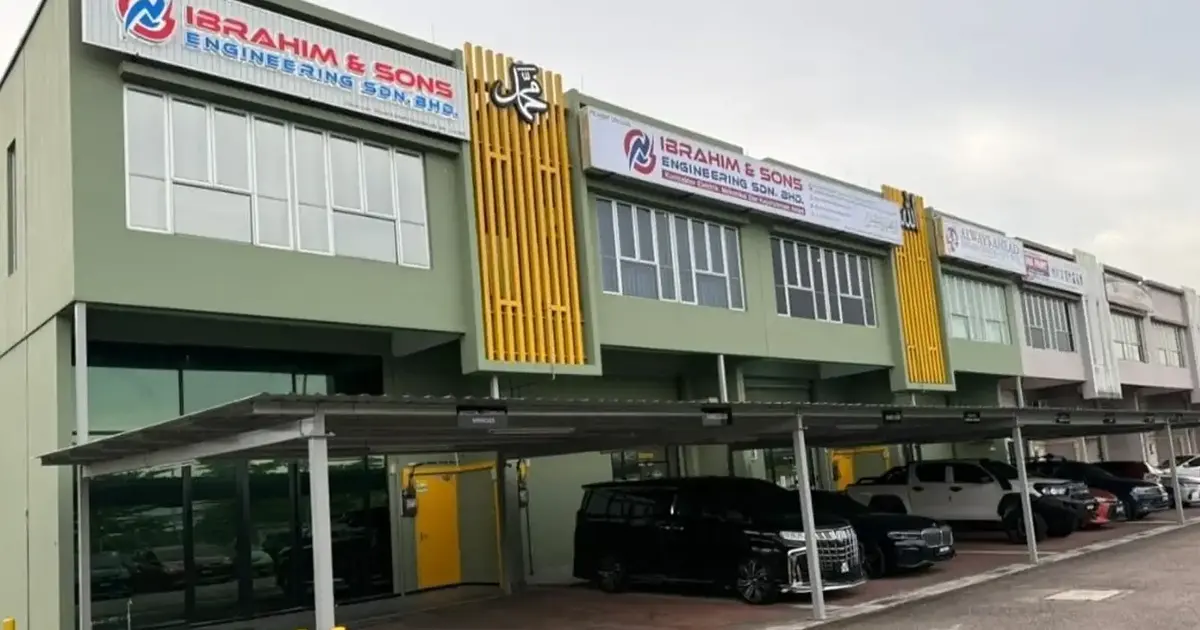
Ibrahim & Sons Engineering Sdn Bhd has escalated its legal battle with Steel Hawk Engineering by launching a defamation counter-action, asserting that the group's conduct reflects a deliberate, pre-planned effort to harm the company's standing and cast its leadership in a fraudulent light. The counter-claim marks a significant turning point in what appears to be an increasingly acrimonious dispute between the two firms, with the Johor Bahru-based company now taking offensive legal measures rather than simply defending against existing allegations.
The counter-suit contends that Steel Hawk's actions constitute a coordinated media strategy rather than legitimate grievances pursued through conventional channels. According to Ibrahim & Sons Engineering, the pattern of Steel Hawk's conduct—encompassing public statements, media engagement, and other communications—demonstrates a systematic approach designed to inflict reputational damage rather than resolve underlying business disagreements. This allegation suggests that the dispute has transcended ordinary commercial differences and entered territory where competing narratives and public perception warfare dominate the conflict.
For Malaysian readers, this case exemplifies the increasingly common intersection of commercial disputes and media strategy that characterises modern business litigation. When partnerships sour, companies now frequently deploy public relations campaigns alongside legal proceedings, creating a multi-front battle where damage to reputation can prove as consequential as outcomes in courtrooms. The involvement of engineering firms—sectors typically dependent on trust and credibility with clients—underscores how defamatory allegations in this industry can have profound commercial consequences extending far beyond the immediate parties involved.
The notion of a "pre-planned media strategy" carries specific legal significance. Defamation law in Malaysia protects individuals and corporate entities from false statements causing material harm to reputation. If Ibrahim & Sons can demonstrate that Steel Hawk deliberately orchestrated a campaign containing false or misleading information, rather than simply advocating its own position, this distinction could prove crucial to the counter-suit's success. The company's legal team appears to be building a case around intentionality and coordination rather than mere disagreement over facts.
This counter-action also reveals the defensive vulnerability of Steel Hawk's approach, at least from the perspective of the Johor Bahru firm. Rather than accepting the allegations passively, Ibrahim & Sons has chosen to challenge not just the substance of Steel Hawk's claims but the legitimacy of how those claims were advanced. This aggressive stance suggests confidence in its ability to demonstrate that Steel Hawk's methods crossed legal and ethical lines, transforming what might otherwise be a contract dispute into a battle over corporate conduct standards.
Engineering partnerships in Malaysia frequently involve complex technical work, substantial capital investments, and long-term client relationships. When such partnerships dissolve into litigation, the stakes extend beyond the immediate firms to their employees, clients, and suppliers. A defamation counter-suit indicates that Ibrahim & Sons views Steel Hawk's actions as sufficiently damaging to warrant the financial and reputational costs of public litigation, suggesting the underlying relationship breakdown is comprehensive and likely irreparable.
The timing and nature of media engagement in modern commercial disputes deserve particular scrutiny. Companies increasingly recognize that winning the court of public opinion can influence actual litigation outcomes, client confidence, and stakeholder perceptions. However, this strategy carries significant risks. Aggressive media campaigns that venture into provably false territory can expose firms to precisely the kind of defamation liability that Ibrahim & Sons now claims to be pursuing. The counter-suit may therefore serve as a cautionary tale about the limits of aggressive public relations in contested business relationships.
Regionally, this dispute reflects broader trends in Southeast Asian business litigation. As markets mature and competition intensifies, commercial conflicts increasingly involve sophisticated legal and public relations strategies. Malaysia's framework of defamation law and court procedures will now determine whether Ibrahim & Sons can substantiate its claims that Steel Hawk engaged in a coordinated campaign to damage its reputation. The outcome could carry implications for how other Malaysian firms balance their rights to publicly defend themselves against disputes while avoiding defamation liability.
The counter-suit's success will likely hinge on Ibrahim & Sons' ability to demonstrate a causal connection between Steel Hawk's alleged statements and specific damage to its reputation, business relationships, or financial position. The company must also establish that the statements in question were either false or presented with reckless disregard for their truth. Proving intentional coordination of a "media strategy" adds another evidentiary layer, requiring documentation of planning, communication, and execution across multiple touchpoints.
Stakeholders monitoring this case include not only the engineering sector but also businesses more broadly concerned with dispute resolution and reputation management. If Malaysian courts find that coordinated media campaigns constitute actionable defamation, this could reshape how companies approach public communications during conflicts. Conversely, if courts prove unwilling to constrain aggressive media strategies, this may encourage further escalation of public relations warfare in commercial disputes, with potentially serious consequences for industry relationships and professional standards.
The dispute underscores a fundamental tension in modern business litigation: the right of companies to defend themselves publicly against allegations must be balanced against protection from deliberate reputational attacks. Ibrahim & Sons Engineering's counter-suit seeks to recalibrate this balance, insisting that certain conduct by Steel Hawk crossed from legitimate advocacy into defamatory territory. As the case progresses, Malaysian courts will face the challenge of defining precisely where that line should be drawn.

