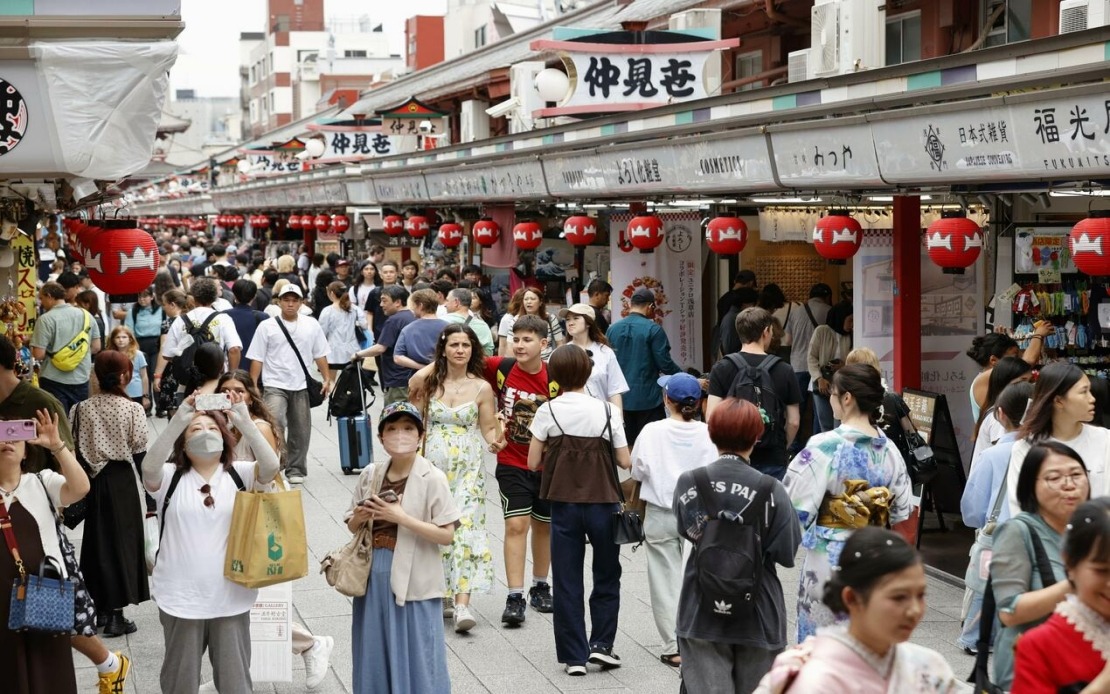
Japanese holidaymakers are retreating from overseas trips this summer as the persistent weakness of the yen combines with inflationary pressures to reshape travel patterns across the region. Major travel agency JTB Corp projects that outbound trips during the July 15 to August 31 holiday season will drop 8.8 per cent to 2.17 million journeys, representing the first year-on-year decline since the post-COVID recovery accelerated in 2023. The pullback signals that Japanese consumers, once among Asia's most enthusiastic travellers, are now becoming more cautious about discretionary spending as currency headwinds erode purchasing power abroad.
The fundamental driver of this retrenchment is the declining value of the yen against major currencies, which makes overseas holidays substantially more expensive for Japanese travellers. When combined with elevated aviation fuel surcharges—themselves a consequence of heightened tensions and disruptions in West Asia—the total cost of international trips has risen sharply. Individual travellers now expect to spend an average of 323,000 yen ($2,000) per overseas trip, up 6.3 per cent from the previous year. This apparent spending increase masks a more nuanced reality: while those who do travel abroad are spending more in absolute terms, the quantity of travellers is shrinking because many are priced out of the market entirely.
For Southeast Asian nations reliant on Japanese tourism, the implications are significant but differentiated. South Korea emerges as the clear winner in this new travel landscape, capturing 26.2 per cent of Japanese outbound trips and consolidating its position as the preferred Asian destination. Taiwan follows at 16.2 per cent, offering similar advantages of proximity, reasonable airfares, and cultural appeal. Malaysia, Thailand, and other Southeast Asian economies that depend more heavily on long-haul arrivals from Japan face headwinds, as cost-conscious travellers gravitating toward nearby destinations will bypass more distant countries altogether. The shift underscores how currency fluctuations and fuel surcharges can fundamentally reshape the competitive dynamics of regional tourism.
China's experience offers a cautionary tale for the region. Japanese visits to the mainland are projected to plummet to just 10.1 per cent of outbound trips, barely half the previous year's figure. This dramatic collapse stems not from economic factors alone but from deteriorating bilateral relations between Tokyo and Beijing, particularly following Prime Minister Sanae Takaichi's November remarks regarding Taiwan. The incident illustrates how political tensions can swiftly undermine tourism flows that took years to rebuild after the pandemic, a warning sign for any nation whose relationship with Japan becomes strained.
Domestically, Japan's tourism picture presents its own challenges. Domestic trips are forecast to decline 4.4 per cent to 69 million journeys, suggesting that frugal sentiment extends beyond the international sphere. The Kanto region, encompassing Tokyo and surrounding prefectures, remains the most popular destination at 19 per cent of domestic trips, while the Kinki region in western Japan captures 14.9 per cent and Hokkaido in the north attracts 11.2 per cent. Average spending per domestic trip is projected to rise marginally by 3.2 per cent to 48,500 yen, indicating that even as fewer people travel, those who do are spending somewhat more—a pattern consistent with selective consumer behaviour.
The divergent spending patterns reveal an emerging bifurcation in Japan's consumer base, one that has implications extending beyond tourism. A JTB official characterised the phenomenon bluntly: some travellers are cutting back by shortening vacations or downgrading destinations, while others remain determined to take the trips they desire regardless of cost. This polarisation mirrors broader economic inequality and suggests that the weak yen is exacerbating disparities in who can afford to travel and where. Middle-income Japanese families are increasingly constrained, while wealthier segments continue to pursue premium experiences.
The survey methodology underpinning these projections—an online canvass of trip planners conducted in June—provides a reasonably reliable snapshot of intentions, though actual behaviour may diverge if economic conditions worsen unexpectedly or if corporate bonus seasons disappoint. The focus on trips of one night or longer excludes day-trippers and short getaways, meaning the figures understate total travel volumes. Nevertheless, the downward trajectory is unmistakable and represents a significant reversal from the exuberant rebound of 2023 and early 2024.
For Malaysia and other ASEAN economies, the implications warrant careful consideration. Japanese tourism, while historically strong, faces cyclical pressures beyond national control. The combination of yen weakness and fuel surcharges creates a structurally disadvantageous environment for long-haul destinations, at least in the near term. Regional tourism boards should anticipate softer demand from Japan and potentially redouble marketing efforts emphasising value propositions and competitive airfare deals. Simultaneously, the shift toward short-haul Asian travel presents an opportunity for countries positioned between Japan and distant Western markets—a role Taiwan and South Korea are currently exploiting effectively.
The broader economic narrative underlying these travel statistics deserves scrutiny. Japan's persistent currency weakness reflects structural challenges in the economy, including demographic decline and modest growth prospects relative to other developed nations. The yen's weakness, while sometimes portrayed as beneficial for exporters, imposes genuine hardship on consumers purchasing foreign goods and services. That Japanese travellers are responding rationally by curtailing overseas trips is unsurprising, yet it signals deeper economic fragility that could influence Japan's regional economic influence and soft power projection.
Looking ahead, the trajectory of the yen will largely determine whether this summer's decline proves temporary or the beginning of a prolonged contraction in Japanese outbound travel. If currency weakness persists or intensifies, the 8.8 per cent drop may represent merely the opening chapter of a longer retrenchment. Conversely, if the yen stabilises or strengthens, pent-up demand could rebound sharply. For now, regional tourism operators should prepare for a more selective Japanese market, one that prizes value, proximity, and cultural attractions over sheer quantity of visitors. The age of unfettered Japanese travel abundance may be entering a more constrained phase.

