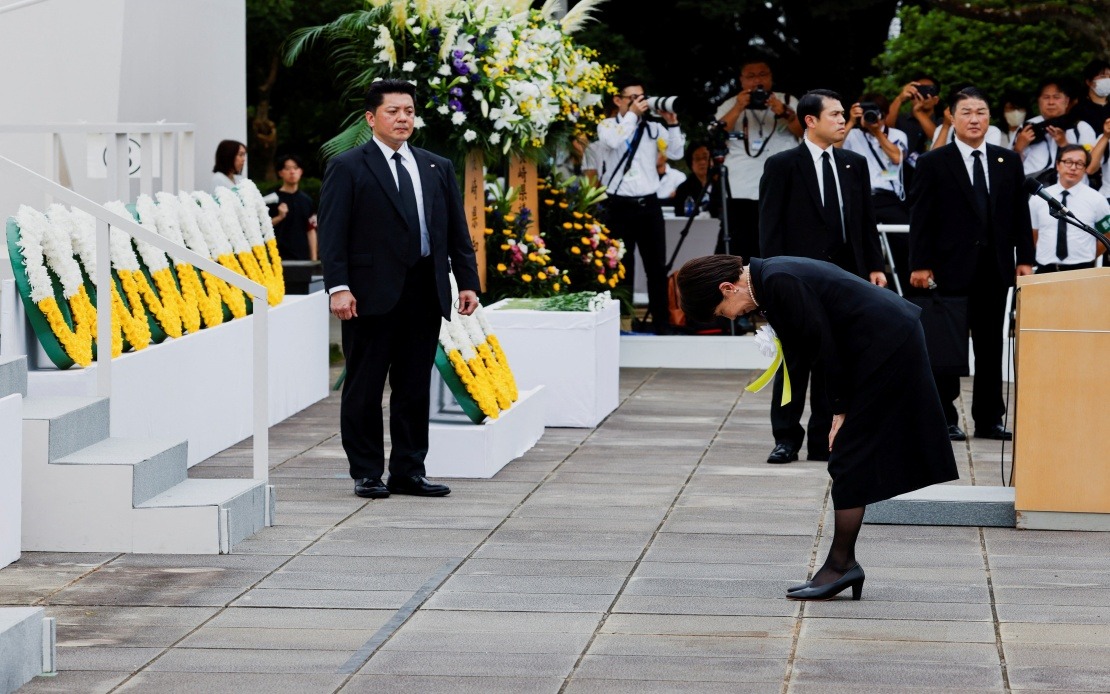
Nagasaki observed the 81st anniversary of the devastating atomic bombing that destroyed the southwestern Japanese city in World War II, a solemn occasion that has taken on renewed significance as nations worldwide wrestle with questions about nuclear weapons in an era of heightened geopolitical tension. The commemoration underscores Japan's complicated position as the only nation to experience nuclear warfare firsthand, yet increasingly caught between its pacifist principles and regional security concerns in an unstable Indo-Pacific.
The August 9, 1945 bombing claimed approximately 74,000 lives by year's end and inflicted generational trauma whose scars remain visible today. The plutonium bomb, codenamed "Fat Man," detonated at 11:02 a.m. over the city, arriving just three days after the destruction of Hiroshima. The two attacks precipitated Japan's surrender on August 15, ending the Pacific War and fundamentally reshaping global attitudes toward weapons of mass destruction. Yet eight decades later, the international community remains fragmented on how to prevent nuclear proliferation or pursue meaningful disarmament.
At Sunday's ceremony, Mayor Shiro Suzuki was expected to articulate a vision central to Japan's post-war identity: the incompatibility of human civilization with nuclear weapons. His remarks reflect the perspectives of hibakusha—atomic bomb survivors—and their advocates, who have devoted their remaining years to ensuring the world never forgets the indiscriminate horror of nuclear war. The mayor's call for global leaders to prioritize disarmament speaks directly to Japan's three non-nuclear principles, established as a moral framework preventing the country from producing, possessing, or allowing nuclear weapons on its soil.
Prime Minister Sanae Takaichi's attendance at the ceremony carries particular weight given recent domestic debate about whether Japan should reconsider these foundational principles. Following the Hiroshima commemoration on Thursday, Takaichi reaffirmed the government's commitment to the three principles, yet her words reflected an underlying tension. As China expands its nuclear arsenal and North Korea continues missile development, some Japanese policymakers and defense analysts privately question whether strict non-nuclear posture remains viable. This ideological struggle between pacifist tradition and contemporary security calculations defines modern Japan's nuclear dilemma.
The broader context illuminates why this year's commemoration resonates beyond Japan's borders. The May Nuclear Non-Proliferation Treaty review conference in New York collapsed without consensus for the third consecutive time, a stark indicator of fracturing international consensus on weapons control. The failure reflects deep divisions between nuclear-armed states seeking to maintain deterrence architectures and non-aligned nations demanding accelerated disarmament timelines. For Japan, which hosts American nuclear-armed military installations and depends on extended nuclear deterrence for security, this gridlock presents an uncomfortable paradox between its history of victimhood and its present-day reliance on nuclear umbrellas.
The hibakusha community embodies this paradox in human form. The officially recognized survivors now average over 86 years old, creating urgency around preserving their testimonies before this generation passes. Their collective memory represents irreplaceable historical evidence of nuclear warfare's true costs—evidence that transcends statistics to encompass psychological trauma, environmental contamination, and intergenerational health consequences. As these witnesses age, their institutions and museums assume greater responsibility for educating younger generations who have never known a world threatened by nuclear annihilation.
For Malaysian and Southeast Asian observers, Japan's struggle carries important lessons. The region hosts significant numbers of non-aligned nations that have pushed for nuclear disarmament while simultaneously watching major powers stockpile warheads. Malaysia, as a signatory to the Treaty on the Southeast Asia Nuclear Weapon-Free Zone, has positioned itself within a framework promoting regional nuclear restraint. Yet the ineffectiveness of international treaties and the survival of Cold War-era deterrence structures suggest that rhetorical commitments to disarmament may continue diverging from geopolitical realities.
The timing of this year's ceremony coincides with shifting strategic calculations across Asia. Russia's invasion of Ukraine resurrected nuclear threat rhetoric in Europe, while US military posture toward China has grown more assertive. Japan itself faces unprecedented pressure from North Korean missile testing, with rockets regularly overflying the country. Within this turbulent environment, Nagasaki's annual remembrance functions as both historical witness and moral counterweight—a reminder that nuclear weapons, once deployed, impose costs far exceeding any conceivable strategic benefit.
Japanese civil society and peace organizations increasingly view the Nagasaki and Hiroshima commemorations as platforms for revitalizing global disarmament movements that have stalled since the Cold War's end. UN Secretary-General Antonio Guterres's expected statement, read during the ceremony, will likely echo these sentiments, even though the UN Security Council remains paralyzed by permanent members' conflicting interests. The disconnect between aspirational statements and actual policy implementation reflects a deeper crisis in international governance regarding existential weapons.
As Japan navigates its role as a economic powerhouse and security alliance partner, the atomic bombing anniversaries serve as annual reminders of why the nation chose a non-nuclear path despite possessing the technological capacity for weapons development. This restraint, exercised amid strategic vulnerability and allied dependence on nuclear deterrence, represents a distinctive contribution to global stability. Whether Japan will maintain this principled stance as security pressures mount remains one of the most consequential questions for regional stability in coming decades.

