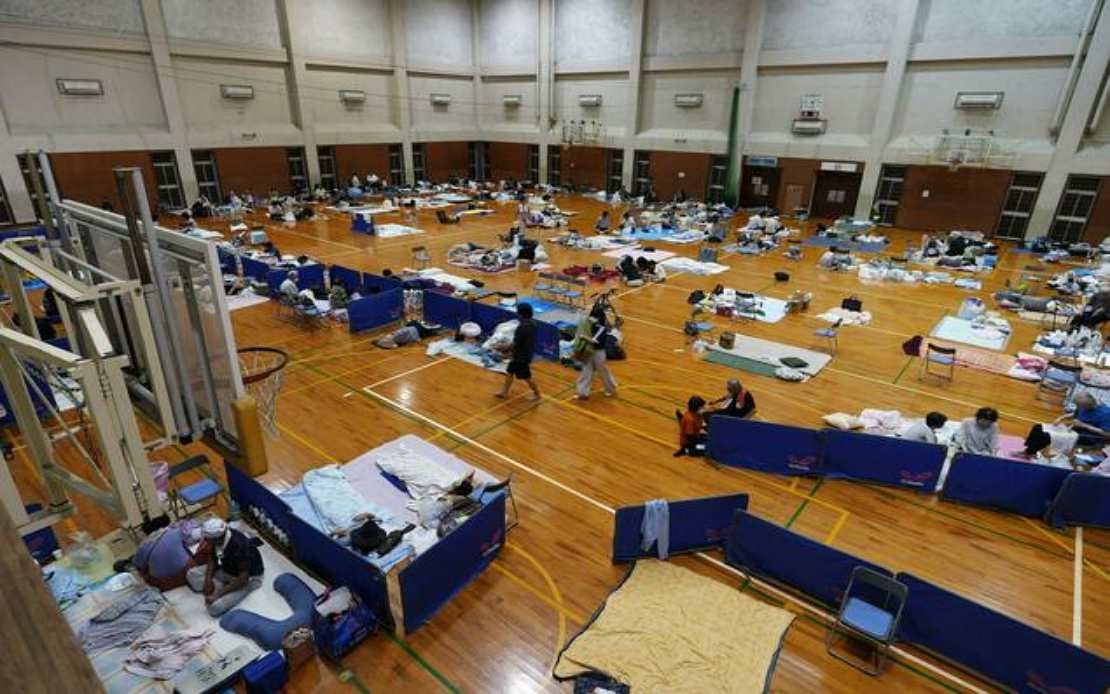
Kumamoto Prefecture in southwestern Japan continues to face a humanitarian crisis one week after a magnitude 7.1 earthquake devastated the region on July 28. More than 8,000 people remain sheltered in 150 evacuation facilities, grappling with cascading emergencies that extend far beyond the initial seismic event. The combination of displaced populations, infrastructure damage, and severe environmental conditions has created a complex recovery challenge that demands sustained national and international attention.
The earthquake's immediate toll has reached 38 deaths, a figure that underscores the disaster's severity. Among the most tragic incidents were seven fatalities caused by an explosion at an Aeon shopping mall in Kashima, while nine workers perished when a chimney collapsed at a Nippon Paper Industries Co. facility in Yatsushiro. These specific incidents highlight how the earthquake's impact extended beyond structural damage to industrial and commercial centres, affecting both private citizens and workers across multiple sectors of the economy.
Water infrastructure has become a critical vulnerability in the recovery effort. Approximately 45,000 households across five municipalities currently lack access to clean water, forcing authorities to deploy water trucks from across Japan to affected areas. This widespread utility failure has created secondary health hazards, particularly concerning for vulnerable populations living in crowded evacuation shelters. The prefectural government has prioritised strengthening water distribution networks, but the scale of disruption continues to strain logistics and resources.
Extraneous heat has transformed the disaster into a multi-layered crisis. Temperatures across Kumamoto Prefecture have soared to dangerous levels, with numerous areas recording highs of 35 degrees Celsius or above on Monday alone. Several locations reached 40 degrees Celsius for the first time in recorded history, creating life-threatening conditions for evacuees, many of whom are sleeping in vehicles or crowded shelters with limited air conditioning. Authorities have documented at least one suspected heatstroke death among those sleeping in cars, suggesting the true toll from heat-related illness may exceed current tallies.
Prime Minister Sanae Takaichi visited an evacuation shelter on Monday and subsequently announced that the government will designate the earthquake a "disaster of extreme severity". This formal classification unlocks enhanced financial support from the national government, enabling affected local administrations to access higher subsidy levels for reconstruction initiatives. The decision reflects recognition that standard disaster protocols are insufficient to address Kumamoto's mounting challenges.
Temporary housing initiatives are underway in the hardest-hit municipalities of Uki and Hikawa, while secondary evacuations to hotels have commenced. However, construction timelines remain uncertain, and the number of people currently sheltering in vehicles has not been comprehensively tallied. Authorities acknowledge that actual figures may significantly exceed preliminary estimates, pointing to data collection challenges amid ongoing emergency response operations.
Transportation infrastructure has suffered substantial disruption, compounding recovery difficulties. The Kyushu Shinkansen Line bullet train service remains suspended between Kumamoto and Kagoshima-chuo stations, isolating the region from broader economic networks. The Kyushu Expressway has been closed to regular traffic between Matsubase and Ebino exits, restricting supply chains and limiting the mobility of relief workers and equipment. These transportation constraints have ripple effects across the broader region's economy.
Government response has encompassed multiple protective strategies targeting vulnerable populations in shelters. Authorities have intensified distribution of drinking water, expanded portable toilet facilities, and deployed spot cooling units to combat heat-related illness. These measures represent acknowledgment that extended shelter stays during extreme weather create compounding health risks beyond immediate disaster injuries.
The disaster has prompted international humanitarian engagement. Kaohsiung, a major city in southern Taiwan, donated essential care supplies to Miyabien, a nursing facility in Yatsushiro, after learning of urgent needs through official channels. Midori Tagata, the facility's director, publicly expressed gratitude for the international assistance, noting that citywide water shortages have severely compromised hygiene maintenance for vulnerable residents, many of whom are elderly or infirm. This cross-border support mechanism demonstrates how regional cooperation can supplement national response capacity during large-scale disasters.
The Kumamoto situation carries implications for disaster preparedness across Southeast Asia and East Asia broadly. The event illustrates how modern earthquakes generate cascading infrastructure failures—water systems, cooling capacity, transportation networks—that create secondary crises potentially exceeding immediate seismic damage. For Malaysia and neighbouring nations operating in seismically active regions, Kumamoto's experience suggests vulnerabilities in interdependent utility systems and evacuation planning. The disaster also underscores the critical importance of ensuring adequate cooling centres and water distribution during emergency responses, particularly in tropical and subtropical climates where heat-related illness compounds displacement trauma.
As recovery operations continue, Japan's response demonstrates both the complexity of managing large-scale evacuations and the importance of designating appropriate disaster classifications that unlock proportionate resource allocation. The situation remains fluid, with authorities focusing on transitioning displaced populations from emergency shelters to temporary housing while simultaneously addressing infrastructure reconstruction. The coming weeks will prove decisive in determining whether current relief measures prevent secondary casualties and facilitate orderly recovery.

