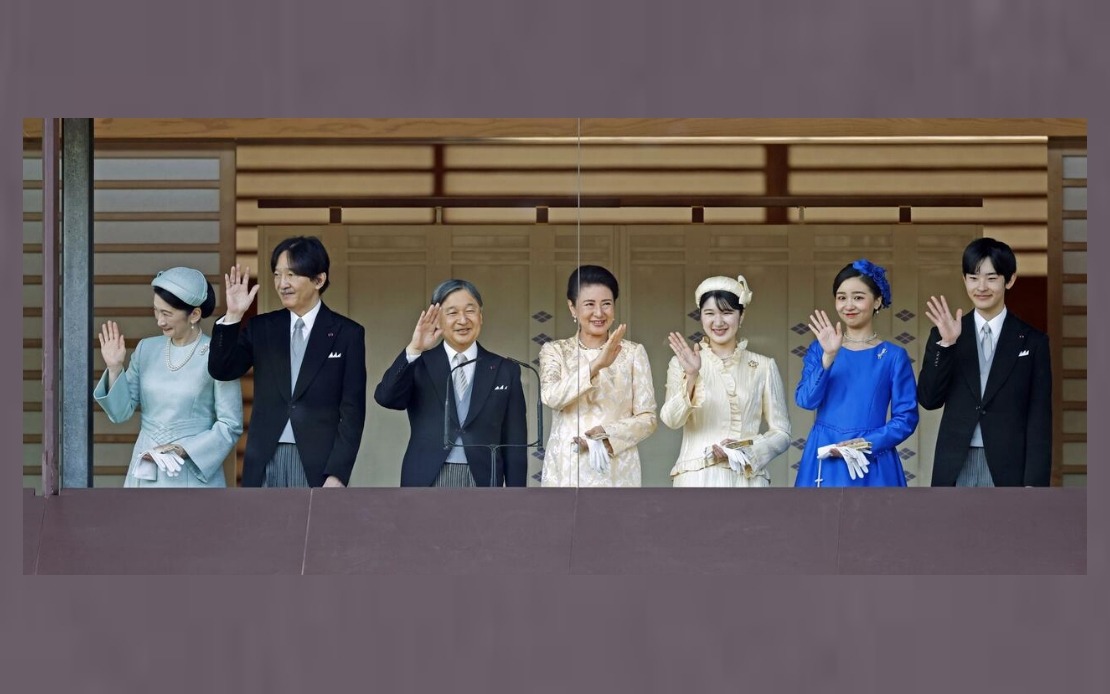
Japan has enacted sweeping changes to its Imperial House Law, marking the first major overhaul since 1947, yet the reforms have created unexpected turbulence within the palace bureaucracy and fractured public consensus about the nation's path forward. Passed by parliament on Friday, the revised legislation represents Prime Minister Sanae Takaichi's conservative government attempting to reverse the demographic crisis within the imperial family, which has dwindled to just 16 members. However, the measure sidesteps the core question troubling many Japanese citizens: whether the world's oldest hereditary monarchy should finally allow women to ascend the throne.
Among those tasked with implementing the new rules, apprehension dominates. Officials working within the Imperial Household Agency find themselves navigating uncharted institutional terrain, uncertain how their day-to-day responsibilities will transform as the palace gradually adapts to accepting adopted male members from former imperial lineages. The uncertainty extends beyond bureaucratic procedure; senior aides worry about the philosophical and symbolic implications of welcoming individuals raised outside the imperial system into roles that have historically demanded intimate knowledge of protocols developed over centuries. One agency official articulated this anxiety plainly, questioning whether adoptees could truly internalize "the nature of the symbolic imperial system and be able to properly carry on the wishes" of recent emperors, a concern reflecting deeper doubts about whether outsiders can authentically embody the responsibilities inherent to their new positions.
The legislation does offer meaningful concessions. Males aged 15 and older from eleven former imperial branch families—lineages that lost their royal status in 1947—may now be adopted into the imperial family, providing a previously unavailable mechanism for replenishing the dwindling pool of potential successors. Additionally, princesses marrying commoners can now choose whether to retain their royal status, a flexibility that marks genuine progress toward modernizing rigid succession conventions. These provisions suggest the government recognizes some necessity for reform. Yet the underlying architecture of the law continues to exclude women from the imperial succession itself, a limitation that sits increasingly uncomfortably with contemporary Japanese values and generational attitudes toward leadership and equality.
Scepticism about the law's practical effectiveness emerged quickly from unexpected quarters. Asahiro Kuni, the 81-year-old third son of the Kuninomiya branch family, expressed doubts that the theoretical opportunity would translate into actual adoptions. "I wonder if anyone would actually step forward to be adopted," Kuni told journalists. "It doesn't seem very realistic." His hesitation captures a broader concern: the palatial lifestyle, intense public scrutiny, and ceremonial obligations of imperial membership may deter candidates from outside families, meaning the law could provide a legal pathway that few choose to traverse. This gap between institutional possibility and human willingness represents a fundamental vulnerability in the government's approach to succession planning.
The position of unmarried female imperial family members has become particularly fraught under the new framework. Princess Aiko, the only daughter of Emperor Naruhito and Empress Masako, remains constitutionally barred from succession despite public sympathy for her potential ascendancy. Yet she and four other unmarried female family members, including Princess Kako, daughter of Crown Prince Fumihito, now face a different dilemma: whether to retain royal status if they marry outside the imperial line. Senior Imperial Household Agency officials have characterized this choice as "quite difficult" and "rather harsh," recognizing that social expectations and family considerations will weigh heavily on these women. The decision carries personal stakes that male family members have never confronted, underscoring how the new law, while appearing progressive, actually intensifies pressure on female imperial members to choose between personal relationships and institutional duty.
The administrative complexity of such marriages further illustrates the law's awkward compromises. Spouses and children of female imperial family members who marry commoners will themselves remain commoners under the revised provisions, creating the anomaly of divided status within single households. One aide to a female imperial family member flagged this peculiarity, observing that it would seem "strange having different statuses within the same family." This aide went further, suggesting the government's design "intends to rule out female emperors or emperors from the matrilineal line," interpreting the reforms as a deliberate strategy to perpetuate male-only succession rather than a genuine modernization of the institution.
Public opinion reflects this institutional ambiguity and unresolved constitutional questions. While some Japanese citizens express confidence that adopted imperial members could perform their symbolic roles successfully if they demonstrate genuine commitment to serving the people, this optimism remains qualified and conditional. Shinichi Kokubun, 76, who met Emperor Naruhito, Empress Masako, and Princess Aiko during their April visit to Fukushima Prefecture following its 2011 earthquake and tsunami, articulated this measured perspective: adopted members would face no insurmountable obstacle if they could "stand by the people just as the emperor does." Yet such personal commitment, however admirable, addresses only the symbolic dimension of the crisis, leaving untouched the fundamental question of whether women should participate in formal succession.
Younger Japanese, particularly those approaching or reaching Princess Aiko's age, have emerged as vocal critics of the government's unilateral approach. Miyu Nakao, 22, from Hiroshima, pointed to consistent polling showing substantial public support for female succession, then criticized what she perceives as governmental overreach. "The government has made a decision on the imperial system all by itself," she remarked, highlighting her generation's conviction that such consequential decisions require genuine democratic deliberation rather than top-down pronouncement. A 20-year-old male college student in Osaka amplified this concern, noting that "not many people around me, including myself, are familiar with what the Imperial House Law is" and lamenting the absence of "sufficient discussions or public outreach" from government leadership. These generational voices suggest that the government's failure to conduct sustained public education or debate about succession reform has created a legitimacy deficit that legal passage alone cannot resolve.
The Emperor is constitutionally defined as the "symbol" of the state, a formulation that grants the institution remarkable cultural resonance while circumscribing its formal political power. Emperor Naruhito and Empress Masako, who brought diplomatic experience from her previous career into the palace, have actively cultivated this symbolic role through frequent domestic and international engagements, including visits to disaster-affected regions and foreign nations. Their visible commitment to the role's substantive dimensions—addressing suffering, building international relationships, representing Japanese values—has elevated public expectations about what the monarchy should accomplish. Yet this very elevation of the symbolic emperor's importance to contemporary governance makes the succession question more pressing, not less. If the imperial family's symbolic function proves so significant that Empress Masako's diplomatic expertise and Princess Aiko's potential future influence matter greatly, then excluding capable women from succession becomes increasingly indefensible on both practical and ethical grounds.
The reform legislation ultimately reveals a conservative government attempting to preserve institutional continuity through incremental adaptation rather than fundamental reimagining. By permitting adoptions and allowing female royal status retention while maintaining male-only succession, the government has satisfied no constituency completely. Palace officials remain anxious about implementation and cultural continuity. Conservative constitutional scholars worry that allowing female retention of status somehow threatens male succession's future. Progressive citizens and younger generations increasingly question whether the government has the moral authority to shape the monarchy's future without more extensive public engagement. And potential male adoptees, in at least one instance, question whether the opportunity will prove practically attractive.
For Malaysia and Southeast Asian readers observing Japan's constitutional monarchy grapple with modernization, the case study holds particular resonance. As regional governments navigate tensions between traditional institutions and contemporary democratic values, Japan's imperial succession debate demonstrates how sensitive constitutional matters resist purely technocratic solutions. The generational divide evident in Japanese responses to succession reform mirrors broader regional patterns where younger populations increasingly question whether inherited institutions must adapt to modern gender equality norms. Japan's failure to conduct robust public dialogue before implementing major constitutional reforms also carries cautionary implications for any Southeast Asian nation contemplating similar institutional evolution. The coming years will reveal whether the adopted sons from former imperial families will actually step forward, whether Princess Aiko's generation will accept their constrained choices, and whether public pressure for female succession will eventually force constitutional revision. For now, Japan's imperial institution stands at an uncertain inflection point, legally reformed but spiritually unresolved.

