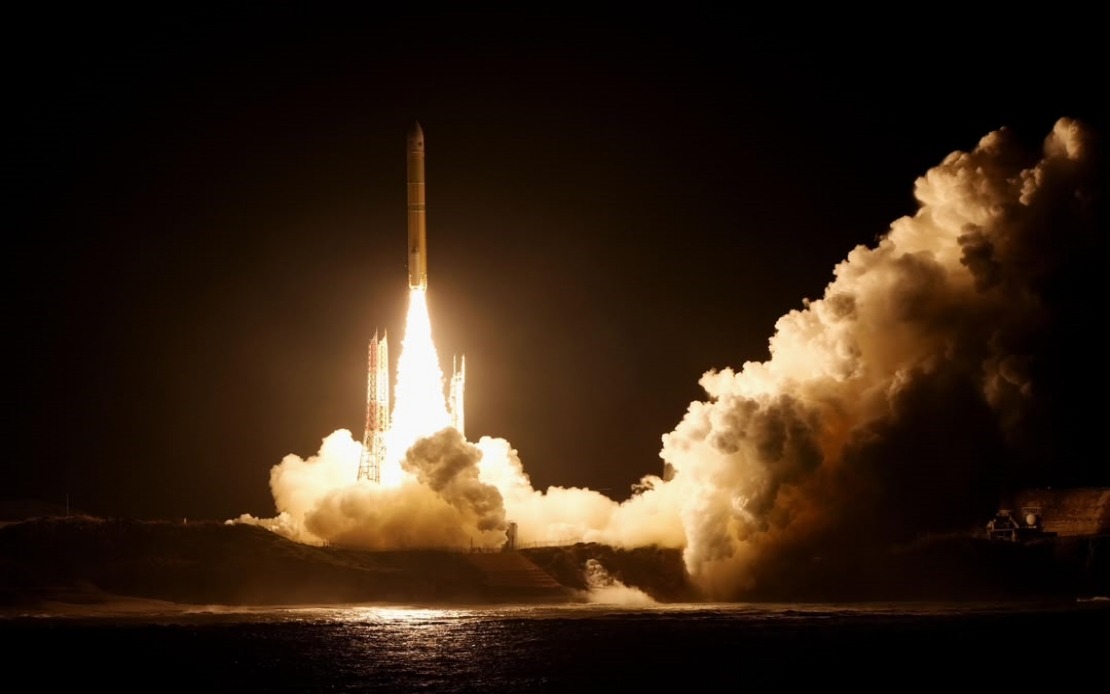
Japan's ambitious efforts to develop an indigenous satellite positioning infrastructure moved forward on Tuesday with the successful launch of an H3 rocket carrying the Michibiki No. 7 positioning satellite from the Tanegashima Space Centre. The Japan Aerospace Exploration Agency executed the mission from Tanegashima, a small island in southwestern Japan, in what represents a crucial recovery from the programme's earlier setback. The achievement signals Japan's determination to establish technological independence in space-based navigation systems, a capability increasingly vital for regional security and economic competitiveness in Asia.
The launch represents the second consecutive successful deployment of the H3 rocket following the December failure that had threatened momentum in Japan's space ambitions. That earlier setback, involving the H3 No. 8 rocket, had prompted urgent remedial work within JAXA to identify and correct the underlying technical problems. The successful June launch that followed carried multiple miniature satellites into orbit, demonstrating that engineers had successfully addressed the issues. Tuesday's mission builds on that progress and validates the corrective measures implemented by the space agency.
Michibiki No. 7 forms part of Japan's Quasi-Zenith Satellite System, a four-satellite constellation designed to provide enhanced positioning, navigation, and timing services across the Asia-Pacific region. The system delivers location information for smartphones, vehicle navigation systems, and an expanding array of civilian and commercial applications throughout the country and across neighbouring regions. This positioning capability carries particular significance for Japan and its regional partners, as it reduces reliance on foreign systems for critical infrastructure dependent on accurate navigation data.
Japan currently operates five Michibiki satellites that provide positioning services across the country, though with coverage limitations and gaps compared to what a complete constellation would deliver. The government's strategic goal involves deploying seven such satellites in orbit, a configuration that would enable continuous, uninterrupted service without dependence on alternative satellite systems operated by other nations. Achieving this seven-satellite constellation would represent a major milestone in Japan's push for technological sovereignty in space infrastructure.
The launch sequence encountered weather-related challenges that pushed back the mission timeline. Originally scheduled for Friday, adverse weather conditions including a passing typhoon forced postponement to Monday. Subsequent inclement weather around the Tanegashima launch site necessitated another delay until Tuesday, when atmospheric conditions finally permitted safe liftoff. These delays, while frustrating to programme managers, reflect prudent safety protocols inherent in space operations where weather windows are critical to mission success.
The December failure had created a cascade effect throughout Japan's space schedule, delaying the Michibiki No. 7 launch that had originally been planned for February. That earlier loss represented a significant setback to the government's timeline for completing the full Quasi-Zenith constellation. The successful deployment on Tuesday helps restore schedule momentum and demonstrates that JAXA's engineers achieved confidence in the H3 rocket system despite the earlier mishap. Each successful launch reinforces the reliability case for the platform and positions it as Japan's dependable successor to the H2A family.
The H3 rocket programme itself has undergone a mixed trajectory since replacing the H2A as Japan's flagship launch vehicle. The H2A rockets established an impressive reliability record over more than two decades of operations, becoming the workhorse of Japan's space infrastructure and earning international respect for consistent performance. The transition to H3 technology represented an attempt to develop more advanced, cost-efficient launch capabilities designed for future decades of Japanese space operations. However, the programme has encountered technical hurdles that have tested project leadership and highlighted the inherent risks in space vehicle development.
From a regional perspective, Japan's success in establishing an independent positioning satellite constellation carries implications for the broader Asia-Pacific strategic environment. Southeast Asian nations, including Malaysia, increasingly rely on space-based positioning systems for infrastructure management, financial systems, and communications networks. The availability of an additional regional positioning option beyond existing systems operated by the United States, Russia, China, and the European Union provides diversification that enhances system resilience and reduces strategic vulnerability. Japan's progress toward a fully operational Michibiki system therefore extends benefits beyond Tokyo to regional partners and allies.
The broader context of space competition in Asia demonstrates how positioning satellite systems have become strategically significant assets rather than purely civilian conveniences. China's BeiDou navigation system now operates a full constellation of 35 satellites, providing global coverage and underpinning ambitions to reduce reliance on American GPS. India's NavIC system serves South Asian needs with a constellation of satellites optimized for the Indian Ocean region. Japan's determination to complete Michibiki reflects recognition that space capabilities directly correlate with national technological status and strategic autonomy. The successful H3 launches demonstrate that Japan retains the engineering expertise and institutional commitment to compete in this domain despite earlier stumbles.

