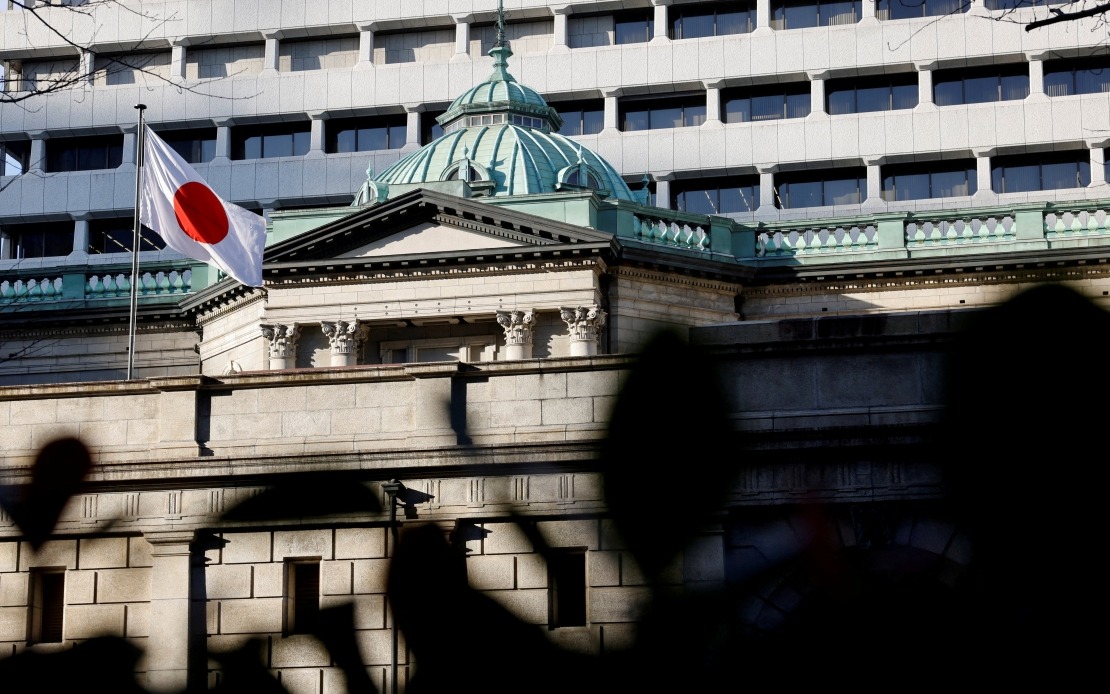
Japan's recent enactment of legislation prohibiting the desecration of its national flag has thrust into the spotlight a tension that democracies worldwide continue to grapple with: the competing demands of protecting national symbols and preserving fundamental freedoms of expression. The new Japanese law arrives at a moment when political polarization is rising in the country, with some observers warning that such restrictions could embolden right-wing movements. Critics have seized on the measure as evidence of an attempt to cultivate what they characterize as national supremacism, reflecting anxieties about the direction of political discourse in Tokyo.
The introduction of Japan's flag protection statute reveals how differently nations calibrate their approach to this question. Germany, which maintains one of Europe's strictest regimes governing national symbols, criminalizes not merely flag desecration but also offensive treatment of the national anthem and other emblems of state. Violators in Germany face up to three years of imprisonment or financial penalties, with sentences potentially reaching five years if the offense is determined to have been designed to undermine constitutional principles. This tough stance carries historical weight: German flags were used sparingly in the decades following the nation's partition after World War II, particularly in West Germany where their display remained circumscribed by collective memory and caution.
The landscape shifted markedly after Germany's role as host of the 2006 World Cup normalized flag displays in public spaces. Yet in recent years, the national standard has become symbolically freighted in ways many find troubling. Right-wing and anti-immigration movements have appropriated the flag as a rallying symbol, leading social commentators and media observers to describe its usage among extremist circles as projecting exclusionary and negative messages rather than inclusive national pride. This appropriation has complicated Germany's relationship with its own patriotic imagery, demonstrating how national symbols can be contested terrain in polarized societies.
France's approach similarly enshrines legal protections for its tricolor flag, which carries profound symbolic resonance tied to the revolutionary ideals of liberty, equality, and fraternity. French law prohibits public destruction of the flag and forbids its use in ways deemed disrespectful or degrading. The French state treats its flag as inseparable from these foundational democratic values, embedding legal protection within a broader narrative of republican identity. This framing differs subtly from nationalist considerations alone, instead rooting restrictions within a philosophy of shared civic principles.
Iran presents a more complex picture. Although no explicit statute exists to penalize flag desecration, the Iranian leadership has moved toward strengthening penalties following waves of anti-government protests in recent months. The Iranian flag's incorporation of the Arabic word for God invests desecration with religious dimensions; damaging the flag is treated as an act of blasphemy against Islam itself. Nonetheless, despite the country's authoritarian governance and current tensions with external powers, the leadership has generally exhibited restraint in pursuing harsh punishments, apparently calculating that fostering national cohesion remains prioritized over aggressive enforcement.
China operates under substantially more punitive statutes. Offenses involving damage to the national flag carry sentences of up to three years in prison. The state reinforces patriotic consciousness through systematic educational campaigns, most visibly through the daily flag-raising ceremony held at Beijing's Tiananmen Square at sunrise, where the Five-star Red Flag is hoisted with ceremonial precision. Individual cases illustrate the seriousness with which authorities pursue such matters: a man in Tianjin who slashed sixty-six flags displayed at a residential complex received a two-year prison sentence, while in Qinghai Province, another individual faced administrative detention merely for using the national flag as a curtain.
The United States presents a starkly different constitutional framework. As an immigrant nation built on pluralistic foundations, the American flag has historically functioned as a symbol of national unity transcending deep social divisions. The practice of flag burning emerged prominently during anti-Vietnam War demonstrations as a form of political protest. In 1989, the United States Supreme Court ruled that such acts constitute protected speech under the First Amendment of the Constitution, establishing flag desecration as a constitutionally safeguarded form of expression rather than a prosecutable offense. This decision reflects American constitutional philosophy prioritizing even provocative speech over state control of symbolic expression.
That foundational legal position faces renewed pressure. In August of the previous year, United States President Donald Trump signed an executive order instructing the Justice Department to prosecute flag burning and related acts of desecration. This directive creates tension with the Supreme Court's established jurisprudence and signals political appetite to overturn or circumvent the 1989 decision, demonstrating that even in the American context, the balance between symbol protection and expressive freedom remains contested and subject to shifting political winds.
South Korea has similarly grappled with these questions. Some legislators have advocated for establishing a national flag day, while existing statutes impose prison sentences of up to five years for intentional damage to the flag motivated by an intention to insult the state. Advocacy groups contend that such restrictions unduly constrain freedom of expression, and South Korea's approach remains controversial among those prioritizing civil liberties. The South Korean debate reflects how societies across East Asia are increasingly confronting the implications of legal protections for national symbols in an age of digital communication and diverse political movements.
For Malaysian and Southeast Asian observers, Japan's legislative move carries significance beyond its immediate borders. The region has witnessed its own tensions between nationalist sentiment and pluralistic governance. Several nations in Southeast Asia maintain substantial multiethnic, multireligious populations where aggressive nationalist legislation could carry different implications than in more homogeneous societies. Thailand's strict lèse-majesté laws demonstrate how symbol protection can intersect with broader patterns of speech restriction. Malaysia, with its constitutional framework emphasizing both Islam's special position and minority religious freedoms, navigates comparable tensions. Japan's new statute provides a case study in how democracies attempt to codify patriotic values while managing the risks that such codification poses to open discourse.
The divergence in global approaches suggests no consensus exists regarding the optimal balance between protecting national symbols and preserving expressive freedom. Democratic societies continue experimenting with different calibrations, ranging from the American model of near-absolute protection for even offensive political speech to the German and Chinese approaches emphasizing state control over symbolic representation. Japan's decision to join the more restrictive camp reflects particular political currents in Tokyo while simultaneously illustrating how this ancient debate persists across vastly different constitutional traditions and political cultures.

