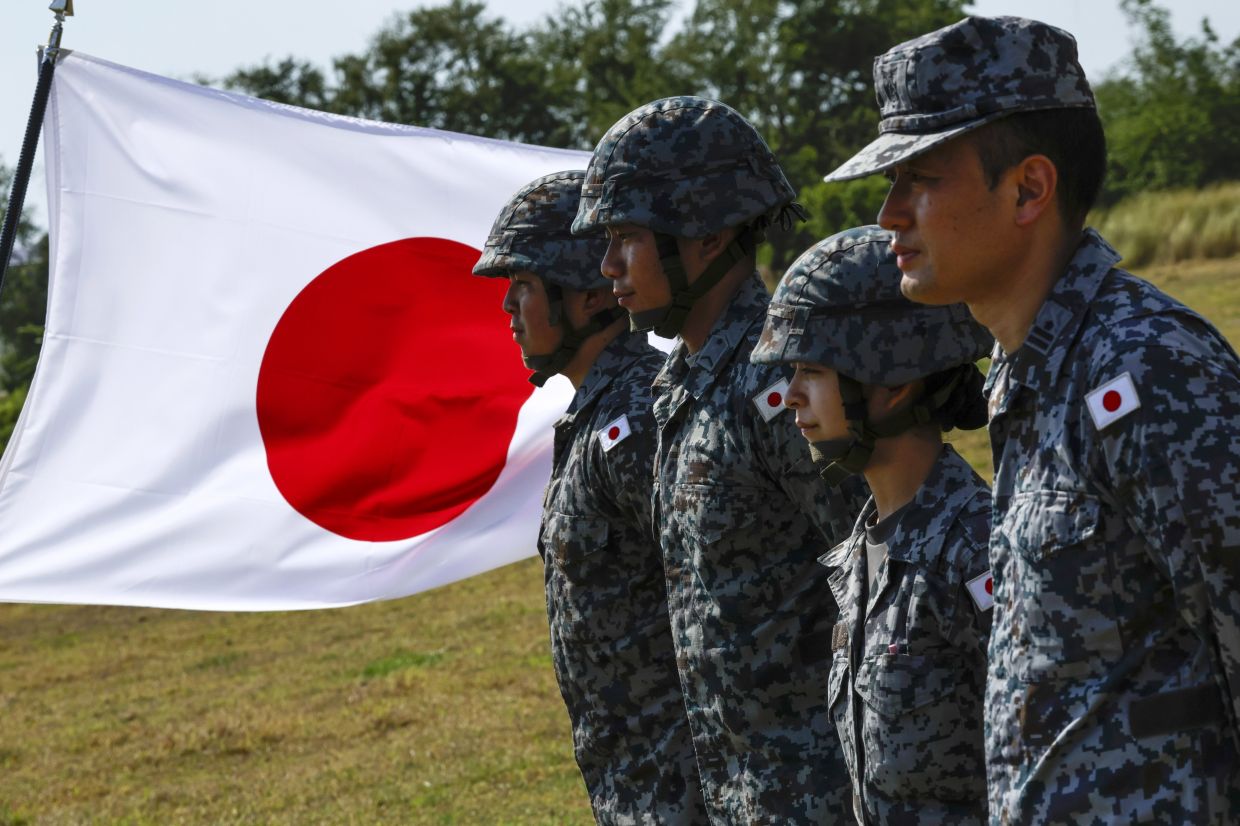
Japan is quietly engineering a comprehensive regional security architecture designed to counterbalance China's growing military assertiveness, yet it must navigate a treacherous diplomatic tightrope—building military partnerships without explicitly declaring them anti-China, all while managing anxieties about America's long-term commitment to Asian security. The strategy became evident during recent international security discussions, where Tokyo's Defence Minister orchestrated high-profile engagements including a carefully choreographed meeting with the US Defence Secretary, signalling to the region that the Washington-Tokyo alliance remains robust. Yet beneath the confident public messaging lies a more complex reality: Japan recognises that its own economic and military resources cannot match Beijing's scale, compelling Tokyo to pursue what analysts describe as a sophisticated hedging strategy that weaves together military partnerships, development aid, economic incentives, and infrastructure investments into a coherent whole.
Japan's shift reflects fundamental anxieties about the evolving regional security environment. Washington's reliability has come into question following the Trump administration's demands that allied nations dramatically increase defence spending whilst simultaneously imposing tariffs on strategic partners like India. This combination of escalating alliance costs and perceived diminishing US commitment has forced Tokyo to accelerate a strategic pivot that began under former Prime Minister Shinzo Abe but is now taking far more concrete operational form. The calculus is straightforward: if the United States cannot be relied upon to maintain its historical commitment to regional stability, Japan must help construct alternative mechanisms ensuring that smaller Southeast Asian and Pacific nations are not coerced into Beijing's orbit through economic and military pressure.
Central to this emerging framework is Japan's transformed Free and Open Indo-Pacific initiative, which Prime Minister Sanae Takaichi recalibrated in May away from abstract principles towards practical tools addressing the region's tangible concerns. Rather than emphasising rule of law and governance norms—worthy but insufficiently motivating for nations facing immediate development challenges—the updated approach prioritises undersea cable infrastructure, energy supply chain security, and maritime domain awareness capabilities. This reorientation acknowledges a crucial insight: many Southeast Asian and Pacific Island nations, whilst understanding China's military rise poses long-term risks, remain primarily focused on economic development and energy security in the near term. By aligning Japan's security strategy with these pressing practical needs, Tokyo offers a more compelling value proposition than binary choice between Chinese or American alignment.
A particularly innovative mechanism enabling this broader strategy is Japan's Security Assistance programme, formally established to circumvent longstanding restrictions embedded in Japan's Official Development Assistance policy that prohibit military use of aid funds. The programme has expanded dramatically, growing from support for four countries valued at 2 billion yen in its initial phase to assistance reaching twelve countries totalling 18.1 billion yen—a ninefold expansion in scope and value. This infrastructure enables Japan to provide military-grade equipment including advanced radar systems and unmanned aerial vehicles to partner nations lacking sufficient capital to purchase such systems through commercial channels. For recipient countries, the arrangement proves politically palatable because receiving infrastructure development assistance and security support through separate channels allows governments to frame external partnerships as primarily developmental rather than military—a crucial distinction in nations where public opinion remains sensitive to perceptions of excessive militarisation.
The practical manifestations of this strategy are becoming increasingly visible across the Indo-Pacific. Tokyo recently welcomed New Zealand's announcement of an upgraded Japanese Mogami-class frigate joining Wellington's naval forces, expanding Tokyo's network of interoperable defence platforms throughout the region. Meanwhile, Japan and Indonesia advanced discussions regarding potential export of Japanese Asagiri-class destroyers, a significant step forward given that Japan only lifted its longstanding ban on lethal weapons exports in April. The expansion now permits Japanese defence exports to seventeen countries globally, including six ASEAN members—the Philippines, Malaysia, Indonesia, Vietnam, Thailand, and Singapore. These military equipment transfers serve multiple strategic purposes simultaneously: they provide partner nations with advanced capabilities; they create interoperability with Japanese systems and doctrines; they generate demonstration effects encouraging broader regional adoption of Japanese military platforms; and critically, they support Japan's domestic defence industrial base by creating international markets for Japanese military technology.
Beyond traditional defence partnerships, Japan has recognised that exclusively military approaches to regional security prove insufficient and potentially counterproductive. The complementary Power Asia initiative, launched in April with US$10 billion in committed resources, targets the immediate vulnerability of regional energy security exposed by ongoing Strait of Hormuz disruptions. This initiative addresses a fundamental constraint limiting Southeast Asian nations' strategic autonomy: overdependence on energy imports through vulnerable chokepoints creates structural incentives to accommodate Chinese preferences regardless of security concerns. By helping regional partners develop emergency energy reserves and build longer-term supply chain resilience, Japan addresses a root cause of regional vulnerability to coercion whilst simultaneously advancing legitimate economic development objectives.
Scholars studying this strategic evolution emphasise that Tokyo's approach succeeds precisely because it avoids explicit anti-China framing that would provoke Beijing's countermeasures and risk alienating regional partners wary of being drawn into great power competition. Stephen Nagy, a political scientist based in Tokyo, characterises the fundamental driver as straightforward hedging against regional instability combined with concerns about Washington's reliability, whilst ensuring sea lanes remain open and smaller nations retain genuine strategic autonomy. Pratnashree Basu, an Indo-Pacific specialist at India's Observer Research Foundation, emphasises that Japan's approach integrates security assistance with infrastructure financing and energy transition support, acknowledging that most regional nations genuinely prioritise development and economic resilience alongside security concerns.
This integrated approach also reflects sophisticated understanding of infrastructure development as a strategic tool with multiple benefits. Funding ports, airports, and connectivity infrastructure proves more politically acceptable to recipient governments than direct military aid whilst simultaneously creating physical assets that can support coastguard operations, maritime domain awareness, and in some instances, defence-related logistics. Japanese scholars note this dual-use dimension: infrastructure ostensibly developed for civilian maritime commerce and energy transport simultaneously creates capabilities enhancing regional security coordination and reducing reliance on Chinese infrastructure networks. In effect, Japan views connectivity infrastructure as both a legitimate development contribution and a strategic enabler of a more resilient Indo-Pacific capable of resisting coercive pressures.
The industrial dimensions of Japan's strategy merit equal attention to its diplomatic aspects. Beyond contributing to regional security balancing, the defence assistance and export expansion programmes create proving grounds for Japanese military equipment within operational environments, providing invaluable feedback for Japan's defence manufacturers and strengthening their position in international defence markets. This industrial expansion represents significant strategic importance for Japan's broader economic pivot. As manufacturing competition intensifies with lower-cost producers across Asia, defence and security-related exports represent high-value sectors where Japanese technological sophistication, reliability, and service support provide enduring competitive advantages. The expansion of Japanese defence exports following the April ban lifting therefore represents not merely military strategy but also industrial policy designed to diversify Japan's economic base and strengthen sectors offering resilience to technological disruption.
Yet substantial obstacles persist in implementing this multifaceted strategy. Japan's financial resources, whilst substantial, pale against China's capacity to extend loans, investment, and development assistance. Regional partners remain acutely aware of China's economic importance and hesitate to undertake actions perceived as explicitly anti-Chinese. Japanese officials and analysts acknowledge that Tokyo cannot outbid Beijing on pure economic terms and must instead emphasise the non-coercive character of Japanese partnerships, the absence of conditionality regarding internal governance or foreign policy alignment, and the complementary nature of Japanese support to regional development priorities. This requires constant calibration—providing sufficient security support and military capabilities to credibly deter Chinese coercion, whilst avoiding rhetoric or actions triggering Chinese countermeasures or alienating regional nations concerned about being drawn into superpower competition.
The strategic calculus fundamentally rests on Japanese policymakers' assessment that regional nations genuinely prefer a security architecture providing autonomy and protecting against coercion, rather than hegemonic ordering by any single power whether American or Chinese. By emphasising practical tools addressing immediate development and security needs, whilst respecting each nation's sovereign choice regarding alignment, Japan seeks to construct what analysts describe as a layered security framework combining minilateral partnerships, bilateral defence ties, and multilateral maritime security arrangements into a coherent system capable of maintaining openness and resisting coercion. This approach acknowledges the reality of American power decline relative to China whilst refusing to accept Chinese regional hegemony as inevitable—instead positioning Japan as an indispensable architect of an alternative order offering regional nations genuine strategic choices.

