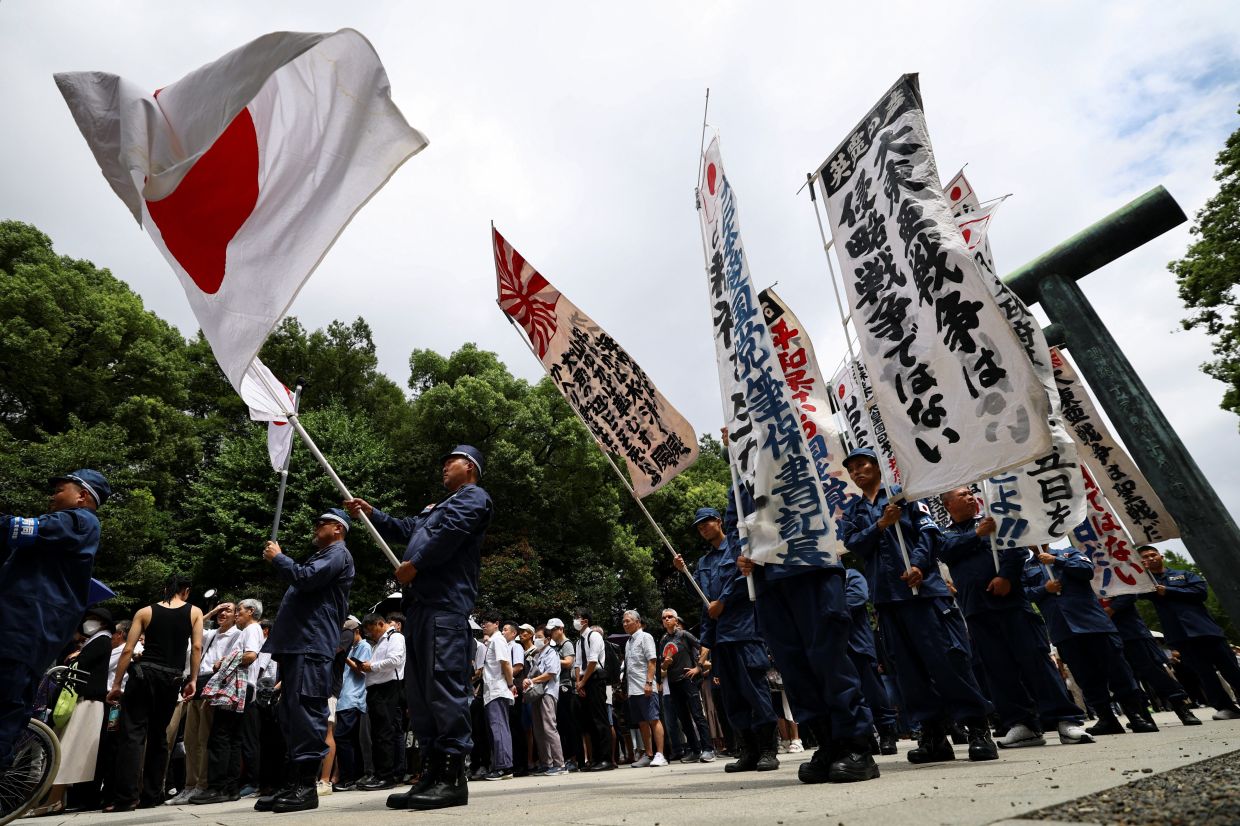
Japan's Defence Minister Shinjiro Koizumi made a closely watched visit to the Yasukuni shrine on Saturday, August 15, marking the 81st anniversary of the country's surrender in World War II. His attendance at the site, which honours Japan's 2.5 million war dead including convicted war criminals from Imperial Japan's occupation of Asia, comes at a time when regional tensions remain elevated over Japanese military posturing and historical grievances. Notably absent from the shrine was Prime Minister Sanae Takaichi, a significant symbolic choice that reflects careful political calculation regarding Japan's delicate relationships with its Asian neighbours.
The Yasukuni shrine has remained a lightning rod for diplomatic friction throughout the post-war era, particularly between Japan and its closest neighbours, China and South Korea. The facility houses the spirits of both ordinary soldiers and individuals convicted of war crimes during Japan's Imperial expansion across the region in the 1930s and 1940s. For decades, official visits by senior Japanese politicians have been interpreted by China, South Korea, and others as insufficient atonement for wartime atrocities and occupation brutality. When former Prime Minister Shinzo Abe visited the shrine in December 2013, the backlash was immediate and severe, triggering angry protests from Beijing and Seoul, and drawing rare criticism even from the United States, Japan's closest security ally.
Takaichi's decision to stay away from the shrine this year diverges from her previous pattern as a regular visitor before assuming the premiership in October. There had been speculation that she might follow Abe's precedent, particularly given her reputation as a nationalist politician and hawk on regional security matters. However, her absence suggests the Japanese government is attempting to balance its need to maintain historical ties with nationalist constituencies at home against the diplomatic cost of antagonising regional powers at a particularly tense moment. Her office confirmed she made an offering to the shrine, a compromise gesture that allows her to pay respects while avoiding the symbolic weight of a physical appearance.
Koizumi's presence as defence minister, by contrast, carries less diplomatic fallout than a prime ministerial visit would entail, yet still sends meaningful signals about Japan's military priorities and historical positioning. This marks his first visit to Yasukuni in his current defence portfolio, though he has maintained a long record of shrine visits during his previous government roles. The last defence minister to visit was Minoru Kihara in 2024, suggesting this has become an accepted, if controversial, practice among officials in the defence establishment. Koizumi's attendance reflects the increasingly assertive military posture Japan has adopted as it gradually sheds the pacifist constraints embedded in its post-war constitution.
The timing of the shrine visit coincides with a period of notably deteriorating Sino-Japanese relations, driven by Takaichi's own provocative statements on Taiwan. In November, the prime minister suggested Japan would intervene militarily should a conflict erupt over the island, directly challenging China's core territorial claims. This rhetoric has prompted Beijing to warn its citizens against travelling to Japan and to impose targeted trade restrictions. Additionally, China has intensified military patrols around disputed territories in the East China Sea, signalling its determination to challenge Japan's security stance. Senior Colonel Chen Xi of China's defence ministry directly referenced these tensions in a statement released just ahead of the August 15 anniversary, denouncing what he characterised as Japanese neo-militarism and calling for Tokyo to abandon its remilitarisation agenda.
Japan's neighbours remain acutely sensitive to perceived historical revisionism and military expansion, viewing these developments through the prism of past aggression. China and Russia jointly issued a statement through their Tokyo embassies highlighting their sacrifices during World War II, an implicit rebuke to Japan's military trajectory. The geopolitical dimension intensified further when Russian President Vladimir Putin visited the Kuril Islands on Thursday, territories also claimed by Japan, prompting fierce protests from Tokyo. This convergence of tensions demonstrates how regional disputes, historical grievances, and contemporary security competition have become thoroughly intertwined across Northeast Asia.
Interestingly, Japanese-South Korean relations have shown signs of modest improvement in recent months, complicating the simple narrative of regional estrangement. In January, Takaichi and South Korean President Lee Jae Myung engaged in informal cultural exchanges, with both leaders participating in musical and sporting activities. Koizumi similarly engaged in friendly ping-pong competition with his South Korean counterpart. These personal interactions suggest that despite institutional tensions, there remains some willingness among leaders to build rapport and find common ground. However, this fragile rapprochement remains vulnerable to disruption by historical disputes and military posturing.
Japan's broader military modernisation under Takaichi's watch has been unprecedented in scale and scope for a nation historically constrained by pacifist commitments. The government has steadily increased defence spending, accelerated weapons acquisitions, and repositioned its military doctrine toward more assertive regional roles. This transformation reflects genuine security concerns about China's military capabilities and strategic ambitions, but it also triggers alarm among nations that view Japan's militarisation as a potential replay of historical patterns. The defence establishment's embrace of figures like Koizumi, who maintain regular Yasukuni visits, symbolises this gradual normalisation of military assertiveness after decades of restraint.
The Yasukuni shrine itself has attempted to manage controversy surrounding the August 15 commemorations by appealing to visitors to refrain from wearing military-style uniforms, seeking to maintain a solemn atmosphere for general worshippers. Approximately 20 to 30 individuals nonetheless appeared in uniform-style clothing during Saturday's observances, according to reports, suggesting that shrine guidance remains advisory rather than enforceable. This tension between official calls for respectful commemoration and the symbolic militarism displayed by some attendees encapsulates the broader struggle within Japanese society over how to navigate historical memory, national pride, and regional responsibility.
The political calculation by Takaichi to avoid attending Yasukuni personally while allowing her defence minister to do so represents a pragmatic middle path through competing domestic and international pressures. Domestically, nationalist constituencies expect their leaders to honour Japan's war dead without excessive apology or restraint. Internationally, especially among Asian neighbours, such visits are read as historical revisionism and militaristic posturing. By absenting herself while maintaining the shrine custom through proxy and offerings, Takaichi signals an attempt to preserve nationalist credentials while limiting diplomatic damage. Yet this distinction may prove artificial as regional powers interpret the shrine visit primarily through the lens of broader Japanese military expansion and perceived historical revisionism, particularly given Takaichi's own hawkish record on Taiwan and defence spending.
Moving forward, Japan faces a fundamental challenge in reconciling its security imperatives in an increasingly threatening strategic environment with the historical sensitivities that continue to define its relationships across Asia. The Yasukuni shrine visits, ostensibly ceremonial in nature, serve as barometric readings of Japan's willingness to engage in honest historical reckoning versus nationalist assertion. As China expands its military presence and Russia's actions in the Far East create new uncertainties, Japan's regional neighbours will continue scrutinising whether Tokyo's military expansion represents legitimate defensive posturing or the emergence of a revisionist power unprepared to acknowledge past wrongs. The answer to that question will substantially shape the trajectory of East Asian stability for years to come.

