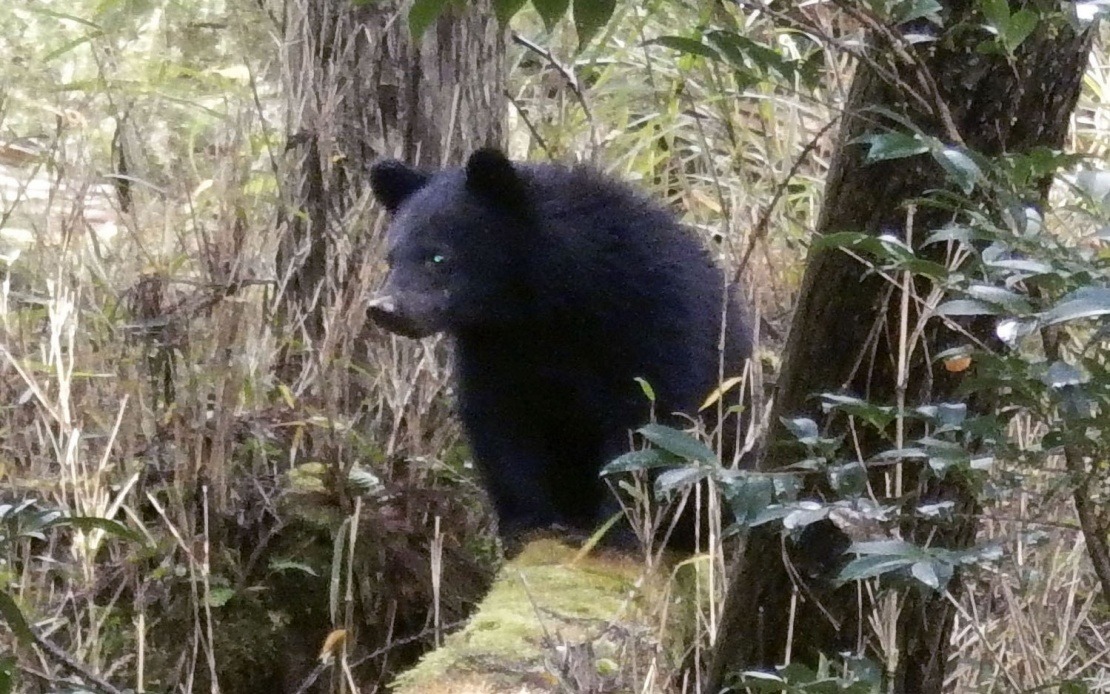
Japan's municipalities are buckling under an unexpected burden: not from wildlife itself, but from an avalanche of aggressive public complaints tied to how local governments handle escalating bear encounters. A government survey covering 40 prefectural and municipal authorities has revealed that more than 40 per cent of responding jurisdictions have endured abusive communication campaigns surrounding bear-related decisions, with 17 local governments reporting that managing these grievances has materially disrupted their core operations.
The scale of the disruption has become serious enough that several municipalities are now appealing to Japan's central government to establish formal guidelines for managing public pressure on wildlife policy. This reflects a deeper governance challenge: when environmental crises trigger intense public emotion, frontline civil servants become targets for venting frustration, regardless of whether they personally set policy. The survey, conducted by Japan's Ministry of Internal Affairs and Communications over the past year beginning last July, captures the collision between surging wildlife encounters and polarised public opinion over how authorities should respond.
The nature of complaints varies widely but consistently crosses the line into harassment territory. Among the 17 local governments experiencing operational disruption, ten reported enduring marathon phone calls exceeding an hour in duration, where callers pursued specific demands or aired grievances with little regard for staff capacity. Five additional jurisdictions absorbed waves of hostile messages through websites and email systems, effectively jamming their communication channels. The intensity suggests this is not casual feedback but coordinated or passionate campaigns designed to pressure decision-makers.
Specific incidents illustrate how polarised the discourse has become. One recurring demand from animal protection advocates comes in blunt form: "Don't you ever kill bears!" Other callers have made demands that border on confrontational, insisting staff "Put the governor on the phone" through repeated calls. Conversely, when a municipality captured and released a bear rather than euthanising it, officials faced a deluge of criticism asking "Why didn't you kill it?" This contradiction reveals no single public consensus exists—instead, municipalities face criticism from both directions simultaneously, making it nearly impossible to satisfy public demand.
One particularly troubling case demonstrates how digital platforms have weaponised the complaint process. A local government employee assigned to bear-related issues became the target of an animal rights advocate who photographed the employee without consent and distributed those images online. This represents a distinct escalation from complaints to personal targeting, creating a chilling effect on staff willingness to handle sensitive wildlife decisions. When individual employees become identifiable targets for online campaigns, the working environment deteriorates significantly, and recruitment for such roles becomes harder.
The context driving this pressure is the unprecedented surge in human-bear encounters across Japan. Government statistics show the nation experienced more than 50,000 bear encounters in the twelve-month period through March—a record high that represents a doubling from the previous year. This explosion in incidents creates genuine public anxiety about safety, particularly in rural and mountainous regions where bears are increasingly venturing into populated areas. That underlying fear is real and justified, but it has created a dangerous outlet in the form of harassment directed at the very officials tasked with mediating between human interests and wildlife management.
The geographical and demographic implications matter significantly for regional stability. Japan's aging rural population, already struggling with resource constraints and administrative capacity, now faces additional strain from managing public relations crises alongside actual wildlife incidents. Municipalities in prefectures bordering forested areas are disproportionately affected, yet they typically have smaller staff and fewer resources to absorb operational disruption. This dynamic compounds existing regional inequality, as rural local governments must now divert limited personnel to managing hostile communications rather than solving substantive problems.
For Southeast Asian observers, this situation offers instructive parallels. As environmental pressures intensify across the region—whether from elephant-human conflict in Thailand and Myanmar, orangutan habitat loss in Malaysia and Indonesia, or tiger incidents throughout the region—similar patterns may emerge. Rapid urbanisation, wildlife habitat loss, and digital connectivity create conditions where local officials handling wildlife decisions become vulnerable to coordinated harassment campaigns. Without institutional frameworks for managing such pressure, environmental governance becomes hostage to the loudest voices rather than evidence-based policy.
A ministry official's statement that "Measures are needed to reduce the burden on frontline staff" represents an official acknowledgment that the current system is unsustainable. However, this framing risks misdiagnosing the problem if it focuses narrowly on protecting staff rather than addressing root causes. The real challenge is establishing legitimate public participation channels, improving transparency in wildlife decision-making, and building broad consensus around bear management that acknowledges both safety and conservation concerns.
The absence of clear national guidelines for bear management creates a vacuum that hostile complainants exploit. Each municipality develops responses independently, generating inconsistency that fuels perception of arbitrary decision-making. If Tokyo were to establish transparent criteria for when bears should be captured versus relocated versus euthanised—based on scientific evidence and community input—it would provide officials with defensible positions rather than leaving them exposed to contradictory public demands. Such guidance would not eliminate complaints but would anchor decisions in formal policy rather than individual discretion.
The timing of this survey is significant because it captures a moment when Japan's wildlife management infrastructure is straining. Climate change, habitat fragmentation, and changing bear behaviour patterns suggest encounters will remain elevated, meaning the complaint burden will persist. Without systemic intervention, municipalities risk losing experienced staff and discouraging new recruitment into wildlife management roles—precisely the opposite of what the situation demands.
For Malaysia and the broader Southeast Asian region, this episode underscores how environmental governance increasingly requires not just ecological expertise but also sophisticated stakeholder management and digital-age communication strategies. As human-wildlife conflict intensifies across the region, administrations must simultaneously manage complex biological realities and equally complex public expectations shaped by social media, online advocacy networks, and polarised viewpoints. Japan's experience suggests that building resilience into local government—through clearer mandates, better training, institutional support, and transparent decision-making frameworks—becomes as important as the technical wildlife management itself.

