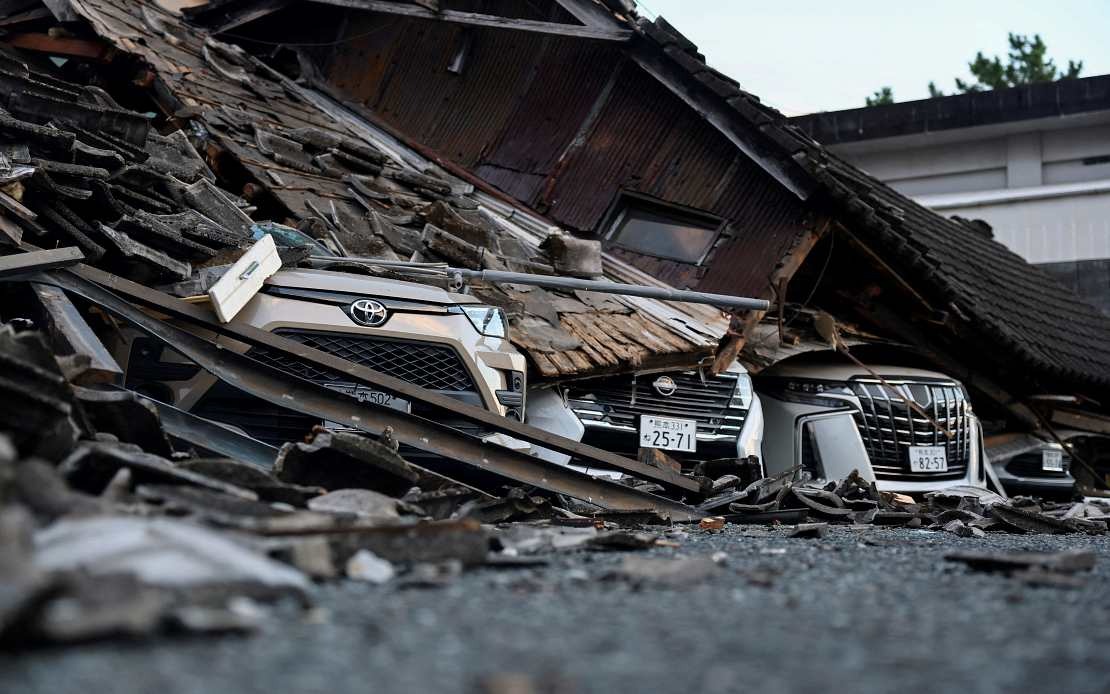
The operator of a variety store chain inside an Aeon shopping mall in Kumamoto Prefecture has publicly admitted to making a decision that cost two workers their lives. On Monday, Habita acknowledged instructing employees to re-enter the building following Tuesday's devastating magnitude 7.1 earthquake, one of the strongest tremors to strike southwestern Japan in recent years. The company's statement came after the two women, one only 22 years old, had safely evacuated the premises in the immediate aftermath of the seismic event but were called back inside to secure cash from daily sales operations.
The scale of the disaster that unfolded on Tuesday underscores the terrifying sequence of events that transformed a routine business operation into a tragedy. The powerful earthquake, which registered at the highest level 7 on Japan's seismic intensity scale, was followed within minutes by a massive explosion that tore through the Aeon Mall Kumamoto building in Kashima Town. Seven people ultimately lost their lives in the blast, including the two Habita employees who had heeded their employer's directive to return inside the structure moments before it exploded.
Koji Yuse, the 64-year-old sales manager at the Kumamoto-based Habita company, took responsibility for the fateful instruction during a press conference on Monday afternoon. He explained that he had ordered the store manager to direct the two employees to go back into the building and transfer the day's cash receipts from the second floor store location to a secure safe positioned on the first floor. Yuse's account revealed the ordinary workplace dynamics that preceded the catastrophe, with a focus on protecting company assets that ultimately obscured the continuing danger to human life.
In his statement to reporters, Yuse expressed deep regret for the decision, telling journalists that he believed the order had been inappropriate given the circumstances. This acknowledgment marks a significant moment in Japan's corporate culture, where such public admissions of error by senior management are not commonplace. The company followed its manager's statement by formally apologizing to the bereaved family members of the deceased employees and providing written documentation detailing the sequence of events that led to their deaths.
The broader context of this incident reveals ongoing concerns about workplace safety protocols in Japan, particularly in how companies weigh financial interests against employee welfare during natural disasters. Evacuation procedures following earthquakes are typically designed to prioritize the immediate safety of all occupants, with the assumption that staff would proceed to designated assembly points and not return until structural engineers confirmed the building's integrity. The decision to override this fundamental safety principle for the sake of securing cash raises questions about how companies balance risk assessment during emergency situations.
Kumamoto Prefecture has been grappling with the full scope of the earthquake's impact across the wider region. According to prefectural government figures released on Tuesday morning, 36 people had been confirmed dead as a direct result of the seismic event, with two additional deaths still under investigation as officials worked to confirm causation. These numbers reflect the intensity of the earthquake and the cascading emergencies it triggered throughout the area, including the Aeon Mall explosion that claimed seven lives.
For Malaysian and Southeast Asian readers, this incident carries particular relevance given the region's own seismic activity and the prevalence of Japanese retail operations throughout the area. Aeon, as a major regional shopping destination operator, maintains significant presence across Malaysia, Singapore, Thailand, and Vietnam, making workplace safety protocols at these facilities a matter of public concern. The Kumamoto incident has prompted a broader review of emergency response procedures at retail facilities across Japan and may influence how similar establishments in Southeast Asia approach disaster management protocols.
The incident also highlights the cultural and organizational factors that can influence decision-making during crisis situations. In this case, the focus on protecting company assets through the retrieval of cash appears to have overridden the precautionary principle that typically governs worker safety in modern economies. This tension between financial stewardship and human safety is not unique to Japan but takes on particular significance in a country with advanced disaster management systems and strong corporate governance frameworks.
Habita's public acknowledgment and apology represent a step toward accountability, but the tragic outcome underscores the irreversible consequences of such decisions. The two young employees, having demonstrated appropriate workplace discipline by initially following evacuation procedures, became victims when asked to disregard their own safety instincts to fulfill a business objective. Their deaths serve as a stark reminder that no amount of financial loss can justify placing workers in harm's way when danger signals are evident.
The broader implications for workplace safety in Japan and across Asia suggest that companies must fundamentally reassess their approach to asset protection during natural disasters. Many organizations have already begun implementing stricter policies that prevent any return to potentially compromised structures after major seismic events, regardless of financial considerations. Industry experts anticipate that the Kumamoto incident will accelerate adoption of more conservative emergency protocols throughout the retail sector and may influence regulatory discussions about mandatory evacuation procedures.
For families affected by this tragedy, Habita's admission and written account provide some measure of transparency about how their loved ones came to be in the mall when disaster struck. However, this transparency cannot alter the fundamental outcome that two women lost their lives due to a decision made by management in their company. The incident will likely influence how Japanese courts assess corporate liability in cases where management decisions during emergencies result in worker fatalities, potentially establishing new legal precedents for workplace safety obligations.

