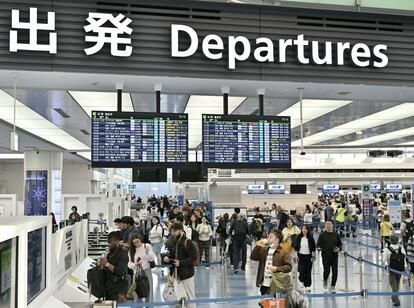
Japan has substantially increased the financial levies on international travel to address mounting pressure from record tourism numbers. Starting July 1, the government raised the departure tax from 1,000 yen to 3,000 yen (approximately US$18) per person, a threefold increase designed to generate revenue for managing the consequences of Japan's tourism boom. The same day saw visa fee increases for foreign nationals, jumping fivefold from previous levels to 15,000 yen for single-entry visas and 30,000 yen for multiple-entry visas—the first such adjustment in nearly five decades since 1978.
The departure tax, formally called the international tourist tax, represents a significant revenue expansion for the government's tourism management strategy. During the fiscal year ending March 2025, the previous tax rate generated approximately 49 billion yen in collections. With the new tripled rate, officials project receipts to reach around 130 billion yen in the subsequent fiscal year, representing a substantial increase in funding available for managing tourism-related challenges. This tax applies uniformly to all departing passengers regardless of nationality, collected seamlessly through airline, cruise line, and travel agency ticket purchases rather than at airports or departure points, minimising friction in the travel process.
The surge in taxation revenue will specifically target infrastructure improvements designed to redistribute tourist flows away from notoriously congested destinations. Tokyo's famous landmarks and Instagram-worthy locations have become victim to their own popularity, creating bottlenecks that degrade both tourist experiences and local quality of life. The government plans to establish designated viewing zones at particularly crowded photo spots, regulating foot traffic through structured access rather than imposing bans. Beyond immediate congestion relief in major cities, the funding will support broader regional tourism initiatives intended to shift visitor numbers toward underexploited areas outside metropolitan centres.
Regional development forms a crucial secondary objective for the tax revenue. Authorities have identified local railways as potential tourist attractions worthy of renovation and marketing investment, transforming transportation infrastructure into heritage experiences. Station buildings across the countryside will receive funding for modernisation and aesthetic improvements, positioning them as focal points for heritage tourism. This decentralisation strategy acknowledges that Japan's tourism capacity problem stems partly from excessive concentration in traditional destinations like Tokyo, Kyoto, and Osaka. By enhancing attractions and accessibility in secondary cities and rural regions, the government seeks to spread visitor spending across a wider geographic and economic base, benefiting provincial economies that have lagged behind urban centres.
Certain traveller categories receive exemptions from the new departure tax, reflecting policy considerations about travel types and passenger circumstances. Transit passengers remaining in Japan for less than 24 hours face no tax obligation, recognising their minimal impact on domestic congestion and infrastructure strain. Similarly, children under two years old are exempted, acknowledging practical difficulties in collecting fees from infants and reflecting social policy considerations around family travel encouragement. However, passengers who purchased tickets before the July 1 implementation date retained the previous 1,000 yen rate, providing a brief transition window for those whose travel plans predated the announcement.
The visa fee increases, representing the first escalation since 1978, reflect accumulated inflation and currency dynamics according to Foreign Minister Toshimitsu Motegi's explanation. Japan's visa charges had remained conspicuously low relative to other Group of Seven member nations, creating what officials viewed as an underpriced entry barrier that failed to reflect either administrative costs or competitive positioning within the developed world. Motegi anticipated that the fee increases would not substantially dampen tourism demand, suggesting official confidence that price elasticity for Japan's tourism product remains inelastic at current fee levels. This measured optimism contrasts with potential concerns that higher entry costs could discourage budget-conscious visitors from Southeast Asia and other price-sensitive markets.
Simultaneously, the government introduced offsetting reductions to domestic passport application fees for Japanese citizens, creating policy balance across different constituencies. The 10-year passport fee for adults dropped dramatically from 16,300 yen to 9,300 yen when applied through designated counters, while five-year passports for minors were standardised at 4,800 yen. Digital applications received additional discounts, reducing costs to 8,900 yen and 4,400 yen respectively, incentivising online processing to reduce administrative burdens. These reductions directly counter the departure tax increase, compensating Japanese travellers for higher international travel costs and supporting government objectives around passport ownership expansion.
Japan's historically low passport ownership rate among advanced economies represents a structural challenge that fee reductions aim to address. By making passport acquisition more affordable, particularly for younger citizens and through convenient online channels, policymakers hope to increase international travel participation among Japanese nationals. This domestic travel promotion balances the government's simultaneous effort to manage inbound tourism volumes, reflecting sophisticated understanding that tourism is fundamentally multidirectional. Encouraging Japanese citizens to travel internationally while managing foreign visitor numbers represents a more nuanced approach than simple tourism reduction.
For Southeast Asian readers and Malaysian travellers specifically, these policy changes carry practical implications. Malaysian visitors planning Japan trips face elevated entry costs through visa fees, making longer trips or repeat visits comparatively more expensive. The departure tax adds roughly 2,000 yen to the cost of each journey, a material expense for budget-conscious travellers. However, Malaysia's visa-exempt status for certain visa categories may provide relief for eligible travellers. The underlying policy rationale—managing overtourism through pricing mechanisms—reflects a broader regional challenge as Southeast Asian destinations increasingly confront similar pressures from surging international arrivals.
The structural approach Japan has adopted suggests important lessons for other regional tourism destinations facing comparable challenges. Rather than attempting demand destruction through restrictive policies, Japan's strategy emphasises revenue-based management coupled with geographic redistribution of visitor flows. This middle-path approach acknowledges tourism's economic importance while acknowledging genuine quality-of-life impacts in congested areas. The combination of congestion management infrastructure, regional development investment, and pricing mechanisms represents a more comprehensive response than isolated tax increases typically allow. As Southeast Asia's major tourism destinations contemplate similar pressures, Japan's integrated policy framework may provide a useful template for balancing economic benefits against livability concerns.
The implementation timeline and exemption structure reveal administrative sophistication in policy design. Rather than introducing retroactive taxation that would have generated traveller frustration and political controversy, the government provided brief advance notice and honoured existing ticket purchases at original rates. This gradualist approach minimises disruption while establishing new baselines, a pragmatic recognition that tourism management requires sustained traveller confidence and goodwill. As Japan refines its tourism policy through these revenue-generating mechanisms, the effectiveness of decentralisation strategies and congestion management infrastructure will determine whether higher prices successfully moderate demand without undermining Japan's competitive position as a premier Asian tourist destination.

