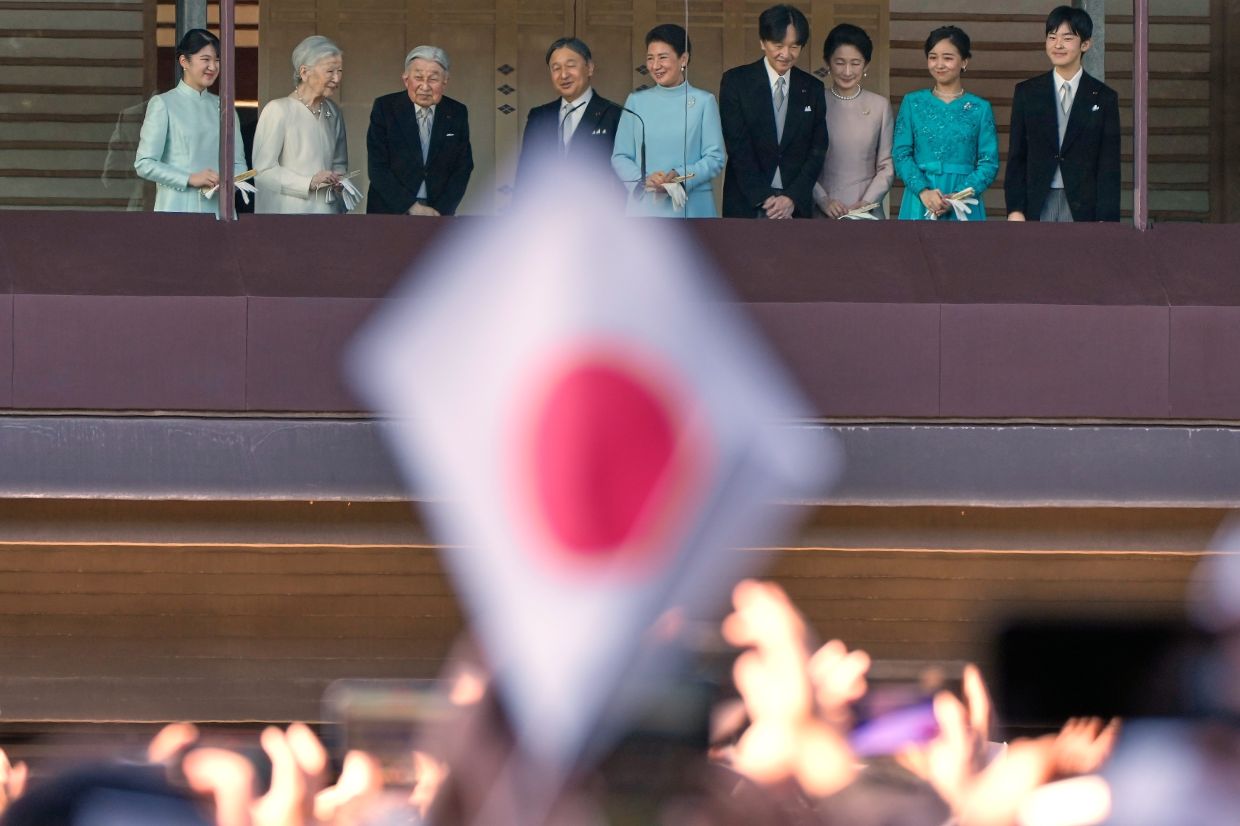
Japan's parliament has reinforced its male-only succession framework for the imperial throne, even as growing evidence suggests ordinary Japanese citizens favour opening the position to women. The upper house passed significant amendments to the Imperial Household Law on Friday, establishing new pathways for maintaining the bloodline through distant male relatives, yet stopping well short of the transformative change that many commentators and public opinion surveys suggest is necessary for the institution's long-term viability.
The practical trigger for these legislative adjustments stems from a narrowing succession pipeline. Prince Hisahito, now aged 19 and the nephew of reigning Emperor Naruhito, represents the primary hope for continuing an unbroken male line stretching back, according to Shinto mythology, to the sun goddess Amaterasu. Yet Hisahito's position remains fragile: he is unmarried, still focused on university studies in biology and entomology, and any failure to produce a male heir would technically sever the imperial lineage under existing law. This prospect has prompted lawmakers to develop contingency measures, though the chosen approach remains deeply conservative.
The new legislation creates a mechanism to adopt distant male relatives aged 15 or older back into the imperial register, provided they remain unmarried at the time of incorporation. This mechanism seeks to mobilise the bloodlines of the 11 imperial branch families that were severed from the main register in the aftermath of World War II. The law also extends a minor concession to royal women, permitting them to retain their imperial status upon marrying commoners—a privilege previously extended only to men in the imperial circle. Observers, however, have noted that this adjustment does nothing to address female succession to the throne itself.
The reform emerged from intense political negotiations within Japan's ruling Liberal Democratic Party, where considerable internal friction became evident as lawmakers grappled with the tension between tradition and contemporary expectations. Prime Minister Sanae Takaichi, herself Japan's first female leader, has been a vocal opponent of female succession, positioning herself against the apparent wishes of many citizens. This paradox—a woman leading the nation while maintaining institutional barriers to female emperors—has not escaped public notice and adds an uncomfortable layer to the debate about meritocracy and equal representation in Japanese governance.
Princess Aiko, the 24-year-old daughter of Emperor Naruhito, represents the most visible casualty of the current rules. Popular with Japanese citizens and educated alongside her father's generation, she remains constitutionally barred from the throne. Similarly, Hisahito's two elder sisters have no succession rights whatsoever. The exclusion of such visible and educated members of the imperial family stands in contrast to the proposed recruitment of distant male relatives, many of whom have spent their lives as ordinary citizens with no preparation for imperial duties.
Former imperial family member Asahiro Kuni, an 81-year-old who belongs to one of the displaced branch families, has articulated serious reservations about the government's chosen strategy. Kuni questioned whether men raised in ordinary society, particularly beyond adolescence, could feasibly adapt to the rigorous constraints and protocols governing imperial life. In remarks to the Asahi Shimbun, he suggested that by age 15, individuals would have already developed attachments to civilian freedom that would conflict fundamentally with imperial service. His assessment implies that the supposed solution—recruiting distant male relatives—may prove unworkable in practice, leaving Japan without viable succession options regardless.
Public opinion, according to polling by the Asahi Shimbun conducted in May, presents a striking counterpoint to the government's conservative approach. Seventy-two percent of respondents expressed support for modifying succession rules to permit women to assume the throne. This supermajority opinion has failed to shift the legislative outcome, revealing a significant disconnect between what Japanese citizens believe appropriate and what their parliament has enacted. The gulf between public sentiment and institutional policy suggests that the imperial succession question remains far from settled in Japanese political discourse.
Even establishment media outlets have begun criticising the government's handling of this issue. The Yomiuri Shimbun, typically a reliable ally of the Liberal Democratic Party, published an editorial questioning the wisdom of the government's chosen path. Liberal Democratic Party veteran Seiichiro Murakami declared the exclusion of Princess Aiko from succession possibilities "utterly outrageous" following the lower house vote on July 10, signalling that party unity on this issue masks genuine philosophical disagreement among senior figures.
The current imperial household comprises 16 members in total, including only five males: retired Emperor Akihito, aged 92; his brother, 90; the serving Emperor Naruhito, 66; the Emperor's brother; and Prince Hisahito. This numerical skew illustrates the demographic reality confronting the institution. With each passing generation, the pool of potential successors narrows further, making the reliance on an exclusively male recruitment strategy increasingly precarious. Any developmental delay, health complication, or failure of Hisahito to marry and produce an heir would rapidly exhaust the available options under the amended framework.
For Malaysia and Southeast Asia's broader regional context, Japan's handling of imperial succession reflects larger questions about how longstanding institutions adapt—or resist adapting—to modern social values and demographic realities. Many Asian monarchies face similar succession pressures and will likely observe how Japan navigates the tension between constitutional tradition and contemporary expectations of meritocratic governance. The decision to maintain male-only succession despite overwhelming public support for change suggests that deeply embedded institutional conservatism can persist even against democratic sentiment and practical necessity.
The legislative package passed with substantial parliamentary majorities, indicating that the government has secured sufficient political capital to defend its position for the immediate term. Nonetheless, the controversy surrounding these reforms—the public dissent from establishment figures, the disapproval from mainstream media outlets, and the stark gap between public opinion and policy outcome—suggests that the imperial succession question will resurface as a prominent political issue within the foreseeable future, particularly if Prince Hisahito's personal circumstances do not evolve as hoped.

