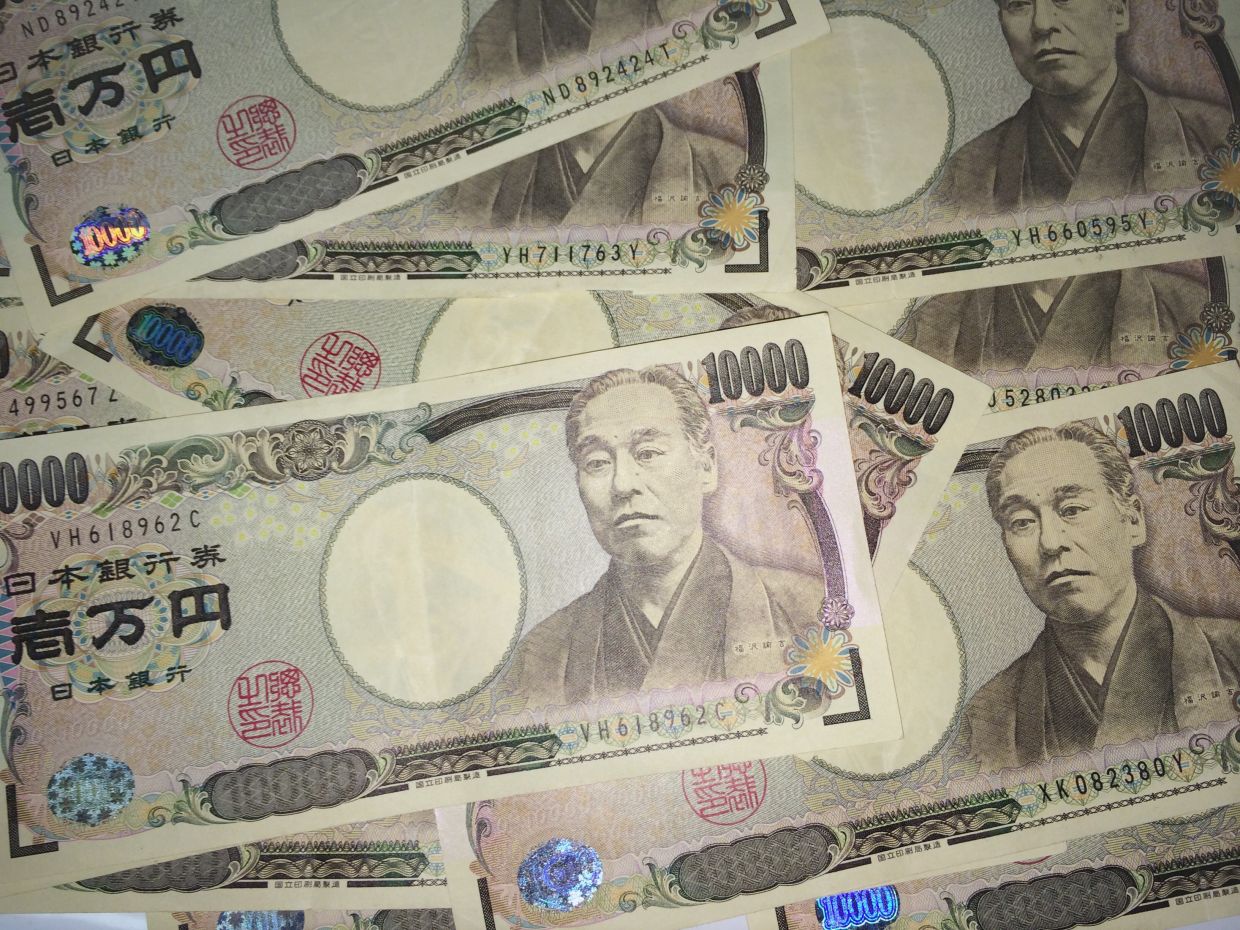
Japan's government has kept the prospect of currency market intervention firmly on the table, with Finance Minister Satsuki Katayama reaffirming on Friday that Tokyo remains prepared to take action to support the yen whenever necessary. Speaking at a routine media briefing, Katayama underscored that Japanese policymakers maintain regular dialogue with their American counterparts on foreign exchange matters and stand ready to respond to further currency weakness. Her comments came as the yen gradually recovered from a four-decade low of 162.84 against the dollar reached on Tuesday, trading at 161.2 on Friday following broader weakness in the US currency triggered by disappointing American employment figures.
The Friday jobs report from the United States provided temporary reprieve for the Japanese currency by dampening expectations of imminent interest rate increases from the Federal Reserve. This data-driven recovery, however modest, highlights how Tokyo's yen support strategy remains contingent on global monetary conditions beyond its direct control. Katayama's statement that Japan's foreign exchange team remains alert "even when the U.S. is on holiday" underscores the intensity with which Tokyo is monitoring currency markets and signals that intervention could materialise with minimal warning. The government's vigilant stance reflects deeper concerns about the economic fallout from sustained yen weakness, which has become increasingly difficult to manage as it ripples through Japan's production and consumption chains.
The prolonged depreciation of the yen has emerged as one of Tokyo's most pressing economic challenges, creating a cascading series of problems for households and businesses already burdened by elevated energy costs linked to geopolitical tensions in the Middle East. Import-dependent industries face mounting pressure as the weak yen automatically raises the cost of acquiring raw materials, components, and finished goods priced internationally in stronger currencies. This inflationary squeeze has proven particularly acute for small and medium-sized enterprises lacking the market power to pass increased costs directly to consumers. The cumulative damage became starkly visible this week when Tokyo Shoko Research released data showing that bankruptcies attributable to yen weakness reached 45 cases during the first half of the fiscal year, representing a 32.3 percent surge compared with the equivalent period twelve months earlier.
Analysts at the research institute attributed these failures predominantly to elevated import expenses for materials and merchandise, with wholesale operations especially vulnerable due to their limited capacity to adjust pricing in response to sudden cost increases. The institute's assessment suggests that corporate distress linked to currency movements will remain elevated throughout the foreseeable future, presenting a mounting challenge for policymakers attempting to sustain economic growth. Finance Minister Katayama acknowledged this emerging crisis when questioned about the rising bankruptcy toll, pledging that the government intends to deploy comprehensive measures designed to reinvigorate private sector dynamism. Yet this commitment to additional stimulus carries significant political and fiscal risks that have begun to unsettle international investors monitoring Japan's long-term financial stability.
The tension between stimulus ambitions and fiscal discipline has crystallised around the economic vision outlined by Prime Minister Sanae Takaichi, whose growth-oriented policy framework appears to prioritise spending over restraint. Despite announcing record tax revenues totalling 84.2 trillion yen for fiscal 2025—exceeding projections by 3.5 trillion yen and marking the sixth consecutive year of record collections—bond market participants have grown increasingly apprehensive about the government's spending trajectory. These investor concerns materialised tangibly on Friday when the yield on benchmark 10-year Japanese government bonds reached its highest point in three decades, signalling market expectations of substantial new expenditure coupled with potential resistance to further interest rate increases by the Bank of Japan.
The blueprint released by Takaichi's administration explicitly emphasises the importance of coordinating fiscal and monetary policy, stating that central bank decisions must align with efforts to strengthen the broader economy. This language has been interpreted by market observers as implying pressure on the Bank of Japan to maintain loose monetary conditions despite persistent inflationary pressures. Katayama attempted to downplay such interpretations, characterising the blueprint as merely reaffirming established government positions and reasserting the administration's commitment to preserving confidence in Japan's fiscal credentials. However, her defensive posture itself betrayed growing concerns within government circles about the fragile equilibrium between supporting economic activity and maintaining financial stability.
Emerging divisions within the government's advisory circles have further complicated the policy picture. Toshihiro Nagahama, an economist serving as an adviser to the dovish Premier Takaichi, broke ranks on Thursday by advocating for measured rate increases by the Bank of Japan. His statement that "moderate BOJ rate hikes are important in rectifying excessive yen weakness" and preventing destabilising yield spikes represents a notable shift from his historical position as an advocate of expansionary fiscal and monetary policies. Nagahama's evolving position suggests that even sympathetic policymakers are becoming convinced that unlimited monetary accommodation carries unacceptable risks for currency stability and bond market functionality.
The complex interactions between yen weakness, import inflation, corporate distress, and fiscal-monetary tensions reveal a policymaking environment where every corrective measure generates unintended consequences elsewhere in the economic system. Intervention to support the yen risks provoking capital flows and complicating the Bank of Japan's policy stance. Fiscal stimulus to support distressed businesses and households risks triggering bond market instability that would itself damage investor confidence and potentially increase government borrowing costs. Interest rate increases to stabilise the currency and calm bond markets risk choking off economic growth and exacerbating the very corporate vulnerabilities the government seeks to address.
For Southeast Asian economies, Japan's predicament carries important implications regarding currency stability across the region and the potential for contagion effects if Japanese financial markets experience disruption. Many regional businesses depend on Japanese supply chains and investment flows, making them vulnerable to sustained yen weakness or sharp currency realignment. Additionally, if Japan pursues aggressive intervention or fiscal expansion, these measures could trigger broader exchange rate volatility affecting currencies throughout East and Southeast Asia. Malaysian policymakers and business leaders should monitor Tokyo's monetary and fiscal coordination closely, as shifts in Japanese policy represent potential headwinds or tailwinds for regional growth.
The coming weeks will prove decisive in determining whether Japan can navigate these competing pressures through calibrated policy adjustments or whether the government will ultimately be forced to choose between supporting the yen, controlling inflation, and sustaining growth. Finance Minister Katayama's emphasis on readiness for intervention reflects confidence in Tokyo's ability to influence markets through coordinated action with the United States. However, the rising bankruptcy toll and bond market turbulence suggest that market forces may ultimately prove stronger than official resolve. The outcome will depend significantly on whether the Bank of Japan joins the government in pursuing coordinated action or maintains independent monetary discipline despite political pressure to accommodate fiscal expansion.

