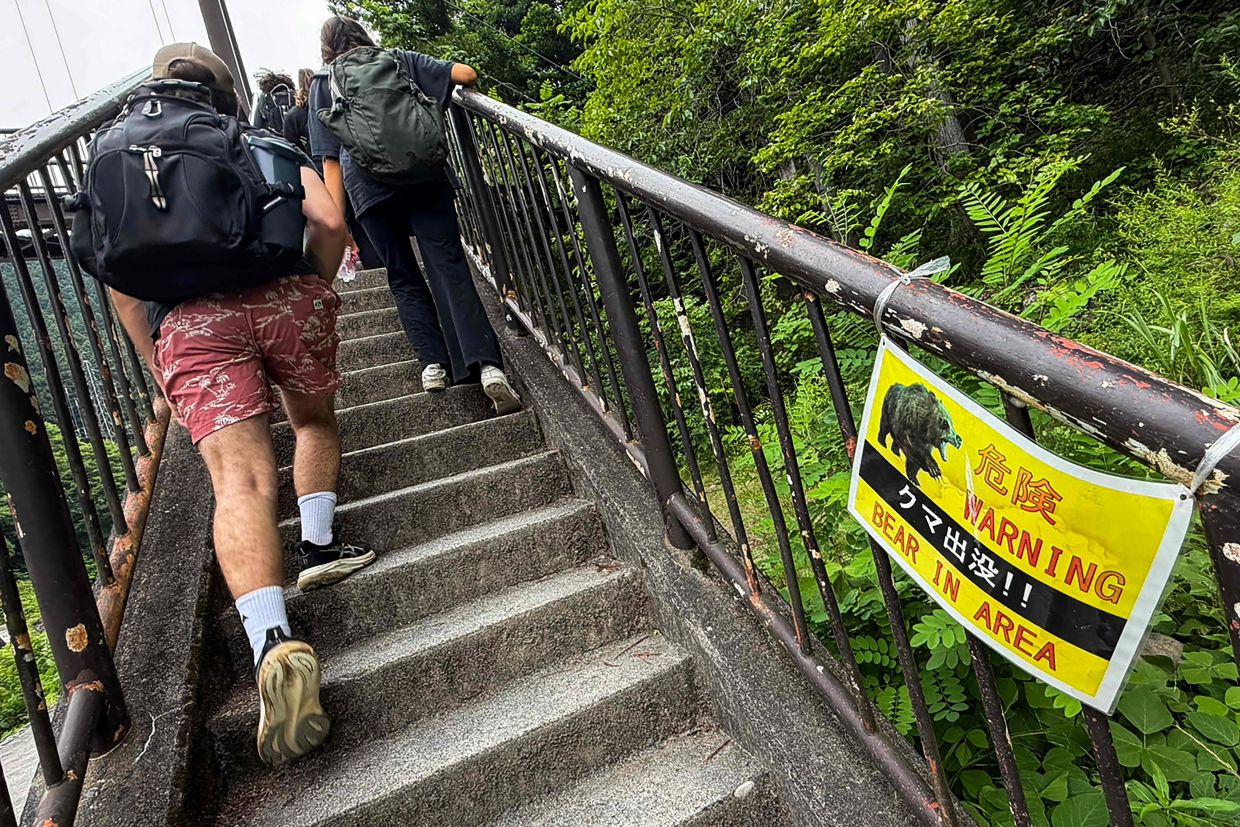
Japan has launched an unprecedented wildlife monitoring operation, deploying more than 800 cameras across its northern mountains in response to an escalating bear attack crisis that has claimed at least five lives since April. The initiative represents a fundamental shift in how the Japanese government approaches human-wildlife conflict, moving away from fragmented local responses toward a coordinated national strategy to understand and manage the country's growing bear population.
The timing of this deployment underscores the severity of Japan's current situation. The nation recorded a shocking 13 fatal bear attacks during the last fiscal year, but the recent spate of spring and early-summer maulings has pushed the issue into the national consciousness with unprecedented urgency. All five deaths occurring since April have clustered in the Tohoku region of northern Japan, creating a geographic epicentre of fear where entire communities now view their natural environment with heightened anxiety. This concentration has turned bear safety into a daily conversation topic, with national broadcasters providing regular coverage of sightings that range from shopping arcades and public parks to school premises—locations where residents expect to be safe.
Environment ministry official Yu Takahashi outlined the scale and methodology of the camera programme to international media. The initial phase targets six major bear population groups within Tohoku, with plans to expand the surveillance across the entire nation over the subsequent four years. The technical approach itself reveals the sophistication of modern wildlife management: strategically placed jars containing honey mixed with wine serve as bait, positioned at approximately head height to encourage bears to stand upright on their hind legs. When the animals rear up to investigate the sweet-scented attractant, their unique white chest markings become clearly visible to the cameras, allowing researchers to identify and track individual bears and better understand population dynamics.
The underlying cause of this wildlife crisis reflects deeper demographic shifts within Japan. Scientists have identified a declining rural population as a significant factor driving bears into increasingly close contact with humans. As fewer people inhabit mountain villages and agricultural areas, the forest ecosystem has effectively expanded its territory, while bears that previously avoided human settlements now encounter fewer barriers to urban encroachment. This trend represents a collision between Japan's ageing, urbanising society and its natural environment—a dynamic that Southeast Asian nations experiencing similar rural-to-urban migration patterns should observe carefully.
Previously, Japan's approach to bear management lacked national coordination. Individual local governments conducted their own population surveys using inconsistent methodologies and timing, producing a fragmented and unreliable picture of the actual threat. Takahashi emphasised that the new programme aims to transcend these limitations by focusing specifically on distinct population groups rather than arbitrary administrative boundaries. This shift toward science-based, large-scale surveillance reflects international best practices in wildlife management and suggests that Japanese authorities recognise the problem has outgrown traditional local solutions.
The practical dangers extend beyond direct attacks. On Wednesday, a post office in Nagoya city became the site of an accidental chemical emergency when anti-bear spray was discharged indoors, hospitalising five people. The incident resulted in the arrest of a 22-year-old Vietnamese national, Huynh Nhat Duy, on obstruction of business charges. He reportedly discharged the repellent unintentionally, highlighting how widespread the distribution of capsaicin-based bear deterrent has become in Japanese society—a reflection of genuine public concern about wildlife encounters. The spray contains capsaicin, the pungent compound found in chilli peppers, and inflicts severe burning sensations on mucous membranes and skin.
Spring and early summer have proven particularly dangerous periods, as bears emerge from hibernation and venture into populated areas searching for food. Recent months have witnessed a dramatic uptick in urban sightings, with bears increasingly straying from their traditional mountain habitats. One notable incident in June required four days of intensive effort involving dozens of police officers, professional hunters, and municipal officials to capture a bear wandering through Utsunomiya, located north of Tokyo, prompting mass school closures across the region. Another bear in Fukushima demonstrated apparent problem-solving abilities, opening windows and manipulating water taps while attacking workers at two separate factory sites before evading capture for days.
Government authorities have issued public health recommendations that reveal the normalisation of bear danger in Japanese consciousness. Residents are advised to avoid solo mountain excursions—a significant restriction in a nation where mountains comprise approximately 80 percent of the total land area. Those who venture outdoors are urged to attach bells to their bags to alert bears to human presence and to carry bear spray as a defensive measure. These precautions indicate that Japanese society has effectively accepted a new baseline of wildlife risk that would have been unthinkable in previous decades.
The investigation into a possible sixth fatality illustrates how immediate and ongoing this crisis remains. Authorities are examining whether bite marks found on a human body discovered in a mountainous Tohoku location constitute evidence of bear predation, suggesting that even preliminary counts of deaths may underestimate the true toll. This ongoing uncertainty, combined with the clustering of incidents in specific regions, has created a patchwork of fear across northern Japan where residents balance normal outdoor activities against genuine safety risks.
For Southeast Asian nations, Japan's bear crisis offers instructive lessons about the consequences of rapid urbanisation and rural depopulation. As countries throughout the region experience similar demographic transitions, the potential for increased human-wildlife conflict looms as an underappreciated policy challenge. Japan's decision to invest in large-scale technological solutions and coordinated national strategies suggests that addressing such conflicts requires moving beyond local ad-hoc responses toward systematic, well-funded approaches grounded in scientific monitoring and regional coordination.
The camera deployment programme represents a critical juncture in how Japan manages its relationship with wild animals in an increasingly human-dominated landscape. By generating detailed population data and tracking individual animals, authorities hope to design interventions that reduce encounters without resorting to mass culling. Success or failure in this endeavour will likely influence how other developed nations with similar demographic and environmental challenges approach their own wildlife management crises in coming years.

