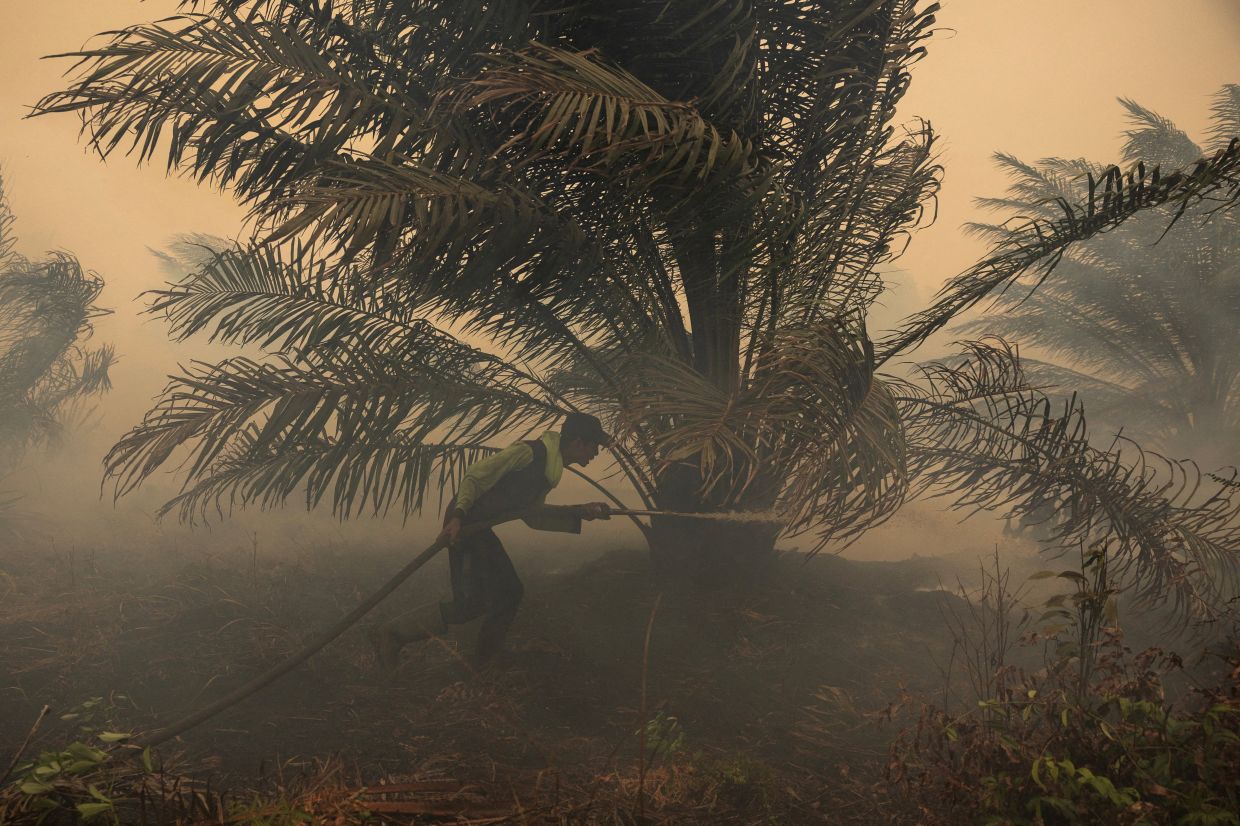
Japan has stepped in with aerial support for Indonesia's escalating battle against forest and land fires ravaging Kalimantan, as regional air quality indices have climbed into dangerous territory rarely seen outside major pollution crises. The commitment of three military helicopters, one of which is a heavy-lift Chinook, signals the severity of the environmental emergency unfolding across the Malaysian region's neighbour. The aid package is set to operationalise from September 10, marking a critical juncture in what has become an annual struggle against seasonal fires that routinely disrupt daily life and commerce across Southeast Asia.
According to the National Disaster Mitigation Agency (BNPB), preparations for the Japanese-supported operations are advancing rapidly, with technical teams conducting site surveys and hammering out operational protocols specific to Kalimantan's geography and weather patterns. Berton Panjaitan, acting head of the BNPB's data and communications division, outlined the partnership during an online briefing on Saturday, emphasising that coordination between the two nations would focus on maximising the effectiveness of water-bombing runs across the affected provinces. The scale of the deployment underscores Indonesia's stretched resources and the reality that domestic firefighting capacity, despite deploying 52 aircraft nationwide, remains insufficient when conditions deteriorate this sharply.
The air quality readings paint a stark picture of the crisis's intensity. Jekan Raya in Palangka Raya, Central Kalimantan, registered an ISPU of 1,108—more than double the threshold marking the "very unhealthy" category—while Southeast Pontianak in West Kalimantan hit 1,075. For context, an ISPU beyond 300 is already considered hazardous to public health; readings in four figures represent a public health emergency where extended outdoor exposure poses serious risks even for healthy individuals. Schools have closed, respiratory illnesses have surged, and visibility in some areas has dropped so severely that commercial operations face disruption.
The geographic spread of active fire sources reflects the systemic nature of the problem. BNPB's latest survey identified 9,242 hotspots across West, Central and South Kalimantan, demonstrating that fires are not isolated incidents but rather a widespread phenomenon concentrated in Indonesia's most ecologically significant regions. West Kalimantan's hotspot count jumped most dramatically, surging by 1,629 to reach 3,371—evidence that fire suppression efforts are being outpaced by new ignitions. The agency simultaneously documented 171 confirmed fire locations across the three provinces, suggesting that while most hotspots detected by satellite are small or incipient, a substantial number have developed into active blazes requiring immediate intervention.
Indonesia's existing air quality mitigation efforts have achieved mixed results. Weather modification operations—cloud seeding—have successfully induced rainfall across several Sumatran provinces including Riau, South Sumatra, Jambi and Lampung, providing temporary relief and creating conditions less favourable for fire spread. However, the same technique has proven ineffective in Central and South Kalimantan, where atmospheric conditions lack the requisite cloud formations necessary for seeding to work. This operational constraint explains why aviation support becomes critical; when meteorological interventions reach their limits, direct water delivery via aircraft becomes the primary recourse.
The broader firefighting infrastructure mobilised across Indonesia tells a story of resource constraints even in crisis mode. The BNPB's fleet of 52 aircraft—38 dedicated to water bombing and 14 to surveillance and weather operations—represents the accumulated capacity of a nation with limited military aviation assets. The 3.5 million litres of water already dropped across six priority provinces demonstrates intensive operations, yet the figures suggest that aggregate suppression efforts remain marginal when measured against the total area burned and the rate of new fire ignition. Each aircraft can make multiple sorties daily, but the sheer expanse of Kalimantan's forested territory means coverage inevitably remains incomplete.
The transnational nature of the crisis adds urgency to Japan's intervention. Kalimantan fires generate smoke that drifts across maritime boundaries, degrading air quality in Malaysian Sabah and Sarawak, as well as Brunei. The haze also affects shipping lanes and regional aviation, imposing economic costs across Southeast Asia. By contributing military assets, Japan addresses not only a humanitarian dimension—the respiratory health of millions—but also the regional stability implications of environmental degradation that transcends borders. This calculus has historically motivated Jakarta's neighbours to offer support despite Indonesia's diplomatic preference for handling domestic crises independently.
The root drivers of Kalimantan's fire crisis remain incompletely addressed despite annual recurrence. While seasonal weather patterns create conditions favourable for fire spread, the scale of burning reflects land-use conversion practices, inadequate ground-level enforcement of fire prevention regulations, and economic incentives favouring rapid land clearing over sustainable forest management. Short-term aerial interventions can suppress individual fires and reduce localized pollution peaks, but they cannot resolve the underlying structural issues that cause fires to proliferate across these territories year after year. Japan's helicopter deployment, however necessary as immediate crisis response, thus represents a symptom-treatment rather than a cure for a problem rooted in development patterns and governance frameworks.

