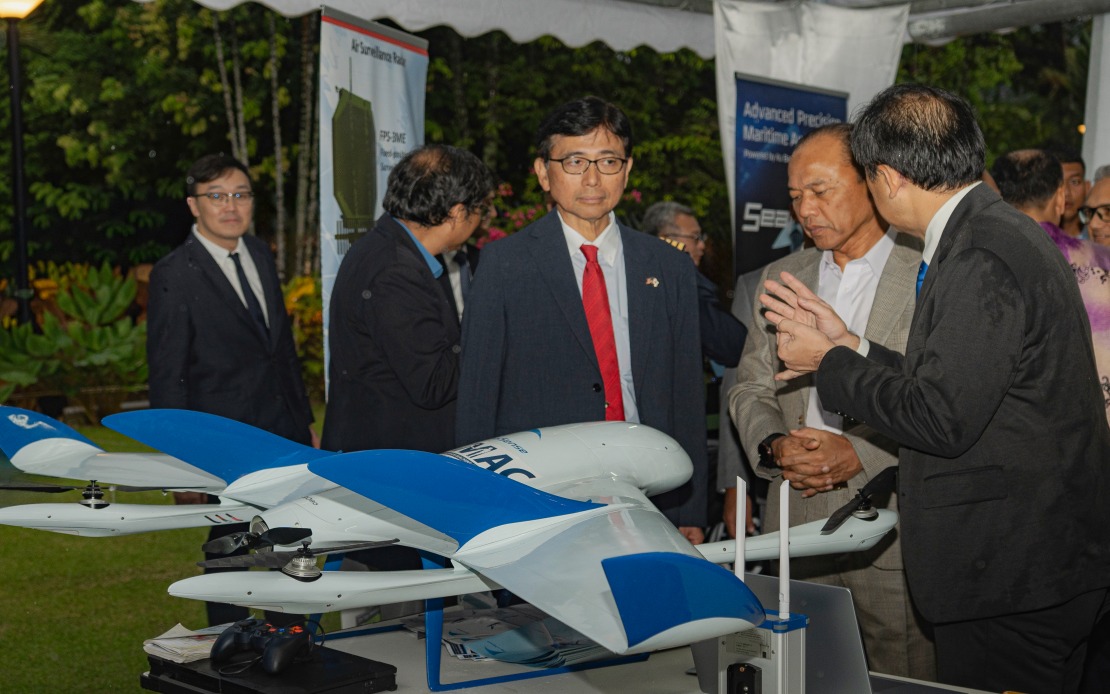
Japan is signalling stronger commitment to its security relationship with Malaysia, positioning the partnership as a cornerstone of its broader Indo-Pacific strategy amid growing regional tensions. Ambassador Noriyuki Shikata delivered the message at the 72nd Japan Self-Defence Forces Day Reception in Kuala Lumpur on Wednesday, emphasizing Tokyo's willingness to deepen defence ties at a time when both nations face complex security challenges in Southeast Asia and beyond.
The statement follows Prime Minister Datuk Seri Anwar Ibrahim's recent visit to Japan, where he met with Prime Minister Sanae Takaichi. During that engagement, the two leaders reaffirmed their determination to expand strategic cooperation with defence and security as fundamental pillars. For Malaysia, the endorsement reflects growing recognition that regional stability requires partnerships with developed democracies capable of providing both security assistance and technological expertise. For Japan, Malaysia represents a crucial ally in implementing its Free and Open Indo-Pacific vision—a strategic framework designed to counter-balance Beijing's expanding influence in one of the world's most strategically important maritime zones.
The bilateral relationship reached a new formal level when Japan and Malaysia upgraded their ties to a Comprehensive Strategic Partnership in 2023, marking a significant diplomatic milestone. Shikata's comments suggest that both nations view this framework not merely as ceremonial but as a practical foundation for deepening operational collaboration. The ambassador highlighted that the approaching 70th anniversary of diplomatic relations next year presents an opportunity to accelerate cooperation across multiple sectors. This messaging appears designed to sustain political momentum and demonstrate to domestic constituencies in both countries that their governments are actively managing security challenges through sustained partnership.
Military-to-military cooperation has become increasingly tangible through regular joint exercises. The MALPAN bilateral exercise, conducted routinely between Japan's Maritime Self-Defence Force and the Royal Malaysian Navy in the South China Sea and Strait of Malacca, represents the most visible expression of operational coordination. In April, the exercise was expanded to include the Royal Malaysian Air Force, signalling deeper tri-service integration. These drills serve multiple purposes: they build interoperability between command structures, enhance mutual understanding of operational procedures, and demonstrate to regional observers—particularly China—that Japan and Malaysia maintain robust defence capabilities and strategic alignment. For Malaysia specifically, such exercises help ensure that critical sea lanes remain secure and that any potential maritime challenges can be addressed through coordinated responses.
Beyond traditional military exercises, Japan is leveraging a relatively new tool to expand its regional influence: the Official Security Assistance framework, which Tokyo launched in 2023. Malaysia was among the first recipients of this initiative, reflecting Japan's strategic prioritization of the country. Under this program, Tokyo has already transferred unmanned aerial vehicles and rescue boats to Malaysian partners. Looking forward to 2025, Japan plans to provide equipment for ceasefire monitoring operations to the ASEAN Observer Team and deliver a diving support vessel specifically to the Royal Malaysian Navy. These contributions, while modest compared to those from major military suppliers, carry disproportionate significance because they address Malaysia's specific operational needs and come without the political baggage associated with other supplier relationships.
The defence industry dimension adds another layer to deepening ties. Ten Japanese companies participated in Defence Services Asia 2026 in Kuala Lumpur, using the platform to showcase technologies ranging from maritime systems to advanced surveillance equipment. More significantly, Japan and Malaysia signed Terms of Reference to establish a bilateral defence industry dialogue during the same event. This mechanism could accelerate technology transfer, facilitate joint development projects, and create commercial opportunities for Malaysian defence companies while deepening strategic integration. For Malaysia, access to Japanese defence technology offers alternatives to traditional suppliers and strengthens its industrial base. For Japan, involvement in Malaysia's defence sector expansion provides commercial returns while securing its strategic influence through established defence partnerships.
The emphasis on maritime security reflects shared concerns about the Strait of Malacca's vulnerability and the South China Sea's contested status. Japan's focus on keeping sea lanes open and secure resonates directly with Malaysian interests, as the country depends heavily on maritime trade. Shikata's explicit mention of upholding international law and supporting de-escalation indicates that Tokyo is framing its security engagement not as military encirclement but as rules-based partnership. This framing matters for Malaysian audiences and other Southeast Asian governments potentially wary of Japan's historical role in the region. By emphasizing the alignment of Japan's FOIP vision with ASEAN's Outlook on the Indo-Pacific, Tokyo is attempting to position its strategy as complementary rather than contradictory to regional consensus.
The timing of this diplomatic messaging suggests Japan is preparing for continued great-power competition in Southeast Asia. The presence of Armed Forces chief General Tan Sri Malek Razak Sulaiman at the reception underscores that security cooperation carries military significance beyond ceremonial value. Malaysia's position as a major Southeast Asian economy with substantial territorial claims in the South China Sea makes it indispensable to any credible counter-balance to regional hegemonic competition. Japan's willingness to upgrade its security commitment to Malaysia reflects recognition that maintaining regional stability requires sustained investment in relationships with key partners.
Looking ahead, the 70th anniversary of Japan-Malaysia diplomatic relations in 2025 will likely serve as an occasion to unveil additional cooperation initiatives. Ambassador Shikata's explicit commitment to taking bilateral ties to the next level suggests that further announcements—potentially involving enhanced military cooperation, technology partnerships, or joint infrastructure projects—may be forthcoming. For Malaysia, deepening security ties with Japan offers tangible benefits in terms of equipment, training, and strategic reassurance. For Japan, Malaysia represents both a genuine security partner and a demonstration that its Indo-Pacific vision can attract sustained commitment from significant regional actors. The trajectory of this relationship will thus deserve close monitoring as an indicator of how Southeast Asia is responding to broader geopolitical realignment.

