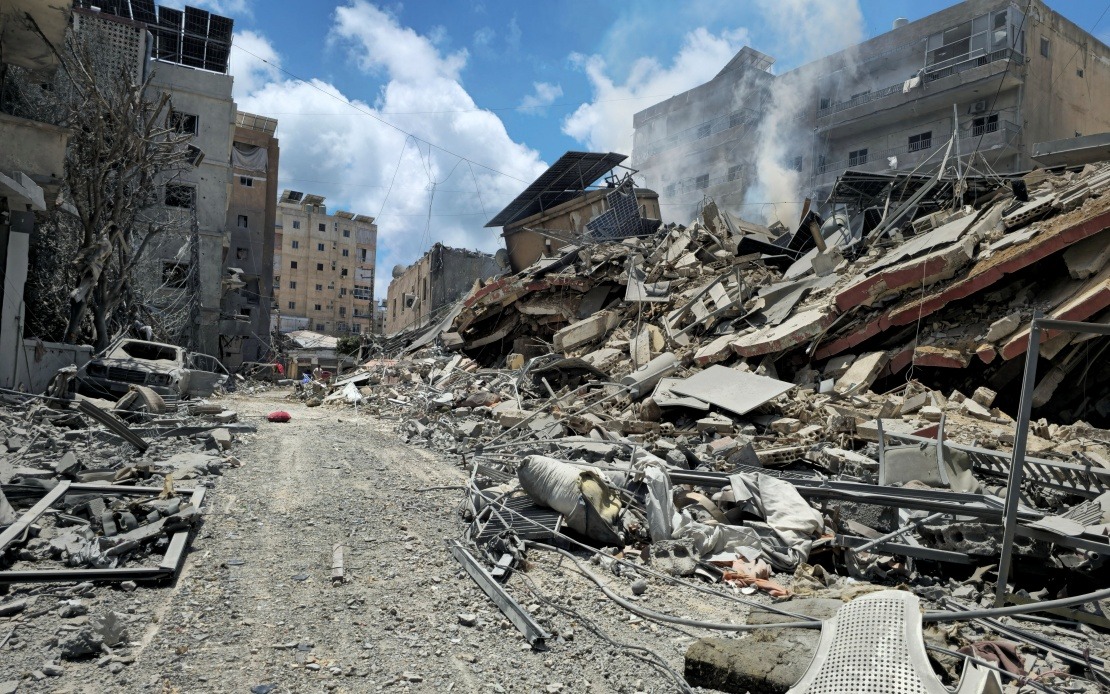
Japan has announced a comprehensive emergency aid package worth US$15 million directed towards alleviating humanitarian crises across West Asia, reflecting Tokyo's strategic commitment to regional stability. Foreign Minister Toshimitsu Motegi revealed the allocation during a Friday news conference, underscoring Japan's concern about escalating humanitarian challenges in one of the world's most volatile regions. The assistance represents a deliberate policy choice to engage with the Middle East through civilian and humanitarian channels rather than military involvement.
The distribution of funds reflects Japan's assessment of where needs are most acute. Iran, experiencing significant economic and social pressures, will receive approximately US$10 million, representing roughly two-thirds of the total commitment. Lebanon faces a distinct crisis, with its economy in severe contraction and currency collapse, and will receive US$4 million. Palestinians in the West Bank, navigating occupation and resource scarcity, will receive US$1 million. This tiered approach demonstrates Japan's nuanced understanding of regional complexities and varying humanitarian requirements.
All assistance will flow through established international organisations rather than direct bilateral channels, a methodology that ensures transparency, coordination with other donors, and alignment with United Nations and humanitarian standards. This multilateral approach is particularly significant given the political sensitivities involved—channelling aid through international bodies insulates Japan from accusations of favouritism while maximising the impact of limited resources. It also leverages existing humanitarian infrastructure and expertise on the ground.
The aid package encompasses essential humanitarian commodities that address immediate survival needs across the affected populations. Food assistance is critical in contexts where inflation has eroded purchasing power and supply chains remain disrupted. Medical supplies take on heightened importance in regions where healthcare systems have deteriorated due to conflict, sanctions, or economic collapse. Additional humanitarian resources will address shelter, water, sanitation, and other basic needs that sustain vulnerable populations through protracted crises.
Motegi's statement positioning Middle Eastern peace and stability as "of vital importance to Japan" reflects Tokyo's recognition that regional turbulence has far-reaching implications for East Asian security and economic interests. Japan depends heavily on stable energy supplies and uninterrupted shipping lanes through the Persian Gulf and Suez Canal. Humanitarian assistance, while primarily motivated by compassion, also serves Japan's strategic interests by helping prevent further destabilisation that could disrupt energy markets or create broader regional conflicts.
For Malaysia and other ASEAN nations, Japan's renewed humanitarian engagement in West Asia offers relevant lessons about balancing principle with pragmatism. The region's importance to Southeast Asian economies—through trade, energy security, and indirect investment flows—means that stabilisation efforts in the Middle East indirectly benefit ASEAN countries. Japan's multilateral approach through international organisations also aligns with ASEAN's own preference for working through established frameworks rather than unilateral interventions.
Japan's commitment occurs amid broader diplomatic repositioning in the region. Tokyo has historically maintained relatively low-profile diplomatic presence in West Asia compared to its involvement in East Asia and the Indo-Pacific. However, growing recognition of Middle Eastern importance to global stability and Japan's own interests has prompted increased engagement. This humanitarian initiative signals intent to contribute meaningfully without overextending military or political commitments that could complicate relations with major powers or regional actors.
The announcement also reflects Japan's emphasis on "human security" as a foreign policy concept—prioritising protection and advancement of individual populations over narrow state interests. This approach distinguishes Japanese diplomacy in the region and appeals to populations across sectarian and political divides since humanitarian aid theoretically benefits all communities regardless of their political allegiances or affiliations. Such positioning allows Japan to maintain constructive relationships across diverse Middle Eastern actors while advancing humanitarian objectives.
Motegi's commitment to continued collaboration with relevant countries and international organisations signals that this aid package represents not an isolated gesture but part of sustained engagement. Japan plans to coordinate with other donors, international organisations managing humanitarian response, and affected governments to optimise resource allocation and ensure assistance reaches those most in need. This coordination approach reflects lessons learned from previous humanitarian interventions and recognition that sustainable progress requires sustained commitment.
The timing of this announcement carries significance given ongoing tensions and humanitarian deterioration across West Asia. Japan's willingness to pledge resources and maintain diplomatic engagement despite regional volatility demonstrates commitment to humanitarian principles even when doing so entails diplomatic complexity. For Malaysia and other ASEAN observers, the announcement reinforces that major developed democracies view humanitarian engagement as compatible with broader strategic interests and that compassion and pragmatism need not conflict in foreign policy formulation.
Looking forward, Japan's humanitarian initiative may establish foundation for expanded engagement in the region, potentially including increased development assistance, diplomatic capacity building, and participation in regional dialogue mechanisms. As ASEAN continues navigating relationships with major powers and global institutions, Japan's balanced approach—combining humanitarian commitment with strategic calculation—offers a model worth studying. The challenge for all external actors in West Asia remains translating humanitarian assistance into conditions for genuine peace and stability that benefit entire populations rather than narrowly defined interests.

