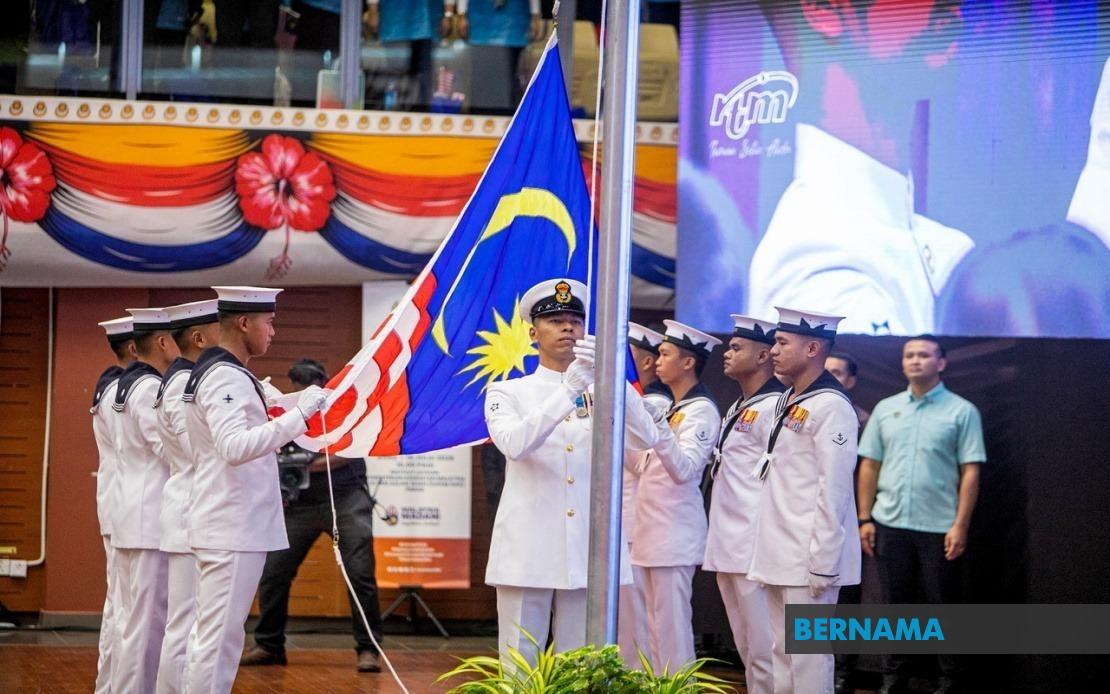
The ceremonial hoisting of Malaysia's national flag has returned as a centrepiece of the nation's patriotic calendar. On July 19, Prime Minister Datuk Seri Anwar Ibrahim presided over the revival of the Jalur Gemilang raising ceremony at the Sultan Azlan Shah Ministry of Health Training Institute in Tanjung Rambutan, Ipoh, ending a two-year period during which the traditional observance had been suspended. The event simultaneously marked the official launch of the 2026 National Month and Fly the Jalur Gemilang campaign, signalling the government's commitment to reinvigorating grassroots expressions of national identity across Malaysia.
The restoration of this ceremonial practice carries symbolic weight for the country's civic engagement strategy. By reintroducing the flag-raising ritual, the administration seeks to rekindle what officials characterize as fundamental values of patriotism and collective belonging among Malaysians. The ceremony itself followed established protocols, with a nine-member contingent drawn from the Royal Malaysian Navy's Lumut Base executing the flag-hoisting operation under the command of Chief Petty Officer Mohamad Razif Aliff Md Yusof. The flag itself, measuring 1.82 metres by 3.65 metres, was accompanied by the national anthem Negaraku, performed by attendees who stood in observance of the moment.
The event unfolded as a carefully choreographed expression of state patriotism, incorporating multiple elements designed to deepen emotional and ideological connections to the nation. Following the flag raising, ILKKM SAS trainee Muhammad Ammar Mohd Asri recited the Rukun Negara pledge, the foundational five principles upon which Malaysian society conceptually rests. This pairing of flag and pledge intended to anchor abstract nationalism in concrete constitutional values, reminding participants of shared civic commitments that transcend sectarian or regional divides.
Central to the 2026 campaign is the Fly the Jalur Gemilang initiative, an annual mobilization encouraging ordinary Malaysians to display the national flag prominently in their homes, businesses, and public spaces throughout National Month. The campaign framework transforms individual flag display into an orchestrated demonstration of national sentiment, creating visible unity across urban and rural landscapes. For regional observers, this represents a deliberate effort to maintain high-profile patriotic messaging during a period when political competition and social fragmentation have occasionally strained consensus around foundational national symbols.
The government has enhanced the campaign's cultural reach by commissioning a dedicated theme song for the 2026 celebrations. Recording artist Faizal Tahir composed and performed "Aku Berjanji," which became available for public download through the Merdeka360 portal beginning at 12.30 pm on the launch day. This integration of contemporary popular music into national commemoration reflects broader administrative strategy to engage younger demographics and maintain cultural relevance for patriotic messaging that might otherwise appear ceremonially dated to internet-native audiences.
The National Month observance schedule structures Malaysia's entire August-September civic calendar around two flagship dates. National Day on August 31 commemorates the nation's 1957 independence from British colonial administration, while Malaysia Day on September 16 marks the 1963 formation of the Malaysian federation through the merger of Malaya with the territories of Sabah, Sarawak, and Singapore. The intervening weeks feature nationwide programming spanning community events, educational initiatives, and media campaigns designed to sustain patriotic sentiment throughout the dual-celebration period.
For Malaysian stakeholders, the Jalur Gemilang ceremony's restoration addresses questions about maintaining national cohesion amid persistent demographic and political complexities. The public flag-raising ritual serves instrumental purposes beyond ceremonial aesthetics: it provides occasions for government leaders to articulate shared national narratives, offers platforms for different communities to participate visibly in collective identity-making, and generates media content reinforcing messages about unity and constitutional governance. The two-year hiatus had raised concerns among some observers about whether the government possessed sufficient institutional capacity and political will to sustain such observances during periods of administrative transition or electoral activity.
From a Southeast Asian perspective, Malaysia's recommitment to organized patriotic ceremony reflects regional patterns of governments instrumentalizing civic ritual to reinforce state legitimacy and national identity during periods of social transformation. Neighbouring countries including Indonesia and Thailand have similarly intensified flag-related nationalism and public observance of independence-related commemorations. However, Malaysia's approach distinguishes itself through explicit constitutional scaffolding via the Rukun Negara, which ground patriotism in written principles rather than purely historical narratives or religious frameworks.
The campaign's timing carries implications for Malaysia's political dynamics heading toward the next electoral cycle. By initiating high-profile patriotic programming nearly a year before general elections, the administration establishes cultural terrain emphasizing national unity and continuity over partisan competition. Such pre-electoral patriotism can either elevate public discourse toward constitutional values or serve as tacit infrastructure for political advantage, depending on implementation and opposition response. The involvement of ceremonial institutions like the military and health sector demonstrates the administration's capacity to mobilize state apparatus around patriotic objectives.
For Malaysian businesses and civil society organizations, the Fly the Jalur Gemilang campaign creates opportunities and expectations for visible participation in nationalist expression. Private sector entities typically respond by adorning offices and retail spaces with flags, while community associations organize neighbourhood-level events and competitions. This democratization of patriotic display diffuses national messaging throughout the social fabric beyond government channels, creating what some scholars characterize as genuine grassroots nationalism while others critique as manufactured consensus.
The integration of digital platforms through the Merdeka360 portal reflects modernization of patriotic engagement mechanisms. By making the campaign's theme song immediately accessible for download, the government acknowledges that contemporary expressions of national sentiment necessarily incorporate media consumption patterns and social media sharing. This approach potentially extends the campaign's reach beyond traditional ceremony attendees to younger citizens who encounter patriotic content through entertainment channels rather than formal state events.
Looking toward the August-September celebration period, Malaysian stakeholders can anticipate sustained multimedia campaigns, organized community events, and continued emphasis on flag display across public and private spaces. The reinstatement of the Jalur Gemilang ceremony signals administrative commitment to maintaining visible patriotic infrastructure despite earlier disruptions, with officials likely to present campaign success through metrics of flag distribution, social media engagement, and reported flag-flying participation rates. Whether such organized patriotism translates into deeper civic engagement or remains primarily ceremonial will partially depend on how extensively the government integrates substantive policy messaging into patriotic programming beyond symbolic gestures.

