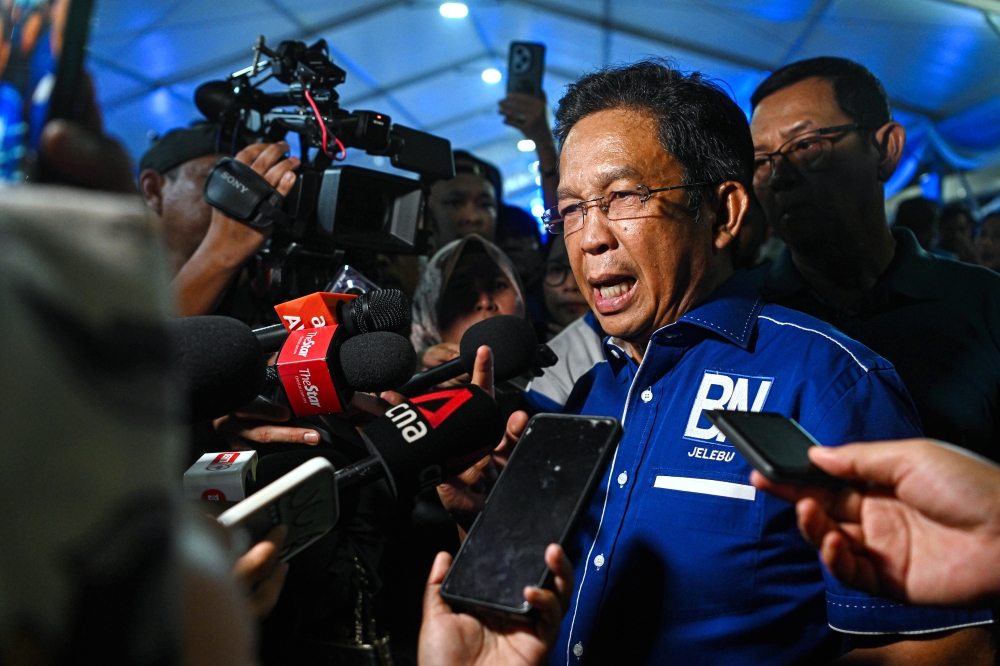
Negeri Sembilan Umno chief Datuk Jalaluddin Alias has expressed his appreciation to Perikatan Nasional for endorsing Barisan Nasional's role as the leading coalition in the state administration, should their combined efforts result in an election victory. The acknowledgment, made during a gathering in Jelebu on July 19, reflects the delicate political balancing act unfolding across Malaysia's coalitions as they position themselves for upcoming electoral contests.
The show of gratitude underscores a significant development in Negeri Sembilan's political landscape, where traditional rivalries between Barisan Nasional and Perikatan Nasional appear to have softened in pursuit of shared electoral goals. Such agreements between competing blocs are relatively uncommon, as they typically remain locked in direct competition. The arrangement signals that both coalitions have identified mutual benefits in supporting a unified administration rather than fragmenting state leadership across multiple power bases.
For Negeri Sembilan specifically, this alignment carries considerable weight. The state has experienced considerable political turbulence in recent years, with shifting allegiances and coalition dynamics creating instability that has affected governance priorities and development initiatives. By securing a clear understanding about leadership structures before elections take place, both Barisan Nasional and Perikatan Nasional aim to provide voters with transparency and prevent the post-election negotiations that have previously created uncertainty and delayed policy implementation.
Jalaluddin's public acknowledgment serves multiple strategic purposes within the state's political ecosystem. First, it legitimises the cooperation between two coalitions that have historically positioned themselves as alternatives to one another. This normalisation of inter-coalition engagement reflects evolving pragmatism in Malaysian politics, where ideological differences increasingly yield to tactical cooperation. Second, the statement reassures Barisan Nasional supporters that their coalition retains sufficient strength and coalition support to maintain administrative control, an important morale booster for party grassroots members.
The Negeri Sembilan situation reflects broader patterns unfolding across Malaysia's political landscape. Since the 2022 general election, the traditional Barisan Nasional versus Pakatan Harapan binary has become considerably more complex, with Perikatan Nasional and various independent groupings creating multiple pathways to political power. Negeri Sembilan's approach of pre-election coordination between major coalitions represents one strategy for managing this fragmentation and providing clear governance direction.
For voters in the state, such arrangements offer both advantages and concerns. On the positive side, knowing in advance which coalition will lead the state allows electors to make informed decisions about the policy directions and administrative styles they prefer. They understand precisely who will hold executive authority and can hold that coalition accountable accordingly. Conversely, pre-election agreements between coalitions can limit voter choice and create situations where winning candidates are bound by coalition commitments rather than their own constituencies' preferences.
The support Perikatan Nasional is extending to Barisan Nasional's leadership role also raises questions about representation and resource distribution within the eventual state administration. Typically, coalitions that contribute elected representatives to government expect commensurate influence over cabinet positions, development allocation, and policy priorities. Without public clarity on how power-sharing will function within the administration, questions may persist about whether all coalition members' interests receive equal attention.
From a regional Southeast Asian perspective, Malaysia's coalition politics increasingly mirror patterns visible in other established democracies where fragmented parliaments necessitate coalition governments. However, the Malaysian context differs significantly because of the dominance of race and religion-based political movements that shape coalition composition. Understanding how such groupings cooperate while maintaining their distinct identities remains crucial for predicting political stability and governance effectiveness across Malaysian states.
Jalaluddin's statement also carries implications for Umno's broader political positioning within Barisan Nasional. By emphasising Perikatan Nasional's support for Barisan leadership, he simultaneously acknowledges that Umno alone may lack sufficient electoral strength to govern independently. This represents a significant shift from the historical pattern where Umno-led Barisan Nasional dominated Malaysian politics with overwhelming majorities. Contemporary politics requires coalition engineering and explicit arrangements, reflecting demographic changes, voter preferences, and the rising electoral competitiveness that characterises modern Malaysian democracy.
Looking ahead, whether this cooperation translates into a seamless post-election administration depends substantially on implementation. Both coalitions must honour their commitments while managing their members' internal expectations, balance resource distribution equitably, and respond effectively to constituent concerns. Any perception of betrayal or unfair power allocation could rapidly unravel the arrangement and create political instability that ultimately harms all participants.
The Negeri Sembilan arrangement also provides a template that other states may either adopt or deliberately reject, depending on their specific political circumstances. States with more balanced competitive situations between coalitions might find such pre-election agreements attractive, whilst states where one coalition enjoys overwhelming advantages may view them as unnecessary constraints. The coming months will reveal whether Negeri Sembilan's model offers a sustainable pathway for managing Malaysia's increasingly complex coalition politics or represents a temporary accommodation between rivals.

