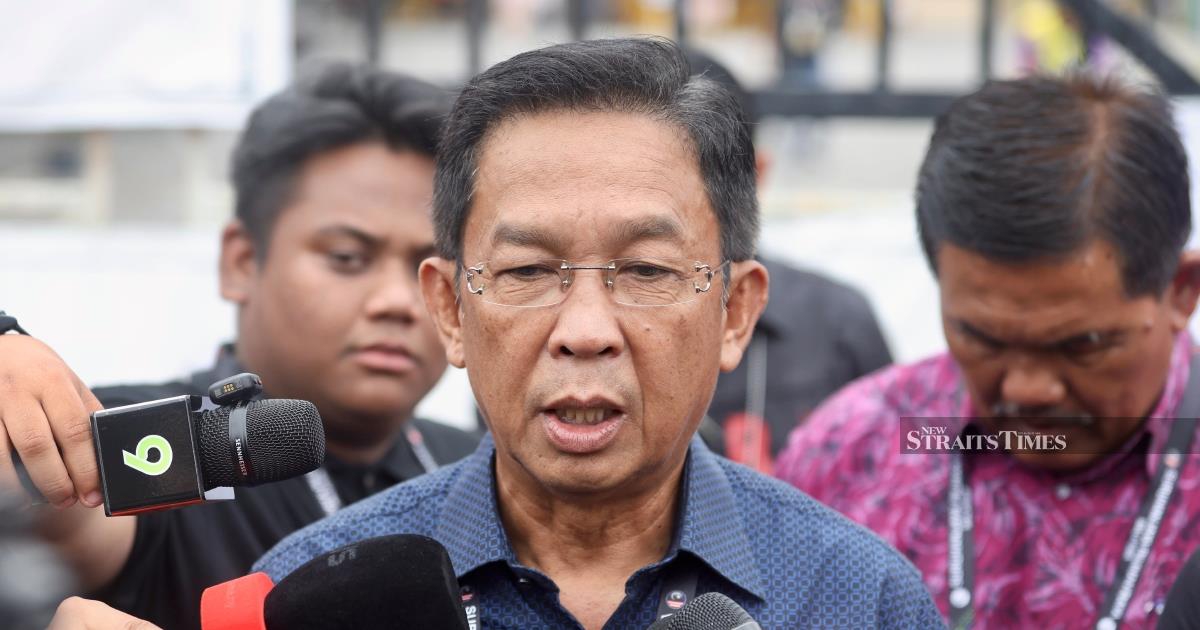
Datuk Seri Jalaluddin Alias, who chairs the Negri Sembilan Umno Liaison Committee, has addressed questions surrounding his no-show at the menteri besar swearing-in ceremony held at Istana Besar Seri Menanti by pointing to the abbreviated timeframe in which he received notification of the event.
The clarification comes as observers continue to scrutinise leadership movements within the Negri Sembilan political establishment, where state-level appointments and ceremonial protocols carry symbolic weight. The menteri besar swearing-in represents a formal consolidation of power and typically draws prominent figures from the governing coalition and state administration. Jalaluddin's absence was noted by those tracking the proceedings, prompting the need for public explanation from the senior party official.
In Malaysian politics, the presence or absence of key party figures at high-profile state events often carries interpretive significance. Coalition partners and observers routinely read such attendance patterns as indicators of intra-party dynamics, factional alignments, and the relative standing of individual leaders within their organisations. This backdrop renders Jalaluddin's explanation particularly relevant to understanding the current equilibrium within Negri Sembilan's Umno machinery and broader state governance structures.
The short notice explanation aligns with known procedural challenges that sometimes accompany state-level ceremonial events in Malaysia. Administrative coordination between the state secretariat, the palace protocol office, and political party leadership can occasionally result in compressed scheduling, particularly when circumstances demand expedited swearing-in ceremonies. However, the fact that such an explanation was deemed necessary suggests the political environment in Negri Sembilan remains sufficiently sensitive that even routine absences warrant public clarification.
Jalaluddin's role as liaison committee chairman places him within Umno's formal structure in the state, where he serves as a bridge between the party's central machinery and state-level operations. The liaison committee traditionally functions as a coordination body during periods of transition or when central party leadership seeks to exercise direct oversight of state affairs. His position thus carries particular visibility and expectations regarding participation in significant political events.
For Negri Sembilan Umno specifically, maintaining coherent party discipline and public unity has taken on heightened importance following the political realignments that have characterised Malaysian politics in recent years. State parties under Umno umbrella have experienced considerable internal jostling as different factions vie for influence over candidate selection, development project allocation, and proximity to state executive power. In this context, explanations from senior party officials serve not merely as personal clarifications but as statements calibrating internal perceptions of party hierarchy and leadership commitment.
The incident also reflects the ceremonial formality that continues to characterise Malaysian state governance, where swearing-in ceremonies at the istana represent significant constitutional moments. These events typically attract comprehensive media coverage and attendance by senior political figures precisely because they mark formal transitions of power. The palace setting itself carries constitutional and cultural weight that reinforces the importance of such occasions.
Looking forward, the clarification by Jalaluddin may serve to normalise the absence and prevent it from metastasising into a broader narrative about factional divisions or leadership discord within Negri Sembilan's Umno contingent. In Malaysian politics, allowing such incidents to circulate without explanation frequently results in increasingly elaborate interpretations as different analysts project their own theories onto the silence. By proactively addressing the matter through reference to administrative timing issues, Jalaluddin has sought to anchor the narrative within mundane procedural explanation rather than leave it open to speculation.
For political observers monitoring Negri Sembilan's trajectory, this episode underscores the continued importance of ceremonial participation as a dimension of political standing within Malaysia's state-level hierarchies. Even as substantive policy challenges and economic development concerns occupy primary attention, the symbolic dimension of politics—who attends what, who sits where, who is visibly absent—retains interpretive power and requires careful management by senior figures seeking to maintain credibility and standing within their organisations.
The matter ultimately illustrates how Malaysian state politics continues to operate simultaneously across multiple registers: formal constitutional procedures, factional party competition, administrative coordination challenges, and the careful choreography of public presence and absence. Jalaluddin's explanation attempts to translate a politically sensitive absence into an acceptable administrative narrative, reflecting the sophistication required of senior figures navigating these overlapping political dimensions.

