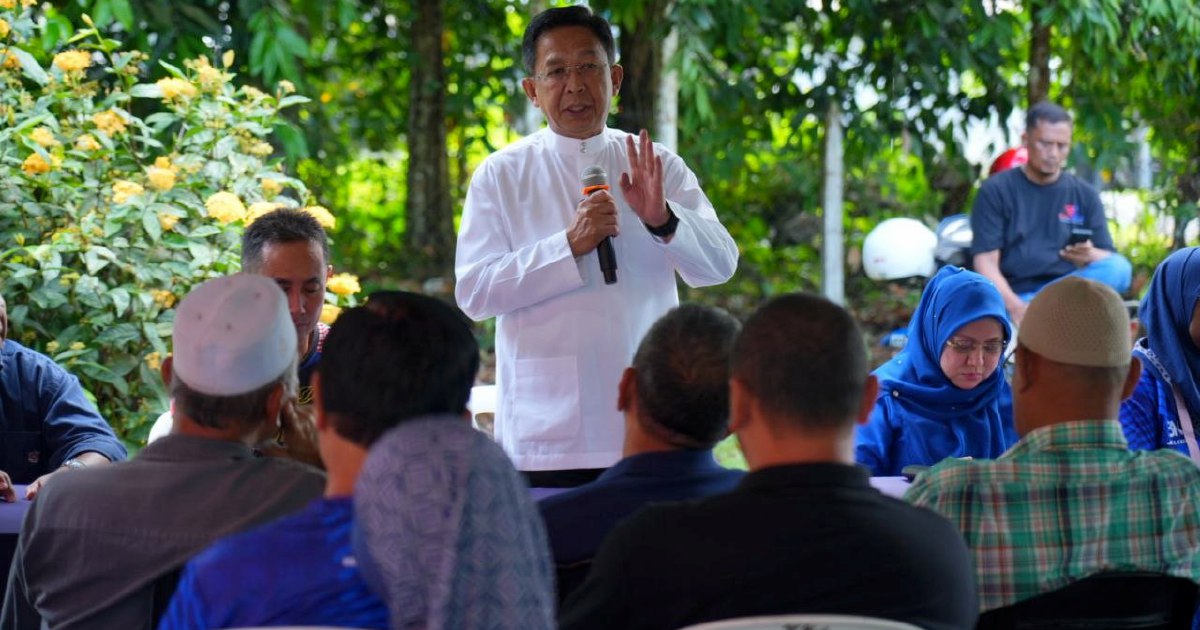
Negri Sembilan's August 1 state election has thrown up an intriguing political equation, with Perikatan Nasional positioning Datuk Seri Jalaluddin Alias as a frontrunner for the menteri besar post should its coalition arrangement with Barisan Nasional prove victorious. The announcement by PN leadership underscores the delicate negotiations underway between the two coalitions as they prepare for what is shaping up to be a closely contested contest in the central state.
Jalaluddin Alias, who heads the Negri Sembilan branch of Umno, enters the discussion as a seasoned political operator with deep roots in the state's political machinery. His elevation as a potential chief minister would represent a significant moment in Negri Sembilan politics, reflecting the weight Umno's territorial presence continues to carry within the broader PN-BN partnership. The move signals PN's confidence in leveraging established figures to consolidate support among traditional BN voters who may be considering their options in the current electoral climate.
The PN-BN understanding itself represents a tactical realignment aimed at maximising combined strength against opposition forces in Negri Sembilan. Rather than fielding separate candidates across constituencies, the two coalitions have negotiated a framework to present a united front, a strategy that proved effective in previous state-level contests. This arrangement requires careful choreography at the leadership level, with both coalitions needing to demonstrate internal cohesion and shared purpose to voters.
The timing of this public signalling carries strategic weight. By naming potential chief minister candidates ahead of voting day, PN aims to crystallise voter expectations around a clear leadership vision. This approach allows the coalition to frame its governance agenda around specific individuals, potentially making its platform more tangible to electorate members who respond better to personality-driven politics than abstract policy platforms. In the Malaysian context, where state leadership remains deeply personalised, such naming conventions frequently influence voting calculus.
Negri Sembilan's political landscape has undergone considerable flux in recent election cycles. The state has transitioned between different configurations of power, with both BN and opposition coalitions experiencing periods of ascendancy. The upcoming election thus carries ramifications beyond the state itself, as observers view it as a bellwether for broader coalition mathematics and voter sentiment across West Coast states. A PN-BN victory would validate the alliance model in this region, while any shortfall would prompt recalibration of strategy ahead of the next general elections.
The identification of Jalaluddin also reflects internal assessments within PN regarding which personalities command sufficient legitimacy to unite divergent factions within the coalition itself. Umno, despite nominal participation in PN structures, maintains autonomous organisational capacity and voter networks. A Negri Sembilan Umno chairman elevated to menteri besar would ostensibly represent a validation of party interests within the broader coalition framework, potentially smoothing internal coordination in the run-up to the 2025 general election.
For Malaysian voters observing state-level contests, the menteri besar question carries immediate relevance regarding resource allocation and development priorities. The chief minister controls substantial state expenditure, patronage networks, and administrative apparatus affecting everything from infrastructure planning to business licensing. The identity of this office-holder thus determines whose priorities receive priority attention during the next five-year term.
The August 1 election itself will determine whether theoretical possibilities translate into actual governance arrangements. While PN-BN coordination has been publicly articulated, state-level electoral dynamics remain fluid. Opposition coalitions will mount their own campaigns, potentially positioning alternative candidates who might appeal to voters fatigued by established political personalities. The contested nature of Malaysian electoral politics means that even well-positioned candidates cannot assume victory.
Jalaluddin's potential candidacy also operates within broader hierarchies within Umno and PN that determine leadership distribution across states. Malaysia's federal structure means that multiple state-level menteri besar positions remain vacant or contested heading into 2024-2025. The allocation of these positions reflects power equations within coalitions, with each party seeking to maximise representation in executive positions. Negri Sembilan's menteri besar slot therefore forms part of larger calculus regarding which political formations secure which state-level offices.
Looking ahead, the election campaign itself will test whether PN-BN unity holds under voter scrutiny. Coalition partners sometimes discover during campaign periods that their grassroots supporters hold divergent views about the election's fundamental purpose and desired outcomes. Voters may prioritise factors quite separate from which individual sits in the menteri besar office, instead voting based on local development issues, party brand loyalty, or dissatisfaction with incumbent government performance. The naming of leadership candidates represents merely one element of a multi-faceted campaign environment.
The significance of Jalaluddin's emergence as a leading contender extends beyond Negri Sembilan itself, offering insights into how Malaysian coalitions manage internal competition while maintaining unified electoral platforms. The ability to have previously designated leadership candidates appears publicly confident while preserving internal flexibility represents an important political skill, particularly when coalitions comprise multiple parties with overlapping territorial interests. The August elections will reveal whether this particular balancing act succeeds in translating public positioning into actual electoral advantage.

