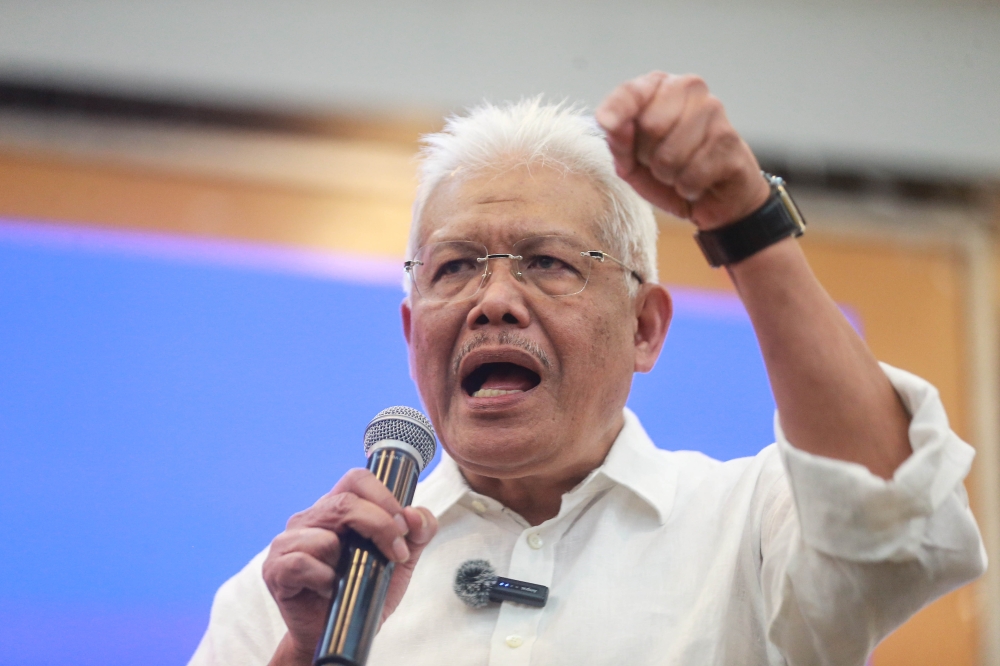
Negeri Sembilan's political landscape appears to be tightening around Datuk Seri Jalaluddin Alias as the Barisan Nasional-Perikatan Nasional coalition prepares its leadership strategy for the central state, according to statements from senior coalition figures. The move signals confidence within the ruling alliance that it can retain control of the state when electoral processes resume, while simultaneously addressing internal party dynamics and power-sharing arrangements between the two main coalition partners.
Jalaluddin's positioning as a frontrunner for the mentri besar position reflects his standing as chairman of Negeri Sembilan Umno, the dominant party within the state's political structure. His elevation would represent continuity in party leadership while consolidating support among Umno's traditional constituency. The announcement, made through coalition leadership channels, suggests that succession planning within the state branch is being formalized at higher levels of party decision-making, indicating this is not merely speculative discussion but represents serious institutional consideration.
The timing of such announcements carries significance in Malaysian politics, where mentri besar appointments operate at the intersection of party machinations, coalition agreements, and royal protocols. By publicly naming potential candidates now, the coalition appears to be consolidating its narrative and managing expectations within party ranks. This approach allows the leadership to demonstrate decisiveness while ensuring all stakeholders understand the hierarchy of preference within the decision-making structure.
For Malaysian political observers, the nomination process underscores how power in multi-party coalitions functions in practice. While Barisan Nasional and Perikatan Nasional have cooperated at federal level, state-level arrangements remain subject to negotiation. The identification of Jalaluddin as a leading candidate suggests Umno has secured favorable ground in any internal coalition discussions about Negeri Sembilan's future administration. This reflects broader patterns of how component parties within coalitions leverage their respective strengths during power-sharing negotiations.
Negeri Sembilan's political importance extends beyond its population and economic output. The state occupies a strategic position within Malaysia's central corridor, encompassing crucial administrative and commercial centers. Its governance directly influences regional development initiatives, infrastructure projects, and economic planning that affect the Klang Valley and surrounding areas. A stable, clearly-identified leadership pipeline therefore carries implications that ripple across the national economy and federation-level politics.
The coalition's confidence in retaining the state reflects its current electoral performance and organizational strength on the ground. Negeri Sembilan has proven to be relatively stable political territory for Barisan Nasional historically, though recent national electoral patterns have introduced unpredictability. By preparing its leadership succession well in advance, the coalition demonstrates institutional maturity while simultaneously signaling to voters and stakeholders that continuity and stability are assured.
Jalaluddin's candidacy also reflects calculations about generational transitions within Umno's leadership structure. As party veterans gradually step back, the party must identify and elevate second-tier leaders who can command respect both within party structures and among the broader electorate. His position as state chairman suggests he has accumulated sufficient political capital and party network support to be considered viable for the state's highest administrative position.
The broader context of coalition politics in Malaysia suggests that such announcements undergo careful vetting before public disclosure. Senior coalition figures like Hamzah Zainudin would not casually discuss potential candidates without some degree of consensus, at least preliminary, among key decision-makers. This indicates that Jalaluddin's name has circulated through appropriate channels and received sufficient backing to warrant public mention. However, the use of language such as "among the candidates" rather than definitive appointment language preserves flexibility should circumstances change or competing interests emerge.
For Southeast Asian political watchers, Malaysia's power-sharing arrangements offer instructive lessons in managing multi-party coalitions within democratic frameworks. The willingness to discuss succession planning openly, even while acknowledging multiple candidates, demonstrates how institutional politics functions when no single party holds overwhelming dominance. This contrasts with systems where power transfers occur opaquely or where coalition partners compete without transparent frameworks.
The implications for Negeri Sembilan voters remain significant regardless of coalition electoral performance. The identification of credible administrative candidates in advance of elections enhances democratic accountability, allowing voters to assess not just parties but individuals likely to assume top positions. This transparency, while sometimes generating internal party tensions, ultimately serves public interests by clarifying what governance options actually exist in practice.
Moving forward, the Negeri Sembilan political situation will likely generate additional statements as the coalition finalizes its strategy and as other potential contenders position themselves within their respective party hierarchies. The state's political actors understand that the window for such positioning is finite and that clarity in leadership succession tends to strengthen rather than weaken electoral prospects. Jalaluddin's emergence as a primary candidate thus represents both his personal advancement and the coalition's strategic calculation about maintaining control in a strategically important state.

