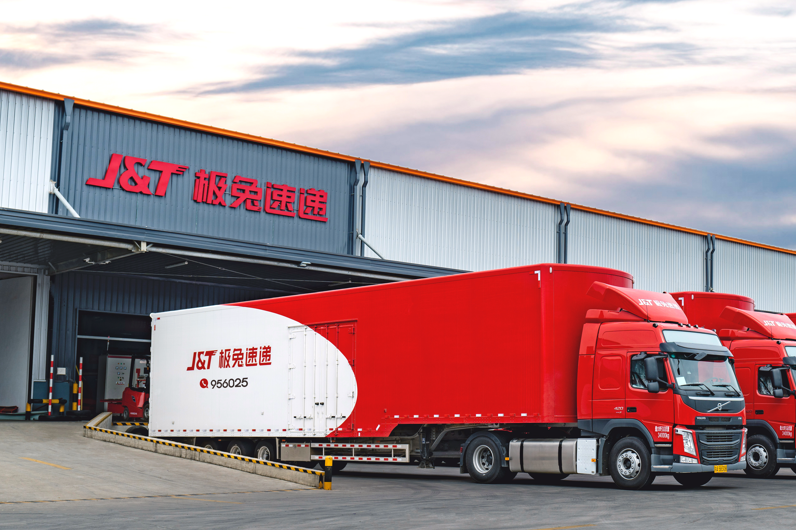
Hong Kong-listed logistics operator J&T Global Express Ltd has achieved a significant operational milestone by processing more than 100 million parcels daily during the second quarter, underpinned by accelerating demand across Southeast Asia and other emerging markets beyond China. The company's total parcel throughput during the April-to-June period reached 9.18 billion units, representing a 24.2 percent increase compared to the same period last year and establishing a new company record for quarterly volume.
The expansion into non-Chinese markets has become the defining characteristic of J&T Express's current growth trajectory. International parcels climbed dramatically by 66.9 percent year-on-year to represent 2.97 billion units, effectively constituting nearly a third of the company's worldwide operations. This geographic diversification reflects a strategic pivot away from the intensely competitive domestic Chinese market, where growth has moderated considerably to 10.6 percent annually despite representing two-thirds of current total volume.
Southeast Asia has crystallised as the primary beneficiary of this expansion strategy. During the second quarter alone, the region processed 2.76 billion parcels, a remarkable 63.2 percent surge from the prior year, translating into an average daily capacity of 30.3 million units. Over the first six months of 2026, Southeast Asian operations accumulated 5.52 billion parcels, climbing 71.2 percent annually—a trajectory that substantially outpaces growth rates observed in J&T Express's established China division. This regional performance suggests that Malaysian and other Southeast Asian e-commerce ecosystems are absorbing logistics capacity at unprecedented rates, reflecting the region's transformation into a genuine alternative hub for global parcel distribution.
Infrastructural investment has tracked these volume increases closely. As of June 30, 2026, J&T Express expanded its Southeast Asian sorting facility network by six installations to reach 127 centres across the region, while simultaneously deploying eleven additional automated sorting lines to achieve a total of 75 machines. These infrastructure enhancements directly enable the region to absorb continued volume growth without operational bottlenecks—a critical requirement as e-commerce penetration deepens across Malaysian and other regional markets where last-mile delivery capabilities remain a competitive differentiator.
Within China, operational adjustments have focused on efficiency rather than volume maximisation. The domestic market handled 6.21 billion parcels during Q2, representing modest 10.6 percent annual growth, though average daily volume stabilised at 68.2 million units. The company responded to market saturation by restructuring its network architecture, recalibrating its customer portfolio, and prioritising operational efficiency metrics. Concurrently, Chinese sorting infrastructure expanded by eight automated lines to reach 346 total facilities during the first half of 2026, suggesting that J&T Express is investing strategically to maintain service quality and automation rates despite slower volume expansion in this mature segment.
Critically for Malaysian stakeholders, the company's geographic diversification extends beyond Southeast Asia. Latin America and Middle Eastern operations demonstrated explosive growth, with Q2 volumes jumping 136.5 percent year-on-year to 211 million parcels as J&T Express expanded cross-border logistics capabilities and strengthened partnerships with major e-commerce platforms operating in these regions. This expansion indicates that the company is building genuine multicontinental logistics infrastructure rather than merely opportunistically capturing volume in adjacent Asian markets—a strategic approach that could position J&T Express as a formidable competitor to established Western logistics providers.
Financial market recognition has validated this strategic reorientation. Morgan Stanley recently elevated J&T Express to an overweight rating, explicitly citing the company's global expansion strategy and the superior growth trajectories visible in its Southeast Asian and South American exposures compared to regional peers. The investment bank's analysis emphasises that e-commerce penetration in Southeast Asia remains substantially below Western levels, suggesting that parcel volume growth rates could sustain for extended periods as digital commerce adoption accelerates across the region.
For Malaysian readers and regional stakeholders, these developments carry multiple implications. First, the dramatic infrastructure buildout in Southeast Asia—represented by the addition of 127 sorting centres and deployment of sophisticated automation—should translate into improved delivery speeds and reduced shipping costs for domestic e-commerce participants. Second, the company's expansion demonstrates that international logistics operators now view the region as core rather than peripheral to their growth strategies, suggesting that service standards and competitive intensity will intensify. Third, the cross-border logistics emphasis indicates that Malaysian retailers and exporters now have viable alternatives to traditional international carriers for reaching global markets, particularly within Southeast Asia and Latin America.
The underlying economic reality reflected in these figures points to a fundamental shift in global logistics geography. For decades, supply chain infrastructure consolidated around North American and European consumer bases. J&T Express's performance data now documents the emergence of Southeast Asia as a destination market for international logistics investment—not merely as a cost centre or transshipment point, but as a legitimate consumer market worthy of comparable infrastructure standards. This represents a structural competitive advantage for regional e-commerce operators and potentially signals an era of declining logistics costs for Malaysian businesses seeking international scale.

