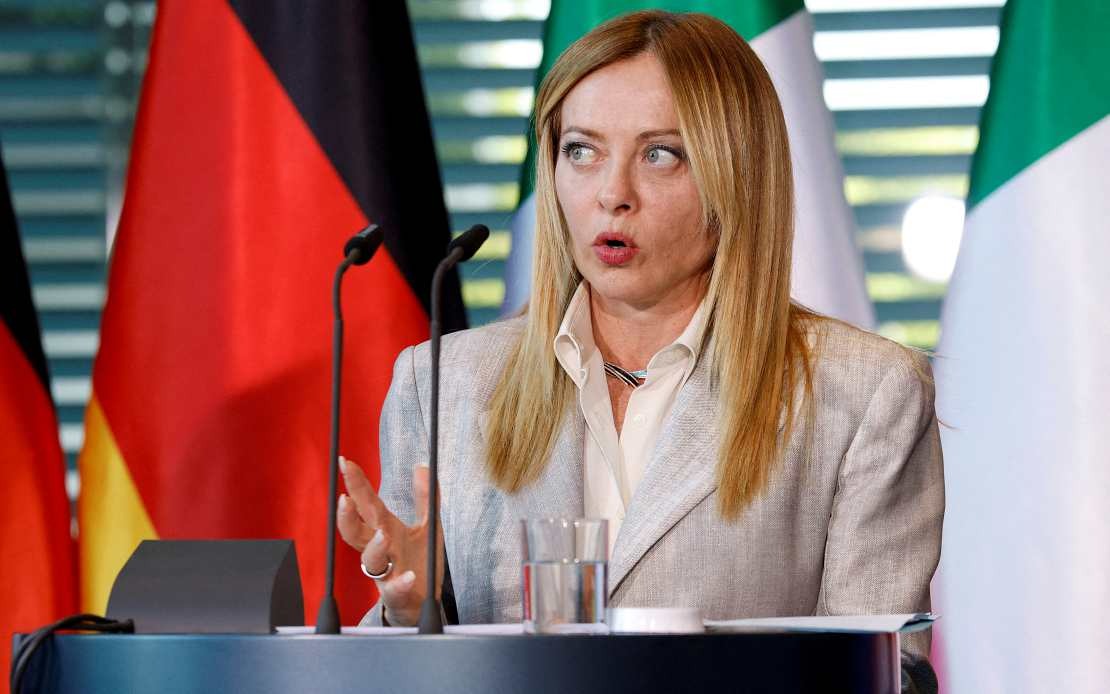
Italy's government is pushing the European Union to establish migrant processing and return centres in non-EU countries, a policy shift that represents an intensifying effort to manage irregular migration beyond the bloc's external borders. Prime Minister Giorgia Meloni has framed the proposal as a priority discussion point for EU home affairs ministers, signalling Rome's determination to reshape how Europe handles asylum seekers and deportations. The timing of this initiative—emerging in the wake of Spain's Ceuta experiencing a dramatic influx of migrants from Morocco in late July—underscores the urgency European capitals feel regarding migration control.
The proposed centres would operate as early as 2027, though the practical timeline depends on negotiations with willing third countries over the coming months. Italy intends to conclude bilateral agreements modelled on its existing arrangement with Albania by the close of 2026, according to reporting from Italian media. Interior Minister Matteo Piantedosi will represent Rome at Tuesday's informal online meeting of EU interior ministers, where the proposal will feature prominently. Significantly, the European Union is expected to provide funding for these offshore operations, transforming what was previously an Italian-only burden into a bloc-wide financial commitment.
The initiative has gained traction across Europe's political spectrum, with 22 EU member states having already submitted a joint letter to European Commission President Ursula von der Leyen and European Council President Antonio Costa advocating for enhanced protection mechanisms against unauthorised migration. Danish Prime Minister Mette Frederiksen has openly endorsed Meloni's approach, reflecting broader anxiety among northern European nations about irregular border crossings. Austria, the Netherlands, Germany and Denmark are among the frontrunners in pursuing bilateral negotiations with potential partner nations, while Greece has similarly indicated interest in launching its own pilot by 2027. This coalition-building suggests the proposal enjoys wider European support than previous, more isolated Italian efforts.
African nations are emerging as key partners in these discussions, with Rwanda and Uganda described as furthest along in substantive negotiations with their European counterparts. Both countries have previously engaged with European migration initiatives, though specifics of current discussions remain limited. The selection of African destinations reflects both geographic proximity to source regions and the principle of processing migrants in their continents of origin before allowing entry into Europe. However, the political and legal feasibility of such arrangements remains uncertain, given sovereignty concerns and capacity constraints in many partner nations.
Italy's own experience offers cautionary lessons about implementation challenges. Rome currently operates migrant reception centres abroad at its own expense and under its full administrative authority, processing asylum applications and managing deportations. Despite considerable investment and bureaucratic effort, Italian courts have repeatedly intervened to block migrant detention, ordering individuals returned to Italian territory and challenging expedited asylum procedures for nationals of designated safe countries. This judicial obstruction highlights a fundamental tension within the EU between executive efforts to restrict migration and the bloc's commitment to fundamental rights and due process protections.
The Albania experiment, often cited as the template for broader European efforts, demonstrates significant practical difficulties. Between May 2025 and mid-July 2026, only 685 migrants were transferred to Albanian processing facilities—a figure representing barely 15 percent of anticipated volumes. Repatriation rates proved even more disappointing, with fewer than 15 percent of those processed actually expelled. Meanwhile, the operational cost of maintaining a single centre in Gjader during 2025 reached approximately €50 million, an expense that raises fundamental questions about cost-effectiveness and scalability across multiple third countries.
The Ceuta crisis, which precipitated this policy acceleration, exposed Europe's vulnerability to sudden migration surges. The Spanish autonomous city, home to roughly 85,000 residents, absorbed approximately 60,000 migrants from neighbouring Morocco within a single 24-hour period in late July. Spain's immediate response—deploying additional police, Civil Guard units and military personnel—temporarily contained the situation but illustrated the inadequacy of border defences when large populations mobilise. For Malaysian and Southeast Asian observers, the episode parallels migration pressures affecting the region, though Ceuta's scale highlights the distinctive challenge European states face managing Mediterranean and overland routes.
The proposal reflects a fundamental strategic shift in EU migration policy away from processing asylum applications within European territory toward offshore processing in designated third countries. Proponents argue this approach discourages irregular crossings by signalling that entry to Europe will not occur for unauthorised migrants, even if they successfully reach European soil. Instead, individuals would be transferred to processing centres in non-EU nations, where asylum claims would be assessed and rejections executed more readily. This logic prioritises deterrence and remote processing over in-bloc reception and integration.
However, the initiative faces substantial legal and political obstacles. International law, EU treaties and human rights conventions constrain member states' ability to outsource asylum processing entirely. Questions of legal liability, responsibility and appeal mechanisms remain unresolved. Furthermore, third countries may demand significant financial compensation or other concessions in exchange for hosting such centres—costs not yet factored into EU budget discussions. The precedent of whether asylum seekers in non-EU processing centres retain appeal rights to European courts, whether EU law applies extraterritorially and how deportation decisions would be enforced remain contentious.
For Southeast Asia, Meloni's proposal carries indirect implications. European migration policies influence global refugee systems and patterns of onward movement. Should the EU successfully establish offshore processing capacity, it may reduce irregular departure from origin countries, potentially affecting migration pressures elsewhere. Conversely, if such initiatives prove unworkable, Europe may intensify pressure on transit nations like Turkey and Southeast Asian states to absorb displaced populations, indirectly affecting regional stability and burden-sharing expectations.
The initiative also reflects Meloni's political positioning within the EU and domestically in Italy. By proposing ambitious migration restrictions, she addresses core concerns of her right-wing coalition base while simultaneously positioning Italy as a serious policy innovator capable of reshaping European approaches. Success in negotiating third-country agreements by year-end would constitute a significant political victory, validating her government's hard-line stance on migration and demonstrating concrete results to constituencies increasingly frustrated with irregular arrivals.
The next phase will test whether this coalition of European nations can translate political agreement into functional partnerships with third countries willing to host processing centres. The financial commitments required, the capacity of partner nations and the legal framework governing offshore operations all remain uncertain. What appears certain is that migration will remain a defining issue for European governments through 2027 and beyond, with Italy's proposal representing one of several competing strategies to manage unprecedented population movements reshaping continental politics.

