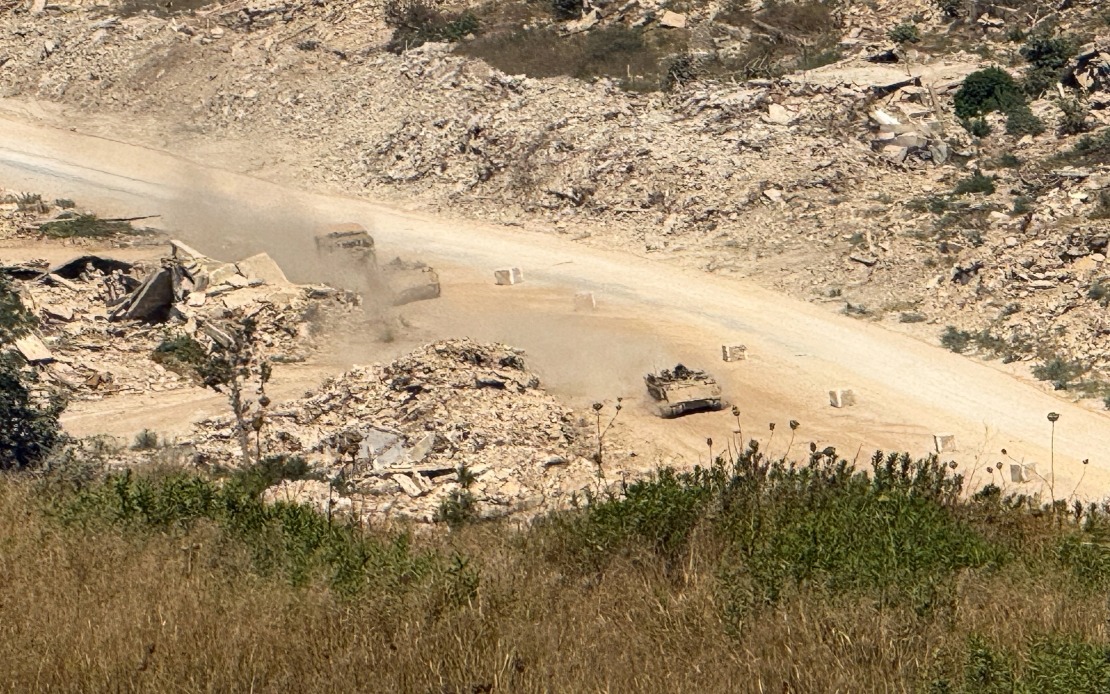
Fresh military operations by Israeli forces across southern Lebanon signal deepening complications in the fragile diplomatic process aimed at resolving the Israeli-Lebanese conflict. According to Lebanon's National News Agency, the Israeli army executed a series of coordinated attacks on Monday, involving explosions, artillery barrages, ground movement into Lebanese territory, and residential destruction across multiple towns and villages in the southern region.
The pattern of incidents demonstrates the volatile ground situation persisting despite diplomatic engagement at the highest levels. Machine gun fire targeted Wadi al-Salouqi in Nabatieh governorate, while the town of Mansouri experienced overnight shelling accompanied by successive explosions. Additional detonations occurred in the Mansouri vicinity, further illustrating the intensity of the operations. In parallel, Israeli forces detonated explosives in Kfar Tebnit within Nabatieh district, whilst the outskirts of Nabatieh al-Fawqa sustained intermittent artillery fire from Israeli positions stationed across the border.
Residential areas bore the brunt of the military campaign, with multiple homes deliberately set alight in Khiam as operations intensified within the town boundaries. The western approaches to Mays al-Jabal witnessed Israeli ground advancement supported by concentrated artillery targeting specific structures. Israeli reconnaissance drones maintained low-altitude surveillance operations over the Zahrani region, underscoring continued military intelligence gathering. These actions represent a continuation of military pressure that contradicts the stated objective of ceasefire arrangements.
The timing of these operations carries particular significance given that Lebanese and Israeli representatives concluded the seventh round of negotiations in Rome just days prior. The talks, mediated by United States diplomacy, concentrated on practical implementation mechanisms for a framework agreement initially reached on June 26. Lebanese President Joseph Aoun characterised the discussions positively during a Cabinet meeting on Friday, noting advancement on sensitive matters including border demarcation and the status of detained individuals held by both sides.
The June 26 framework envisions a structured Israeli military withdrawal from Lebanese soil through designated pilot zones, contingent upon Lebanese army deployment in liberated areas and the disarmament of militant organisations, primarily Hezbollah. This arrangement reflects compromise positioning from both sides, acknowledging the security concerns each party maintains. However, continued military operations suggest that elements within the Israeli defence establishment may be pursuing maximum territorial and strategic advantage before any formal agreement takes effect, a negotiating tactic that frequently undermines diplomatic processes in protracted conflicts.
The broader humanitarian crisis underpins the urgency of reaching a permanent settlement. Since hostilities commenced on March 2, Lebanese health authorities document 4,335 fatalities and 12,277 wounded persons, whilst displacement figures exceed one million civilians rendered homeless or internally relocated. These statistics represent not merely abstract numbers but families fragmented, communities destroyed, and economic devastation across entire regions. The displaced population endures precarious conditions in makeshift shelters and host communities already strained by resource limitations.
Israeli military presence now encompasses territory conquered during the present campaign, with forces penetrating more than ten kilometres beyond the internationally recognised border. Simultaneously, Israel maintains occupation of territories seized decades earlier, alongside more recent acquisitions from the 2023-2024 conflict period. Southern Lebanon contains strategic positions that Israeli security planners view as critical to national defence, a perspective that informs ongoing reluctance to withdraw unconditionally. This territorial dimension complicates negotiations, as each side calibrates withdrawal sequencing and verification mechanisms.
For Malaysian and broader Southeast Asian observers, the Lebanese-Israeli situation illustrates recurring patterns in regional conflicts where military operations proceed parallel to diplomatic channels. The relationship between negotiating positions and battlefield actions demonstrates how military objectives can either facilitate or obstruct political settlements. The international community's capacity to enforce compliance with agreed frameworks remains limited, particularly when one party possesses superior military capability and perceives continued advantage through delayed withdrawal.
The involvement of United States diplomatic machinery underscores Washington's strategic interests in restraining escalation whilst maintaining alliance relationships across the Middle East. American mediation reflects recognition that uncontrolled conflict expansion could destabilise the broader region and create security vacuums exploitable by hostile powers. Yet mediation effectiveness depends upon willingness from both parties to prioritise negotiated outcomes over military advantages, a calculation that appears contested currently.
Longer-term implications for Lebanese state reconstruction depend fundamentally upon establishing sustainable ceasefire arrangements that prevent recurring violence cycles. Current military operations jeopardise trust-building essential for implementing withdrawal agreements and deploying Lebanese institutions into recovered territories. Each incident of shelling or house burning generates grievances that complicate future reconciliation and normalisation processes. The humanitarian costs of continued fighting provide compelling rationale for accelerated diplomatic progress and meaningful restraint from military operations.
The broader Israeli-Palestinian dimension compounds regional complexity, as unresolved Palestinian sovereignty questions and continued Israeli occupation of Palestinian and Syrian territories perpetuate interconnected conflicts. International frameworks calling for Palestinian statehood remain unfulfilled, creating resentment that radiates throughout the region and influences how regional populations interpret Israeli security policies. Progress toward Lebanese-Israeli ceasefire arrangements might establish precedent for addressing other territorial disputes through negotiated frameworks rather than military imposition.
Moving forward, the critical test involves translating diplomatic agreements from conference rooms into implemented reality on the ground. Verification mechanisms, phased withdrawal schedules, and mechanisms for addressing violations will determine whether current negotiations produce lasting peace or merely represent temporary pauses in protracted conflict. The Lebanese population's desperate need for reconstruction and normalcy provides powerful incentive for success, yet implementation challenges remain formidable given entrenched military positions and competing strategic interests across multiple parties.

