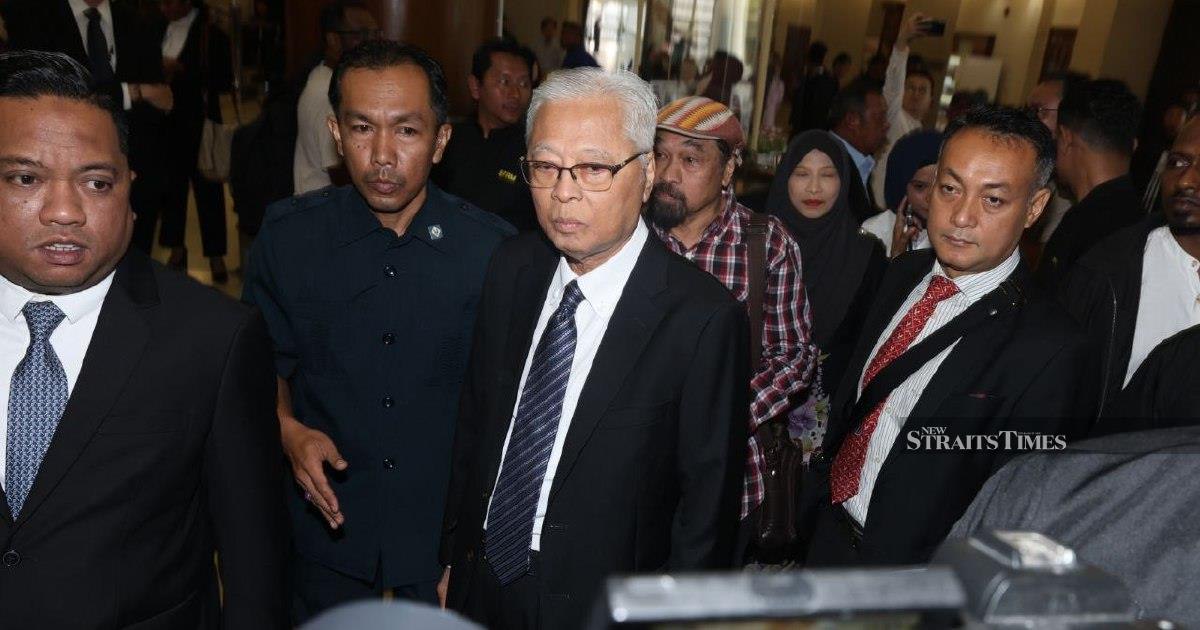
Datuk Seri Ismail Sabri Yaakob, who served as Malaysia's prime minister, has walked free from the courts after his son arranged the posting of RM300,000 bail. The development came as the former leader departed the Kuala Lumpur court complex, where he had appeared in connection with legal proceedings against him. His release follows a family-facilitated bail arrangement, allowing him to leave the court grounds following the necessary formalities.
The RM300,000 bail represents a significant financial commitment by the former premier's family, underscoring the gravity of the matter before the courts. Bail arrangements in Malaysia typically serve as financial security ensuring a defendant's appearance at subsequent court dates. The posting of such a sum by immediate family members is commonplace in Malaysian legal practice, particularly for individuals of standing within society who maintain strong community ties and stable residences.
Ismail Sabri's appearance at court and subsequent release reflects the ongoing judicial processes affecting senior Malaysian political figures. As someone who held the highest executive office in the nation from August 2021 until November 2022, his legal situation carries implications beyond personal consequences, touching upon broader questions of accountability and governance in Malaysia's political system. The trajectory of his case will likely attract sustained public attention given his prominence within the ruling coalition and extensive parliamentary experience.
The former premier's departure from the court complex after bail proceedings represents a routine yet symbolically significant moment in Malaysia's legal and political narrative. Court bailings for high-profile figures are often conducted with media scrutiny, reflecting public interest in the proceedings and outcomes affecting the nation's leadership. The involvement of family members in facilitating bail arrangements demonstrates the practical mechanisms through which legal processes unfold for individuals from established political families.
Malaysia's bail system operates within a framework designed to balance the presumption of innocence with ensuring court attendance and public safety. The RM300,000 figure suggests the court deemed this amount adequate to satisfy both conditions in Ismail Sabri's circumstances. Such determinations typically account for the defendant's financial capacity, the seriousness of alleged offences, and assessments regarding flight risk or community danger. The relatively substantial sum indicates the judiciary considered these factors seriously in this particular case.
The former prime minister's legal situation emerged within Malaysia's complex political environment, where transitions of power and shifts in coalition alignments frequently generate scrutiny of past administrations and their officials. Ismail Sabri's government navigated numerous domestic and international challenges during its tenure, including managing the post-pandemic economic recovery, addressing ongoing political stability concerns, and maintaining Malaysia's regional and international standing. The current legal proceedings represent a separate dimension of accountability within the Malaysian political system.
Family involvement in bail arrangements reflects both practical and cultural dimensions of Malaysian society, where extended family networks often provide mutual support through challenging circumstances. The decision by Ismail Sabri's son to post the required sum demonstrates family solidarity and confidence in the former leader's commitment to meeting legal obligations. Such familial support structures remain influential in shaping how individuals navigate the formal justice system, particularly those from prominent backgrounds with established resources.
The bail posting represents an interim development rather than a conclusive outcome in whatever legal proceedings Ismail Sabri faces. Malaysian courts will require his continued attendance at future hearings, and the conditions of his bail presumably restrict certain activities while ensuring his availability to the justice system. The trajectory of such cases frequently extends over considerable periods, with multiple court appearances, procedural motions, and adjournments marking progress through Malaysia's legal processes. For observers tracking developments in Malaysian political accountability, subsequent court dates will prove equally significant as this initial bail arrangement.
Ismail Sabri's release on bail also reflects the operational reality of Malaysia's criminal justice system, where pretrial detention is generally reserved for circumstances deemed exceptionally serious or where bail conditions cannot adequately address judicial concerns. The posting of bail enables individuals to remain engaged with family, professional, and community responsibilities while legal processes advance. For a figure of Ismail Sabri's standing and visibility, maintaining limited freedom pending trial also reflects judicial approaches distinguishing between procedural requirements and punitive detention.
The former premier's situation participates within a broader pattern affecting Malaysian political leadership, where transitions often generate legal scrutiny of previous administrations. This reflects mechanisms, sometimes controversial, through which political systems attempt to establish accountability and address allegations of misconduct. Whether such processes function equitably and serve justice remains contested terrain within Malaysian civil society, with observers debating whether legal proceedings target political opponents disproportionately or represent legitimate accountability mechanisms. Ismail Sabri's case will continue generating such analytical attention among Malaysia's politically engaged populations and international observers monitoring the nation's governance developments.

