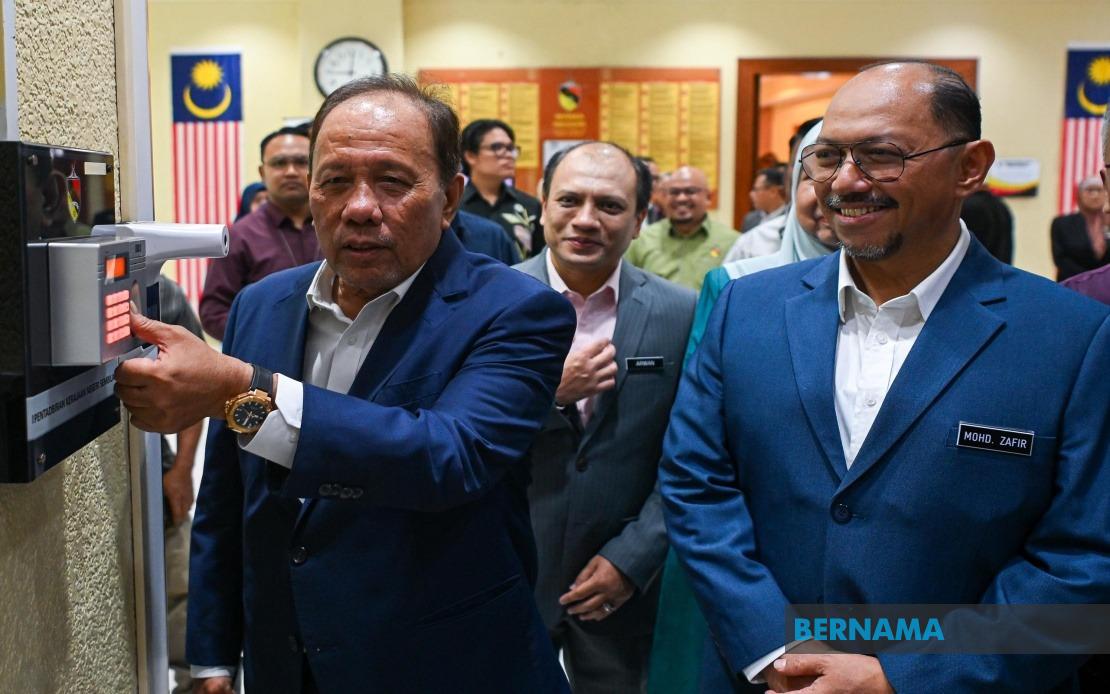
Negeri Sembilan's new Menteri Besar Ismail Lasim has moved swiftly to address mounting questions about his appointment, insisting that all proper protocols were observed throughout the selection process. Speaking to journalists at Wisma Negeri in Seremban on Monday, Ismail expressed confidence that the procedures governing his elevation to the state's top executive position were executed correctly and in full compliance with established guidelines.
The appointment has drawn scrutiny from prominent political observers, particularly Tan Sri Rais Yatim, who chairs the Wawasan think-tank. Rais has questioned the mechanics of how Ismail was chosen for the role, alleging that external parties may have inappropriately influenced proceedings in ways that potentially circumvent Negeri Sembilan's constitutional framework and customary conventions governing such appointments.
Ismail, who secured the Juasseh state constituency during the recent Negeri Sembilan state election, underwent the formal investiture ceremony before Yang Dipertuan Besar Tuanku Muhriz Tuanku Munawir at Istana Besar Seri Menanti the previous Sunday. The ceremony represented the formal constitutional moment when the ruler formally endorsed and accepted Ismail into his new office, a traditional component of the state's governance structure that carries particular weight in Malaysia's constitutional monarchy system.
The coalition landscape in Negeri Sembilan provides critical context for understanding the political dynamics at play. Barisan Nasional emerged from the recent state election with a commanding position, securing 18 of the 36 available seats, while Perikatan Nasional captured seven seats. This distribution meant that neither coalition required support from independent representatives, as both possessed sufficient numbers to independently command a two-thirds supermajority—a threshold that affords considerable legislative power and stability for either potential governing coalition.
The existence of these competing two-thirds majorities presents an unusual constitutional scenario that may have prompted speculation about how the crucial decision over who would lead the state administration was ultimately reached. In normal circumstances, the ruler would assess which coalition leader could demonstrate the confidence of the legislature, but the presence of multiple blocs each claiming supermajority status creates ambiguity about the decisional process.
Rais Yatim's concerns touch on a sensitive dimension of Malaysian governance: the balance between constitutional propriety and political influence in matters that formally rest with the ruler but occur within a broader political context. Questions about whether proper consultations took place, whether all relevant stakeholders were appropriately heard, and whether the process adhered to established conventions remain significant in Malaysian political discourse, particularly when they relate to the monarchy's constitutional role.
Ismail's straightforward defence suggests confidence that the procedural record will withstand scrutiny. By characterizing the appointment as orderly and compliant with prescription, he appears to be signalling that documentation and the formal record would support the legitimacy of his selection. However, the persistence of questions from figures like Rais indicates that some observers require more detailed clarification about specific aspects of the decision-making process.
For Malaysian readers, this situation illustrates broader questions about institutional governance that extend beyond Negeri Sembilan alone. The mechanics of how state menteri besar are appointed involve intricate constitutional provisions that vary somewhat between states, and the legitimacy of these appointments rests substantially on public confidence that proper procedures have been respected. When such processes face external challenge, even from non-governmental figures, they invite closer examination of whether the state's unique constitutional arrangements are being honored.
The timing of Rais's intervention is notable, occurring after the formal appointment had already been completed rather than during any transition period when objections might have influenced the outcome. This suggests that his criticisms are primarily aimed at establishing a public record questioning the process rather than attempting to alter the immediate result. Such positioning is characteristic of Malaysian political discourse, where institutional legitimacy is frequently contested through media and intellectual commentary even after formal decisions have been rendered.
Negeri Sembilan's constitutional framework, which accords particular prominence to the Yang Dipertuan Besar in executive matters, means that the ruler's confidence in the appointed leader carries special significance. Ismail's invocation of the formal procedures and the successful completion of the investiture ceremony before the ruler implicitly references this constitutional foundation, suggesting that he views the ruler's acceptance as the ultimate validation of the process's propriety.
Moving forward, Ismail faces the task of establishing his government's credibility and effectiveness in addressing the state's policy priorities. How he addresses the procedural questions now swirling around his appointment may influence his ability to govern with full confidence and legitimacy, particularly if the Perikatan Nasional coalition chooses to mount formal challenges or sustained public criticism. The resolution of these concerns, whether through further explanation or through effective governance, will likely determine whether the appointment controversy becomes a persistent political liability or a transitory challenge.
For the broader Southeast Asian context, Negeri Sembilan's situation reflects the continuing tension within constitutional monarchies regarding how executive leadership is selected when multiple political coalitions possess numerical strength. These questions resonate across the region, where similar constitutional arrangements in other Malaysian states and neighboring nations involve comparable tensions between democratic majoritarianism and traditional monarchical prerogatives.

