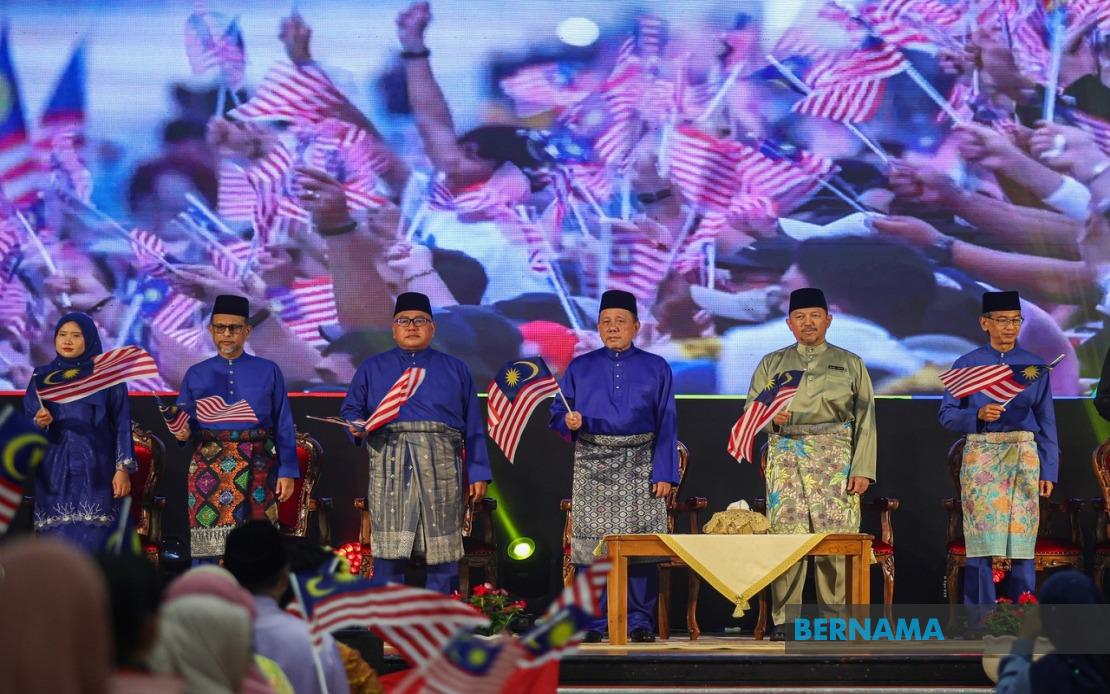
Negeri Sembilan Menteri Besar Datuk Ismail Lasim has articulated a comprehensive vision for the state's future, grounding his administration's priorities in three interconnected pillars: institutional stability, measured progress and equitable prosperity. Speaking at the state-level public servants assembly in Seremban, he emphasised that these foundations would determine how effectively his government delivers services to residents and tackles the complex challenges facing the state.
The stability pillar extends beyond simple political dominance in the State Legislative Assembly, Ismail clarified, encompassing institutional robustness, sound administrative practices and political maturity. He underscored the importance of safeguarding constitutional monarchy frameworks and customary institutions that form the bedrock of Negeri Sembilan's governance structure. This framing suggests his administration recognises that durable public confidence depends on more than electoral numbers—it requires demonstrable commitment to institutional integrity and respect for established constitutional traditions that residents value.
Confidence from both the public and investment community represents a critical component of this stability agenda. By articulating that investors look for predictable, institutionally sound governance environments, Ismail positioned Negeri Sembilan as seeking to differentiate itself among Malaysian states through reliable administration rather than short-term populist gestures. This messaging carries particular weight given regional competition for foreign direct investment and the increasing sophistication of investors evaluating state-level governance quality.
The progress pillar rejects a narrow economic interpretation, instead proposing that development encompasses opportunity creation, investment quality and balanced territorial growth. Ismail's explicit rejection of concentrated development in major urban centres directly addresses longstanding rural grievances in Negeri Sembilan, particularly among Felda settlement residents who have historically felt marginalised by development priorities favouring towns like Seremban. His commitment to parallel rural advancement signals an administration attempting to forge inclusive growth that prevents widening disparities between urban and hinterland communities.
Economic indicators demonstrate cautious momentum. Negeri Sembilan's gross domestic product reached RM55.8 billion in the previous year, up from RM54.3 billion twelve months earlier, representing 2.6 per cent expansion driven primarily by services and manufacturing sectors. These figures position the state's economy as moderately resilient, though growth rates remain modest compared to stronger-performing Malaysian states. The services sector's prominence reflects Negeri Sembilan's geographic proximity to Kuala Lumpur and its function as a residential and commercial hub for the federal territory.
State revenue collection has accumulated to RM522.4 million to date, with authorities projecting achievement of a RM1 billion target by 2030. This ambitious trajectory suggests confidence in enhanced taxation efficiency, expanded economic activity and improved revenue administration over the coming eight years. For perspective, achieving this target would require approximately 11 per cent annual revenue growth, a significant undertaking that depends on sustained economic expansion and effective resource mobilisation. Reaching this benchmark would provide substantially increased financial flexibility for developmental initiatives across the state.
The newly constituted State Executive Council brings diverse professional backgrounds and contemporary perspectives that Ismail views as essential for navigating contemporary governance demands. The emphasis on fresh expertise and collaborative synergy between political leadership and the permanent public service establishment reflects recognition that effective administration requires both political vision and bureaucratic competence. This partnership rhetoric, while routine in political discourse, carries genuine operational significance for state agencies tasked with translating policy intentions into tangible public benefits.
Ismail's reference to managing expectations of 1.2 million Negeri Sembilan residents acknowledges the tension inherent in public sector leadership—the gap between citizen aspirations and available resources and capacity. By explicitly invoking this demographic figure and framing governance as a collective enterprise requiring unified purpose, he attempted to establish reasonable expectations and foster shared responsibility for the state's trajectory. This approach implicitly recognises that sustainable development requires public cooperation and realistic public understanding of governmental constraints.
Coordination between the State Executive Council, public service agencies, local authorities and schools features prominently in the developmental blueprint. This multi-institutional approach suggests Ismail's administration recognises that siloed departmental operations produce suboptimal outcomes and that meaningful progress requires horizontal integration across government structures. The emphasis on creating youth opportunities and revitalising agricultural and rural economic sectors indicates priority areas receiving special attention within this coordination framework, addressing demographic concerns about young resident retention and economic diversification beyond urban service sectors.
The call to display the Malaysian flag across government departments, local authorities, schools and business premises during National Day celebrations represents symbolic nation-building within the state context. While ostensibly ceremonial, such initiatives reinforce collective national identity and create visible public reminders of shared patriotic commitment. For Negeri Sembilan specifically, this emphasis may carry additional significance given the state's positioning as a border region between federal territory and other states, requiring deliberate cultivation of cohesive state identity alongside national belonging.
Ismail's articulation of administrative philosophy reveals an attempt to position Negeri Sembilan as a professionally governed state prioritising institutional credibility and inclusive development over populist shortcuts. By emphasising stability, measured progress and shared prosperity as integrated objectives rather than competing priorities, he advanced a governance narrative that appeals to diverse constituencies—investors seeking predictability, rural communities seeking equitable development and public servants seeking clear administrative direction. Whether subsequent policy execution matches this rhetorical vision will determine the administration's ability to deliver tangible improvements in resident living standards and attract the quality investments necessary for achieving ambitious revenue targets.

